Leave Your Message
Precision-engineered VFD compressors delivering stable, energy-efficient compressed air for every pneumatic tool demand
A deep-dive into the technology, market trends, and industrial applications reshaping compressed air systems
Pneumatic tools have long been the backbone of manufacturing, automotive assembly, construction, and heavy industry. From impact wrenches and air drills to spray guns and nail guns, these tools demand a consistent, reliable, and precisely regulated supply of compressed air. Traditionally, fixed-speed air compressors fulfilled this role — but at a significant cost: energy waste, pressure fluctuations, and excessive mechanical wear. The emergence of the Variable Frequency Drive (VFD) air compressor has fundamentally changed this equation, offering intelligent, demand-responsive compressed air generation that aligns perfectly with the dynamic requirements of pneumatic tool operations.
A variable frequency air compressor — also referred to as a VSD (Variable Speed Drive) or VFD compressor — uses an inverter to continuously adjust the rotational speed of the motor in real time, matching compressed air output precisely to actual demand. Unlike fixed-speed compressors that run at full capacity regardless of load, a VFD compressor modulates its motor speed between approximately 25% and 100% of rated capacity, eliminating the energy-wasting load/unload cycles that plague traditional systems.
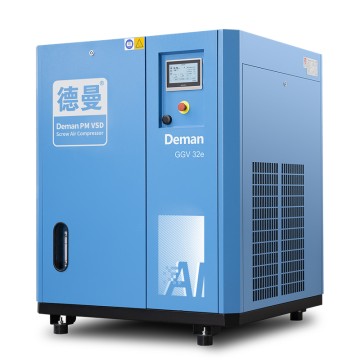
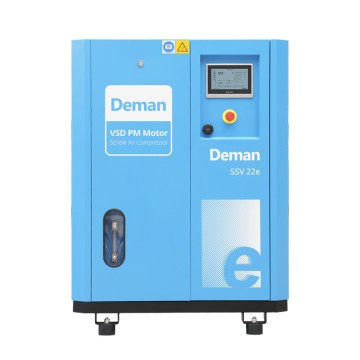
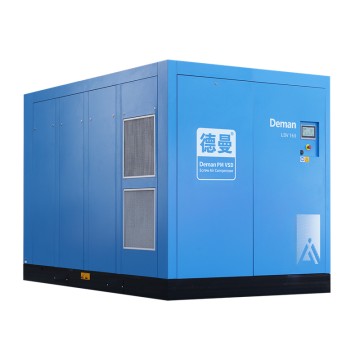
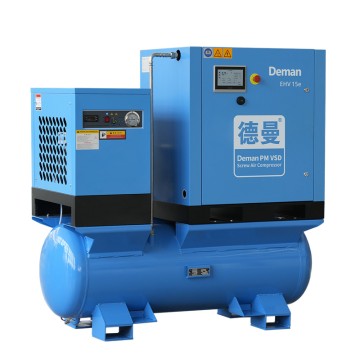
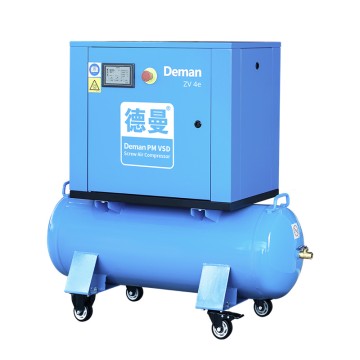
When combined with a Permanent Magnet (PM) motor — which offers superior efficiency across the entire speed range — the result is a PM VSD air compressor that delivers exceptional energy savings, often reducing electricity consumption by 30–50% compared to conventional fixed-speed units. For facilities running pneumatic tools across multiple shifts, this translates into tens of thousands of dollars in annual energy cost reductions.
The global variable speed drive air compressor market was valued at approximately USD 8.2 billion in 2023 and is projected to exceed USD 14 billion by 2030, growing at a CAGR of over 8%. This growth is primarily driven by the industrial sector's intensifying focus on energy efficiency, carbon neutrality mandates, and the rising adoption of pneumatic tools in automated manufacturing environments.
In sectors such as automotive manufacturing, aerospace, electronics assembly, and food processing, pneumatic tools account for a disproportionately high share of compressed air consumption. These industries are rapidly transitioning from legacy fixed-speed compressors to VFD-based systems, not only to reduce operating costs but also to meet increasingly stringent environmental regulations and ISO 50001 energy management standards.
Asia-Pacific — particularly China, Japan, and South Korea — leads global adoption, with Chinese manufacturers like Deman pioneering PM VSD technology and setting national industry standards. Europe follows closely, driven by EU energy efficiency directives, while North America shows accelerating uptake in automotive and aerospace pneumatic tool applications.
Six critical performance benefits that make variable frequency compressors the definitive choice for pneumatic tool applications
VFD compressors maintain air pressure within ±0.1 bar of the setpoint, eliminating the pressure fluctuations that degrade pneumatic tool performance, cause inconsistent torque output, and accelerate tool wear.
By precisely matching motor speed to demand, VFD compressors eliminate the wasteful unloaded running of fixed-speed units. Facilities with variable pneumatic tool usage profiles see the greatest savings.
Soft-start capability eliminates mechanical stress during startup, reducing bearing wear, seal degradation, and compressor head fatigue — significantly extending service intervals and total equipment life.
Advanced AI controllers continuously analyze demand patterns, predict load changes, and optimize motor speed in real time. Integration with Industry 4.0 systems enables remote monitoring, predictive maintenance, and automated energy reporting.
Operating at lower speeds during partial load conditions, VFD compressors produce substantially less noise — critical for automotive assembly floors, electronics manufacturing, and workshop environments where operator comfort matters.
Lower energy consumption directly translates to reduced CO₂ emissions. For large industrial facilities, transitioning to PM VSD compressors can eliminate hundreds of tonnes of CO₂ annually, supporting corporate sustainability goals.
Industry-specific analysis of how variable frequency air compressors optimize pneumatic tool performance across critical sectors
Automotive assembly lines rely on pneumatic impact wrenches, torque guns, and riveting tools operating at precise, consistent pressures. VFD compressors maintain exact pressure setpoints across hundreds of simultaneous tool connections, ensuring consistent bolt torque, eliminating rework, and reducing compressed air costs by up to 45% in high-volume production environments.
Aerospace applications demand ultra-precise air pressure for drilling, fastening, and surface finishing of aircraft components. PM VSD compressors provide the micro-level pressure stability required for aerospace-grade tolerances, while AI monitoring systems ensure zero-downtime operation and full traceability for quality compliance.
Construction sites use pneumatic jackhammers, chippers, and concrete breakers with highly variable demand profiles. VFD compressors adapt in real time to these fluctuating loads, eliminating the pressure drops that reduce tool effectiveness and the energy waste of oversized fixed-speed units idling between tasks.
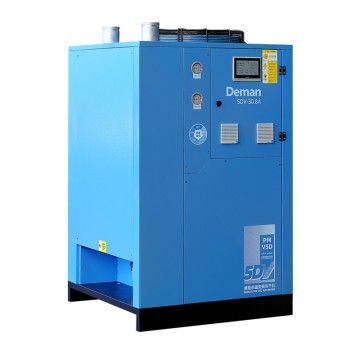
CNC machining centers, plasma cutting systems, and pneumatic clamping fixtures in metal fabrication require clean, dry, stable compressed air. VFD compressors paired with PM VSD refrigerated air dryers ensure consistent dew point control and pressure stability, protecting precision tooling and improving surface finish quality.
Spray painting, sandblasting, and powder coating operations are highly sensitive to compressed air pressure and quality. VFD compressors maintain the precise, oil-free air supply required for flawless surface finishes, while intelligent air dryer integration ensures moisture-free delivery that prevents coating defects.
Pneumatic packaging, filling, and conveying systems in food and pharmaceutical production require hygienic, contamination-free compressed air. VFD compressors with advanced filtration and intelligent monitoring meet ISO 8573 air quality standards, ensuring product safety while optimizing energy efficiency in 24/7 production environments.
Emerging technologies and market forces shaping the next generation of variable frequency compressed air solutions
Next-generation VFD compressors are increasingly embedded with AI algorithms that learn facility-specific demand patterns, predict maintenance requirements before failures occur, and autonomously optimize energy consumption. Deman's GGVe Series AI Air Compressor exemplifies this trend, incorporating intelligent load forecasting and self-diagnostic capabilities that reduce unplanned downtime by up to 80%.
Modern VFD compressors are becoming fully integrated nodes within smart factory ecosystems. Real-time data streaming to cloud platforms enables remote performance monitoring, energy consumption analytics, and predictive maintenance scheduling — transforming compressor stations from isolated utility equipment into intelligent, connected assets within the Industry 4.0 framework.
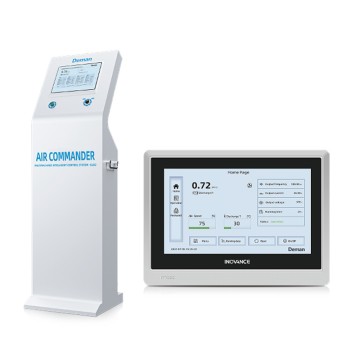
The "Air Commander" multi-compressor central control architecture represents the future of large-scale pneumatic tool facilities. By intelligently coordinating multiple VFD compressors, the system ensures optimal load distribution, eliminates redundant operation, and maximizes overall system efficiency — achieving energy savings impossible with individually controlled units.
Up to 90% of the electrical energy consumed by an air compressor is converted to heat. Integrated heat recovery systems capture this thermal energy for space heating, process heating, or hot water generation — dramatically improving total system efficiency and supporting corporate carbon neutrality commitments. This technology is rapidly becoming standard in new VFD compressor installations.
The adoption of IE4 and IE5 ultra-premium efficiency permanent magnet motors in VFD compressors is accelerating, driven by tightening global energy efficiency regulations. These motors maintain near-peak efficiency across the entire operating speed range — from 25% to 100% load — delivering consistent energy savings regardless of pneumatic tool demand variability.
Advanced data analytics platforms are enabling comprehensive compressed air system audits that identify leakage, pressure mismatches, and inefficient tool usage patterns. This data-driven approach to system optimization — combined with VFD compressor flexibility — is helping industrial facilities reduce compressed air costs by 20–60% through systematic, evidence-based improvements.
We follow six-end solutions to create infinite value for clients' efficient use of compressed air — from system planning and intelligent production to efficient transmission, ensuring every cubic meter of compressed air powers your pneumatic tools at peak efficiency.
A comprehensive, end-to-end methodology ensuring your pneumatic tool operations achieve maximum efficiency and reliability
"No planning, no machine selling." We analyze air pressure, flow, and quality requirements at every pneumatic tool terminal before recommending any solution. This prevents mismatched systems that reduce production efficiency and increase operating costs.
Applying "Three-Dimensional Customization" — tailoring compressor station configurations to precise pressure, flow, and air quality requirements using the best combination of VFD compressors, air dryers, heat recovery units, and the "Air Commander" central control system.
Our professional team designs and installs optimized air pipe networks using energy-saving aluminum alloy or stainless-steel green air pipe — ensuring efficient transmission with minimal pressure drop to every pneumatic tool connection point.
Integrated filtration, drying, and purification systems ensure compressed air meets the exact quality specifications required by each pneumatic tool application — from general manufacturing to food-grade and pharmaceutical environments.
Continuous energy monitoring through intelligent control systems identifies optimization opportunities, tracks KPIs, and provides actionable insights — enabling ongoing improvement of compressed air system efficiency as production requirements evolve.
Comprehensive after-sales service including preventive maintenance programs, remote diagnostic support, and rapid spare parts supply ensures maximum uptime and sustained performance of your VFD compressor investment throughout its operational life.

Founded in 1998, Deman has been at the forefront of the air compressor industry by leading energy-saving initiatives in China. We are the primary drafter of China's industry standards for VSD Oil-injected (JB/T10972) and PM VSD Screw Air Compressors (JB/T 13345-2017).
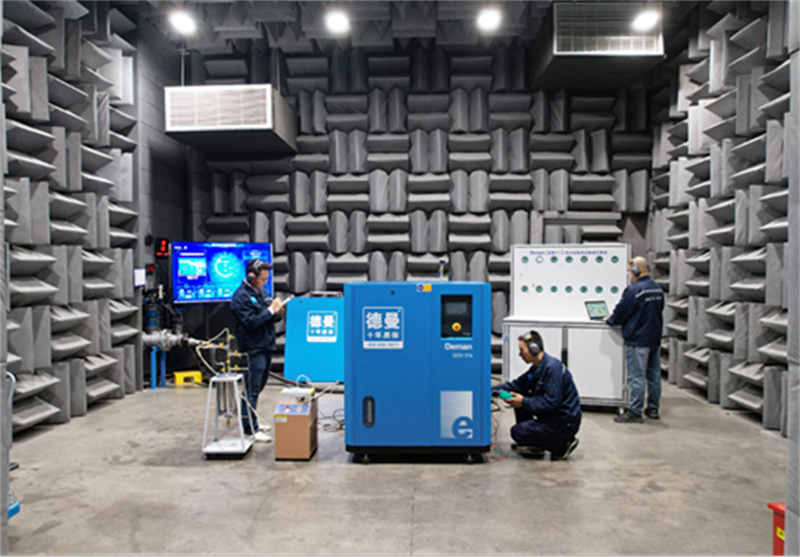
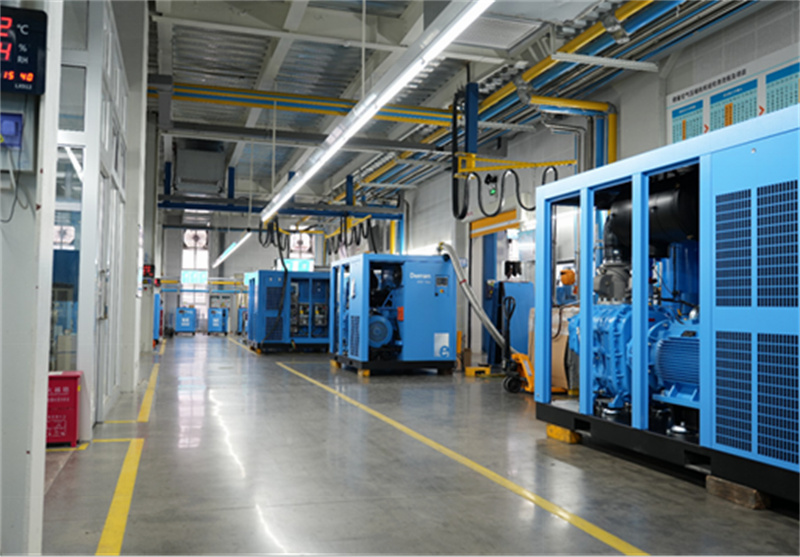
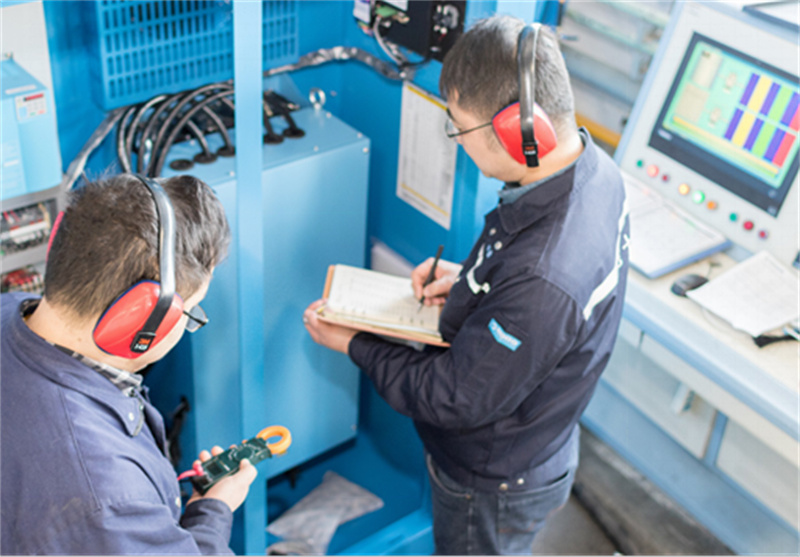
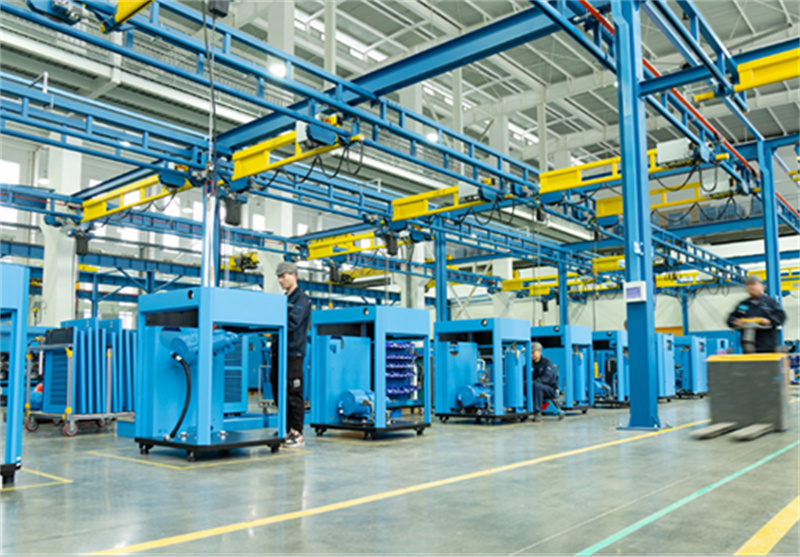
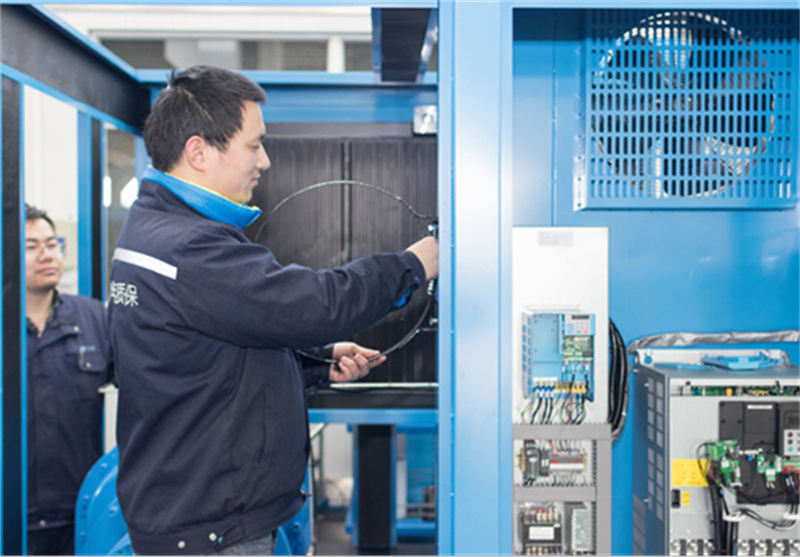
As a China National High-tech Enterprise, Deman has integrated capabilities in R&D, manufacturing, sales, and service. We have a robust R&D team of over 140 technical professionals. Our factory, based in Ningbo, China is ISO9001:2015, ISO14001:2015, and ISO45001:2018 certified. Our product testing process strictly adheres to ASME and ISA1932 standards to ensure the delivery of safe and reliable compressors.
World-class manufacturing and testing facilities ensuring every VFD air compressor meets the highest standards
Contact Deman's compressed air specialists for a customized system assessment and energy savings analysis tailored to your facility's pneumatic tool requirements.
Explore Deman VFD Compressor Solutions →The full Deman VFD product portfolio — engineered to power every pneumatic tool application with precision and efficiency