Leave Your Message
In the modern industrial landscape, precision manufacturing stands as the pinnacle of engineering excellence. From semiconductor fabrication and medical device assembly to aerospace component machining and high-speed fiber laser cutting, the margin for error is non-existent. Among the critical utilities powering these high-tech operations, compressed air is often referred to as the "fourth utility." However, standard compressed air solutions frequently fall short when subjected to the rigorous demands of precision tasks. This is where the Two Stage Compression Air Compressor emerges as an indispensable asset.
Unlike traditional single-stage compressors that force air to undergo the entire compression cycle within a single set of rotors, two-stage systems divide the workload. By compressing air in two distinct phases with an intermediate cooling process, these machines optimize thermodynamic efficiency. This structural refinement directly addresses the two most critical challenges in precision manufacturing: thermal stability and energy consumption. As global industries align with Industry 4.0 standards and stringent carbon neutrality targets, the transition to two-stage compression technology is transitioning from a premium upgrade to a baseline requirement.
By cooling the air between the first and second stages (intercooling), a two-stage compressor brings the compression process closer to the ideal isothermal cycle. This reduces the specific power consumption, allowing the system to deliver up to 15% more air volume (CFM) per kilowatt of energy compared to single-stage equivalents.
The global market for high-efficiency air compressors is experiencing a significant structural shift. Historically, single-stage rotary screw compressors dominated the market due to lower initial capital expenditure (CAPEX). However, contemporary manufacturers are shifting their focus toward total cost of ownership (TCO). Given that energy consumption accounts for approximately 70% to 80% of the lifetime cost of an industrial air compressor, the efficiency gains of two-stage compression yield rapid returns on investment (ROI).
Furthermore, the integration of Permanent Magnet Variable Speed Drive (PM VSD) technology has revolutionized the commercial viability of these systems. By matching the motor speed precisely to fluctuating air demands, PM VSD two-stage compressors eliminate idle run times and minimize throttling losses. This technological synergy is highly sought after in precision manufacturing hubs across Europe, North America, and East Asia, where energy tariffs are rising and environmental compliance is strictly enforced.
One-stop Compressed Air System Provider
Founded in 1998, Deman has been at the forefront of the air compressor industry by leading the energy-saving initiatives in China. We are the primary drafter of China's industry standards for VSD Oil-injected (JB/T10972) and PM VSD Screw Air Compressors (JB/T 13345-2017).
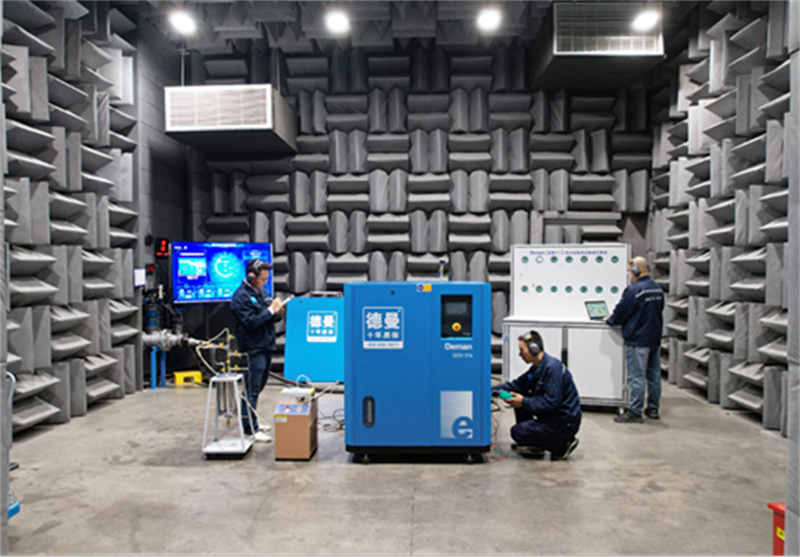
As a China National High-tech Enterprise, Deman has integrated capabilities in R&D, manufacturing, sales, and service. We have a robust R&D team of over 140 technical professionals. Our factory, based in Ningbo, China is ISO9001:2015, ISO14001:2015, and ISO45001:2018 certified. Our product testing process strictly adheres to ASME and ISA1932 standards to ensure the delivery of safe and reliable compressors.
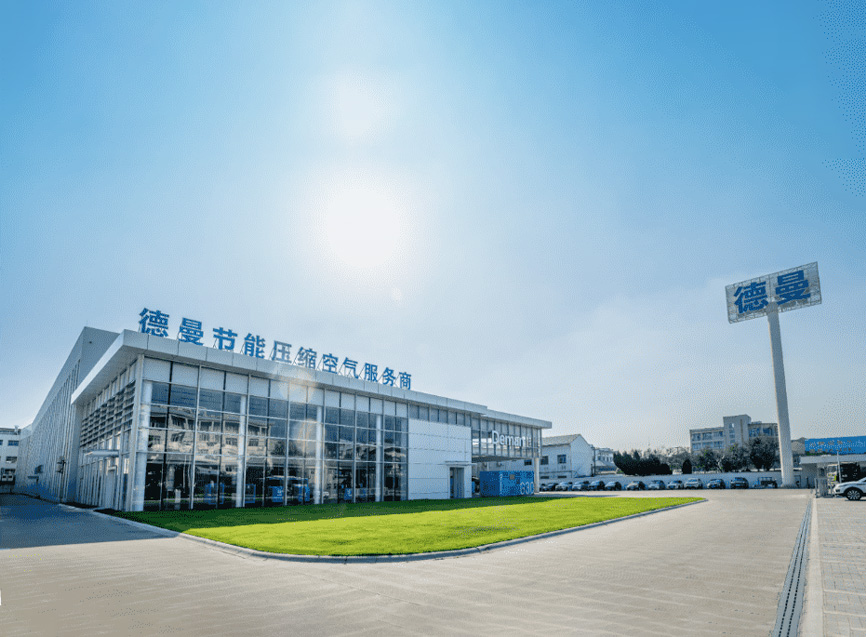
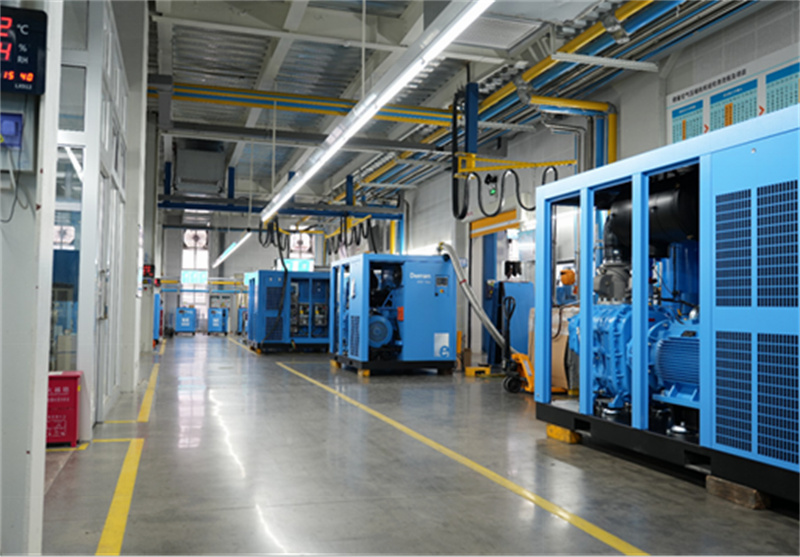
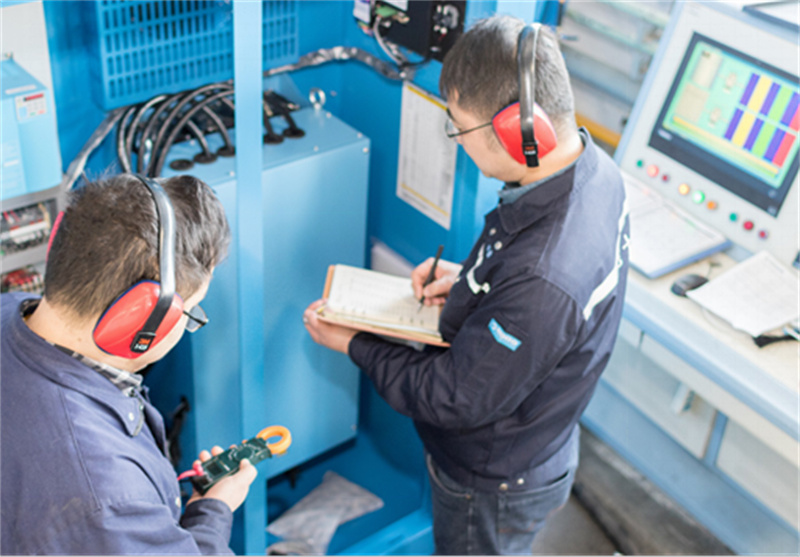
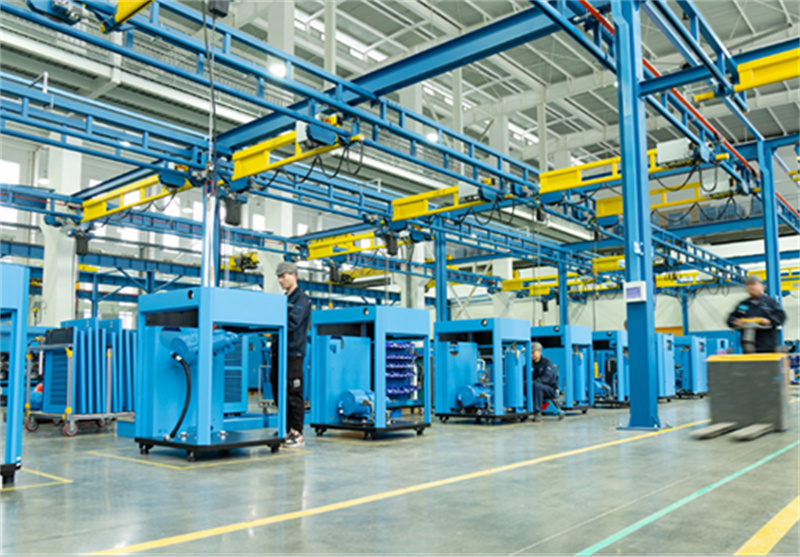
Step inside our state-of-the-art production base in Ningbo, where precision engineering meets rigorous quality control standards.
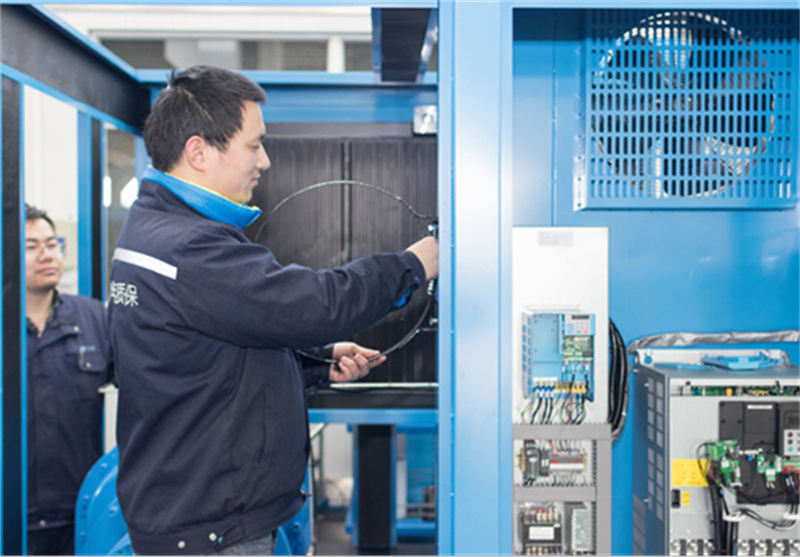
Precision manufacturing is not a singular industry; it encompasses various sectors, each with unique and demanding requirements for compressed air. Below is an in-depth analysis of how two-stage compression systems solve specific engineering challenges in these environments.
In modern metal fabrication, fiber laser cutting systems demand high-pressure compressed air (often between 16 to 30 bar) to act as an assist gas. The compressed air blows away molten material, cools the cutting edge, and prevents oxidation. Any pressure fluctuation or contamination (such as oil or moisture) can ruin the laser lens, cause dross formation, and compromise cut quality. A two-stage compression system, coupled with integrated air dryers and high-efficiency filtration, ensures a steady, high-pressure stream of clean, dry air. This directly translates to smoother cutting edges, faster processing speeds, and reduced gas costs compared to liquid nitrogen.
The semiconductor industry operates in highly sensitive cleanroom environments (often ISO Class 5 or cleaner). Pneumatic actuators, pick-and-place robots, and wafer handling systems rely on compressed air to function. In these applications, even trace amounts of oil aerosols or moisture can contaminate microchips, causing massive batch failures. Two-stage compressors, designed with advanced separation systems, deliver high-volume, extremely stable air. When configured as oil-free or utilizing advanced filtration, they guarantee compliance with ISO 8573-1 Class 1 (or Class 0) air purity standards, protecting sensitive silicon wafers from particulate contamination.
Aerospace turbine blades and automotive engine blocks require CNC machining to tolerances measured in microns. Compressed air is used to clear debris from the cutting path, actuate high-speed spindles, and calibrate coordinate measuring machines (CMMs). If the air pressure drops even momentarily, a CNC tool might stall or miscalculate, leading to scrap parts. Two-stage compressors provide unmatched pressure stability. Because they operate at lower internal compression ratios per stage, thermal expansion of the compressor components is minimized, ensuring reliable, continuous duty cycles without pressure drops.
From surgical implants to pharmaceutical blister packaging, medical manufacturing requires sterile, dry, and oil-free compressed air. The air often comes into direct contact with the product or its packaging. Two-stage systems provide the thermal control necessary to ensure downstream desiccant and membrane dryers operate at peak efficiency. Lower discharge air temperatures from the compressor mean less moisture load on the drying system, guaranteeing a consistent pressure dew point (PDP) down to -40°C or lower, preventing bacterial growth in pneumatic lines.
We follow six-end solutions to create infinite value for client's efficient use of compressed air
"No planning, no machine selling". We make sure to understand the air pressure, air flow, and air quality requirement of each air use terminal at client's factory, before selling anything. When most customers want to spend less for a better machine, we think it is necessary to invest time in planning, to avoid mismatched systems that can reduce production efficiency.
Applying "Three-dimensional Customization", meaning customize the compressor station in terms of air pressure, air flow, and air quality requirements. By selecting the best combination of Deman air compressors + air dryers + heat recovery unit + "Air Commander" central control system, we make sure customers not only have improved production quality, but also reduced energy consumption.
In order to make customers' lives easier, we established a professional team for designing and installing air pipe networks using Deman energy-saving aluminum alloy or stainless-steel green air pipe. Our scientific design, green materials, and professional installation ensure efficient air transmission with minimal pressure drop.
As manufacturing facilities evolve into fully automated smart factories, compressed air systems are undergoing a digital transformation. The integration of Internet of Things (IoT) sensors, cloud computing, and Artificial Intelligence (AI) is redefining how compressors are managed and maintained. Deman is at the forefront of this shift, incorporating smart diagnostics and centralized control architectures into our product lineup.
Modern two-stage compressors are increasingly equipped with intelligent algorithms that analyze operating data in real-time. By monitoring parameters such as ambient temperature, humidity, interstage pressure, and motor load, the system can predict maintenance needs before a failure occurs. AI controllers can also optimize the VSD speed profile dynamically, ensuring the compressor always operates at its most efficient point on the performance curve.
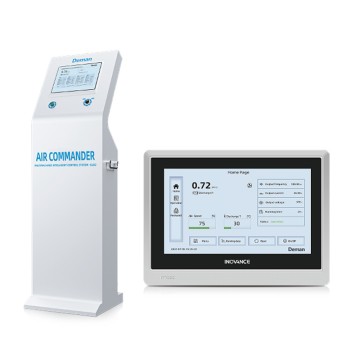
In large manufacturing facilities, multiple air compressors are often grouped into a centralized station. Traditionally, these machines operated independently, leading to pressure fluctuations and unnecessary energy waste. Intelligent central control systems, such as Deman's "Air Commander," coordinate the operation of multiple units. By distributing the load intelligently and ensuring only the required capacity is online, central control can reduce station energy consumption by an additional 5% to 15%.
Approximately 94% of the electrical energy supplied to an air compressor is converted into heat. In two-stage systems, the heat generated during the first stage of compression is normally rejected via the intercooler. Modern industrial plants are increasingly utilizing heat recovery units to capture this thermal energy. This recovered heat can be used to generate hot water for space heating, boiler preheating, or sanitary use, significantly improving the overall thermal efficiency of the entire manufacturing facility.
Explore our comprehensive range of high-efficiency compressors and control systems designed for precision manufacturing tasks.