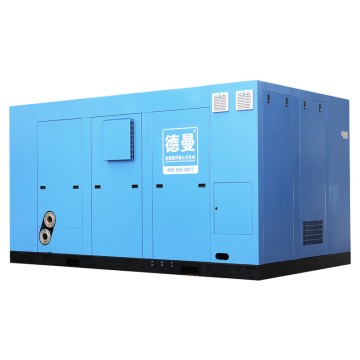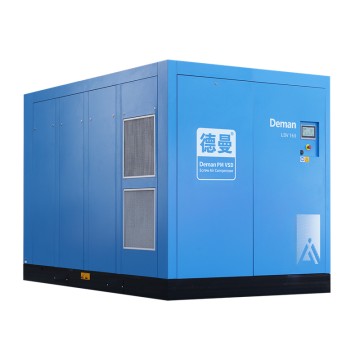
Leave Your Message
Explore our flagship two-stage compression solutions engineered for high-demand industrial environments — precision-built, energy-certified, and ready to transform your plant operations.
As global energy prices continue to rise and carbon neutrality commitments intensify, industrial plants worldwide are under unprecedented pressure to reduce compressed air energy consumption — which typically accounts for 20–40% of total plant electricity use.
Two-stage compression air compressors divide the compression process into two sequential stages with intermediate cooling between them, dramatically reducing the thermodynamic work required to achieve the same discharge pressure. The result: measurable, sustained energy savings on every operating hour.
According to the International Energy Agency (IEA) and industry benchmarks, switching from conventional single-stage systems to two-stage compression technology can yield energy savings of 10–18%, while also extending mechanical component life and improving air quality — making it one of the highest-ROI upgrades available to plant managers today.
Industry Insight: The global industrial air compressor market is projected to exceed USD 16.4 billion by 2030, with two-stage and variable-speed drive (VSD) compressors commanding the fastest growth segment — driven by mandatory energy efficiency regulations in the EU, China, and North America.
Six compelling engineering and operational reasons why leading industrial plants are making the switch to two-stage air compression systems.
By splitting compression into two stages with intercooling, the air temperature is reduced before the second stage, minimising compression work. Combined with PM VSD drive technology, plants achieve dramatic reductions in specific power consumption (kW/m³/min).
Intercooling between stages keeps discharge temperatures significantly lower than single-stage equivalents — protecting lubricant quality, extending seal life, and reducing heat rejection load on your facility's cooling infrastructure.
Reduced thermal and mechanical stress on rotors, bearings, and seals translates directly into longer mean time between failures (MTBF), lower maintenance costs, and minimised unplanned downtime for production-critical operations.
Two-stage designs deliver more stable and consistent pressure output across varying load conditions, ensuring that precision manufacturing processes — from laser cutting to pharmaceutical packaging — receive uninterrupted, quality-regulated compressed air.
Modern two-stage compressors from Deman integrate AI-powered "Air Commander" central control systems that dynamically adjust output based on real-time demand, enabling multi-machine coordination, remote monitoring, and predictive maintenance alerts.
Energy savings directly translate to CO₂ reduction. Facilities adopting two-stage PM VSD compressors can document measurable carbon emission reductions — critical for ESG compliance reporting, green building certifications, and carbon trading programmes.
The two-stage compression landscape is evolving rapidly. Here are the five macro-trends reshaping procurement decisions for plant managers and energy engineers globally.
Governments across the EU (Ecodesign Directive), China (GB 19153 energy efficiency standards), and the US (DOE compressor rules) are tightening minimum efficiency requirements. Two-stage PM VSD compressors are positioned as the compliance-ready solution for the next decade, and increasingly required for government procurement contracts and export market access.
Industry 4.0 is driving demand for compressors that communicate with SCADA, MES, and ERP systems via Modbus, PROFIBUS, or cloud APIs. Two-stage systems with digital controllers are enabling real-time energy dashboards, automated demand response, and integration with broader plant energy management systems (ISO 50001).
Up to 94% of the electrical energy input to a compressor can be recovered as usable heat. Leading industrial plants are now pairing two-stage compressors with heat recovery units to pre-heat process water, space heating, or industrial drying operations — transforming an energy cost into an energy asset with payback periods often under 2 years.
In pharmaceuticals, food and beverage, and electronics manufacturing, oil-free two-stage compression is experiencing double-digit annual growth as facilities prioritise air purity (ISO 8573-1 Class 0). Advanced water-injected and dry-running two-stage screw designs are eliminating contamination risk without sacrificing energy performance.
A growing number of industrial buyers are shifting from capital expenditure to operational expenditure models — paying per cubic metre of compressed air delivered. This model, pioneered by leading compressor OEMs, aligns supplier incentives with customer energy efficiency goals and is accelerating adoption of premium two-stage technology in cost-sensitive SME markets.
Supply chain sustainability pressures from OEMs like automotive and aerospace manufacturers are cascading down to tier-2 and tier-3 suppliers. Factories need documented energy performance data on every utility system — and two-stage compressors with energy monitoring outputs are becoming a prerequisite for supplier qualification in green supply chains.
Two-stage compression air compressors deliver measurable performance advantages across diverse industrial sectors. Explore how specific industries are leveraging this technology for competitive advantage.
High-pressure, ultra-dry compressed air is the lifeblood of fibre laser cutting systems operating at 6–16 bar. Two-stage compressors maintain the consistent pressure and air quality (dew point ≤ -40°C) needed to achieve clean cut edges at maximum feed speeds, reducing consumable costs and rework rates while processing stainless steel, aluminium, and carbon steel.
Sterile compressed air for tablet coating, blister packaging, and clean-room pneumatic conveyance demands ISO 8573-1 Class 0 oil-free air. Two-stage oil-free compressors paired with refrigerated and desiccant dryers eliminate contamination risk, satisfy FDA and GMP audit requirements, and deliver the reliability needed for continuous 24/7 production campaigns.
Body-in-white robotic welding, pneumatic torque tools, and high-volume spray paint booths require large volumes of stable, moisture-free compressed air at 7–10 bar. Two-stage VSD compressors dynamically match output to production line cycling patterns, eliminating pressure fluctuations that cause paint defects and delivering 15–20% energy savings versus fixed-speed alternatives.
PCB manufacturing, SMT pick-and-place lines, and semiconductor wafer handling require ultra-pure, particle-free compressed air at precise pressures. Two-stage compression with advanced filtration provides the stable low-pressure supply (3–6 bar) and exceptional air purity required for these precision processes, protecting sensitive components from contamination-induced failure.
PET bottle blowing requires extremely high-pressure two-stage compression (up to 40 bar), while pneumatic conveying, filling, and capping operations run at medium pressure. Two-stage technology spans this range efficiently, with oil-free variants ensuring HACCP compliance, preventing product contamination, and supporting uninterrupted high-speed production.
Process air for oxidation reactions, instrument air for control valves, and purge air for hazardous area equipment demand exceptional reliability and ATEX-compliant engineering. Two-stage compressors in this sector deliver high availability (≥99.5% uptime), precise pressure regulation, and robust construction suitable for harsh chemical plant environments.
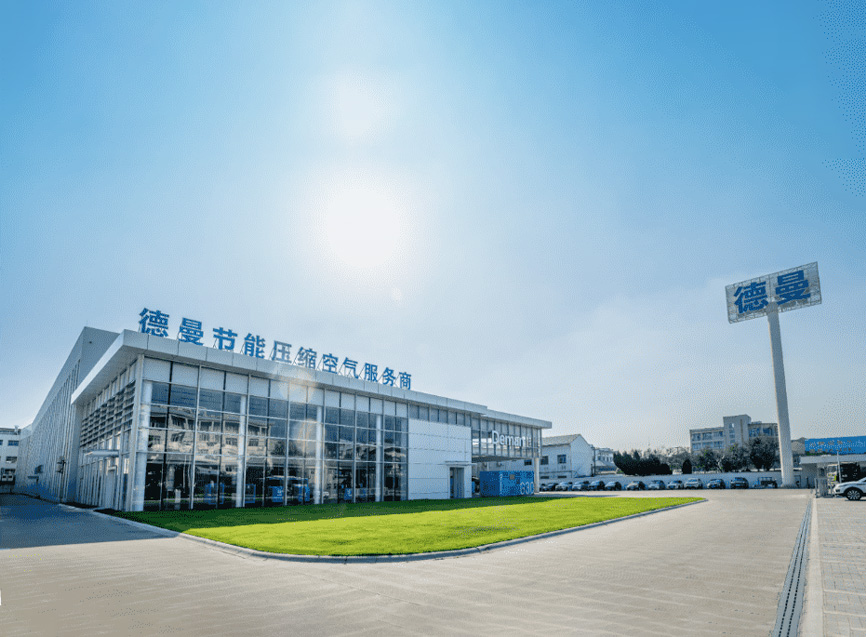
Founded in 1998, Deman has been at the forefront of the air compressor industry by leading energy-saving initiatives in China. We are the primary drafter of China's industry standards for VSD Oil-injected (JB/T10972) and PM VSD Screw Air Compressors (JB/T 13345-2017).
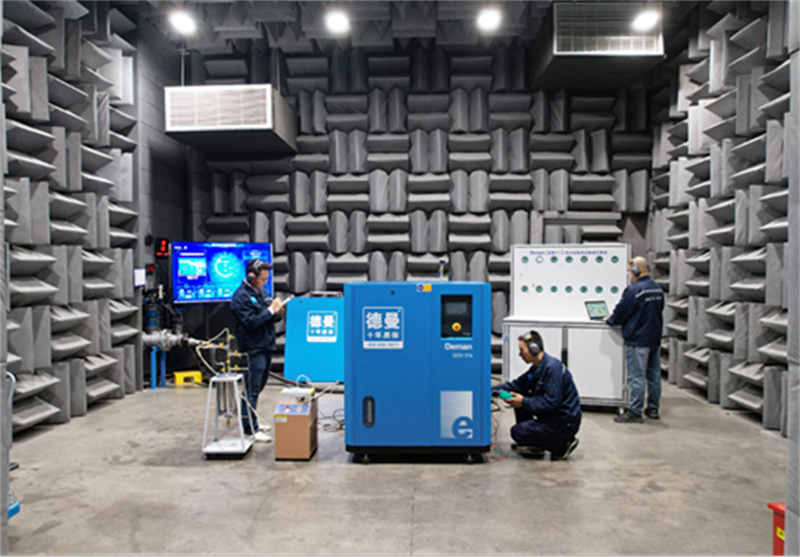
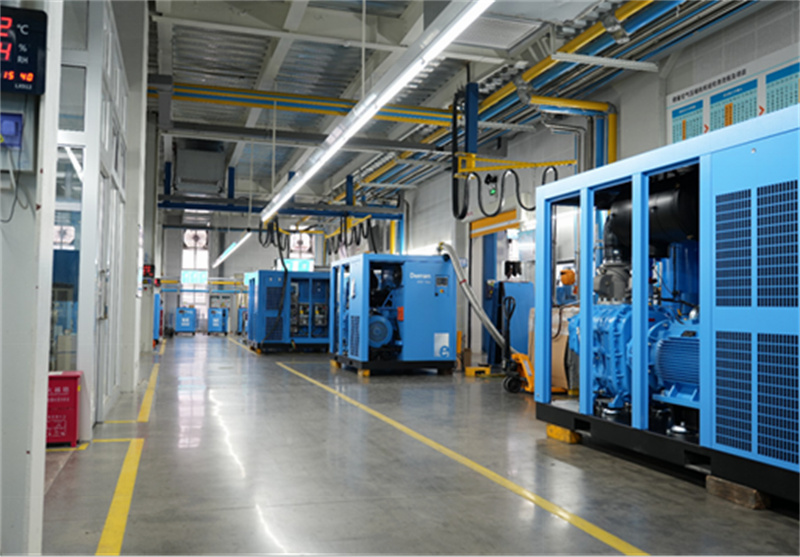
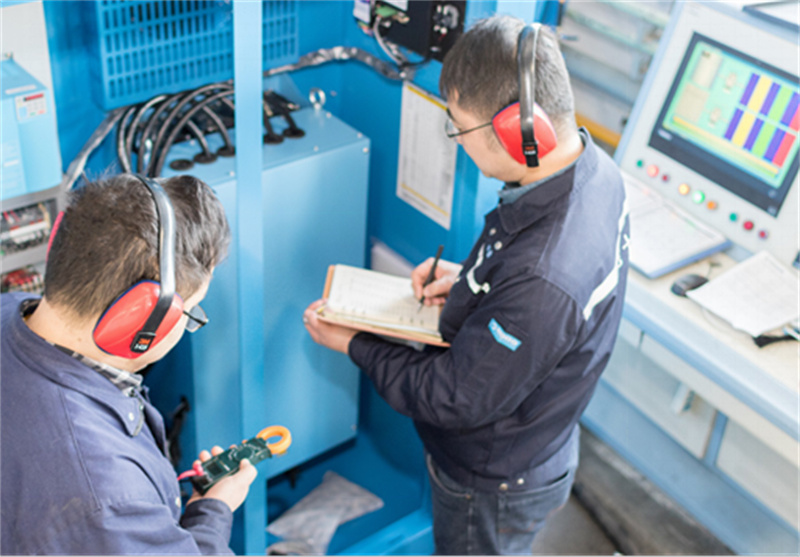
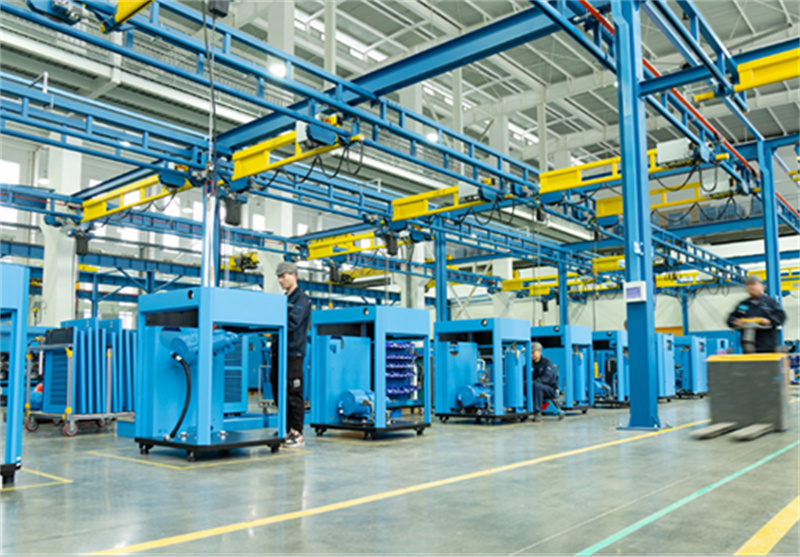
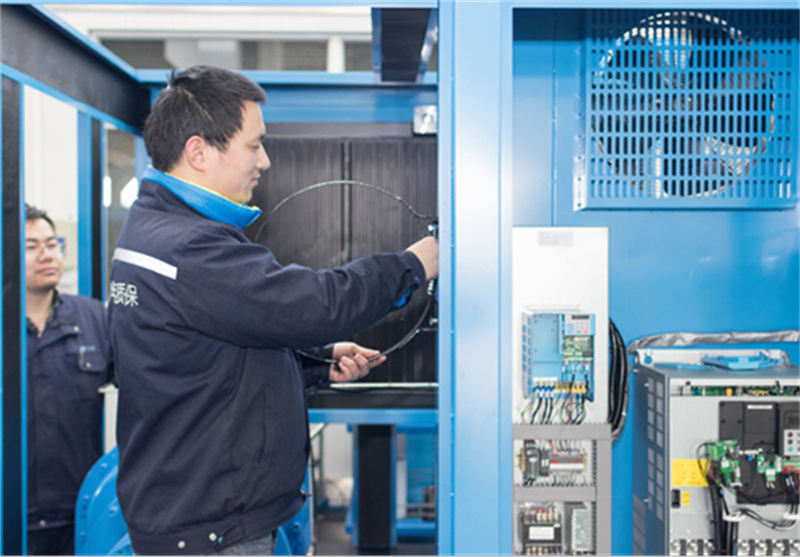
As a China National High-tech Enterprise, Deman has integrated capabilities in R&D, manufacturing, sales, and service. We have a robust R&D team of over 140 technical professionals. Our factory, based in Ningbo, China, is ISO9001:2015, ISO14001:2015, and ISO45001:2018 certified. Our product testing process strictly adheres to ASME and ISA1932 standards to ensure the delivery of safe and reliable compressors.
Step inside Deman's world-class manufacturing and R&D facilities — where every two-stage air compressor is engineered, tested, and validated to the highest global standards.
We follow a proven six-end solutions framework to create infinite value for clients' efficient use of two-stage compressed air — from initial planning through to continuous operational optimisation.
"No planning, no machine selling." We make sure to understand the air pressure, air flow, and air quality requirement of each air use terminal at the client's factory before selling anything. When most customers want to spend less for a better machine, we think it is necessary to invest time in planning, to avoid mismatched systems that can reduce production efficiency.
Applying "Three-dimensional Customization" — meaning customise the compressor station in terms of air pressure, air flow, and air quality requirements. By selecting the best combination of Deman two-stage air compressors + air dryers + heat recovery unit + "Air Commander" central control system, we ensure customers not only have improved production quality, but also reduced energy consumption.
In order to make customers' life easier, we established a professional team for designing and installing air pipe networks using Deman energy-saving aluminium alloy or stainless-steel green air pipe. Our scientific design, green materials, and professional installation ensure efficient air transmission with minimal pressure drop across the entire plant distribution network.
Air quality directly impacts production quality. Deman integrates precision filtration, refrigerated drying, desiccant drying, and condensate management systems tailored to each application's ISO 8573-1 air purity class requirement — ensuring that the clean, dry, oil-free air your processes demand is consistently delivered at every point of use.
Properly sized air receivers and intelligent "Air Commander" monitoring platforms buffer demand peaks, eliminate pressure drops during production surges, and provide granular visibility into system performance. Real-time energy consumption data enables continuous optimisation and supports ISO 50001 energy management system compliance reporting.
Our service commitment extends far beyond installation. Deman provides predictive maintenance contracts, remote diagnostics, energy auditing, and system upgrade consultancy — ensuring that your two-stage compression investment continues to deliver peak efficiency and reliability throughout its entire operational lifespan of 20+ years.
From two-stage screw compressors and PM VSD drives to AI-powered quad-screw systems and magnetic levitation centrifugal compressors — Deman offers the most comprehensive portfolio of energy-efficient compressed air technology for modern plant operations.
Connect with Deman's expert engineering team today for a free compressed air system audit, energy savings projection, and customised two-stage compressor solution for your specific plant operations.
Get a Free Energy Audit →