
Leave Your Message
Engineered to sustain continuous pressure stability without thermal derating in demanding industrial mechanical environments.
Heavy manufacturing, metallurgy, automotive stamping, and heavy mechanical infrastructure cannot tolerate pressure drops, oil aerosols, or thermal breakdown.
In contemporary manufacturing ecosystems, compressed air is globally recognized as the fourth utility behind electricity, water, and natural gas. However, within heavy-duty mechanical operations—such as structural steel rolling, high-tonnage pneumatic forging presses, precision multi-axis CNC machine cells, robotic shot peening, and shipyard refits—the operational profile departs radically from light commercial use. A machine labeled as a reliable air compressor for heavy-duty mechanical work must deliver continuous volumetric output (CFM) under severe, non-stop 100% duty cycles without catastrophic thermal derating or pressure oscillations.
Industrial statistics indicate that compressed air accounts for approximately 10% to 15% of total industrial electrical consumption across heavy machine factories. In large-scale installations, over 75% of an air compressor's lifecycle cost is direct electricity expenditure, while capital purchase and ongoing maintenance represent just 12% to 13% each. Consequently, mechanical plants are executing rapid operational shifts away from traditional fixed-speed asynchronous compressor configurations toward dual-stage compression, ultra-efficient Permanent Magnet Variable Speed Drive (PM VSD) systems, and AI-enabled dynamic air management.
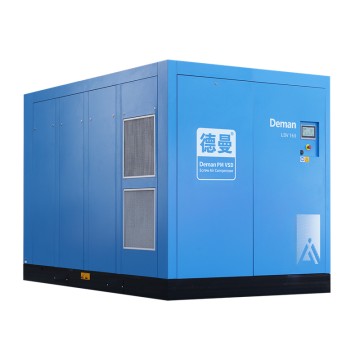
High-torque mechanical tools require uninterrupted volumetric displacement. Oversized helical rotors running at low RPM mitigate thermal friction and mechanical shear, eliminating heat-induced emergency shutdowns.
Heavy duty workshops operate with erratic air demands—fluctuating rapidly between high-flow sandblasting lines and intermittent torque tools. PM VSD instantly matches motor output to real-time consumption, eliminating idling loss.
Protecting sensitive multi-axis pneumatic tool changers and pneumatic actuators from oil contamination, moisture-induced corrosion, and particulate wear through multi-stage coalescing filtration and integrated VSD drying.
Where continuous pneumatic delivery governs plant throughput, mechanical precision, and workforce safety.
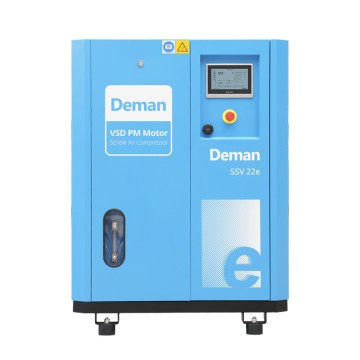
In high-speed automotive stamping and body assembly plants, compressed air operates high-cycle pneumatic clamping fixtures, sheet metal destackers, robotic spot-welding guns, and transfer presses. A transient drop in header pressure below 6.0 bar can cause pneumatic robotic arms to lose synchronization or fail clamping safety interlocks, triggering immediate assembly line stoppage. Deman's GGVe and SSVe series ensure an unwavering baseline pressure of 8.0 to 10.0 bar, utilizing smart micro-second algorithm adjustments that keep line pressure fluctuations strictly within ±0.01 MPa.
Heavy foundry operations subject air compressors to brutal atmospheric conditions characterized by high ambient temperatures, abrasive quartz dust, and continuous mechanical vibration. Conventional compressors suffer premature intake filter clogging, lubrication breakdown, and rotor scoring. Heavy-duty mechanical work in this sector demands heavy-duty industrial centrifugal or high-mass twin-screw configurations fitted with oversized pre-filtration modules, high-efficiency oil separators, and high-temp synthetic lubricants capable of sustaining continuous 45°C ambient operating temperatures without degradation.
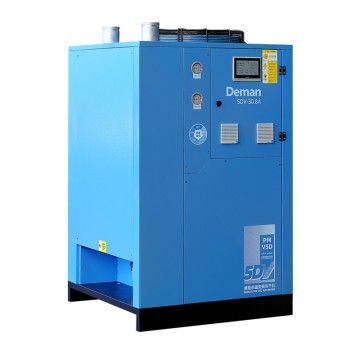
Modern 5-axis aerospace machining centers rely on compressed air not only for pneumatic tool clamping mechanisms and indexers but also for continuous positive-pressure spindle air sealing and micro-lubrication (MQL) mist delivery. Any atmospheric moisture or micron-scale particulate matter carried in the air line will corrode ultra-precision spindle bearings operating at 24,000+ RPM, resulting in thousands of dollars in spindle rebuilding costs. Utilizing Deman integrated PM VSD packages with downstream 5DV refrigerated drying units guarantees Class 4 or higher air quality (ISO 8573-1 standards), ensuring dry, oil-free barrier air.
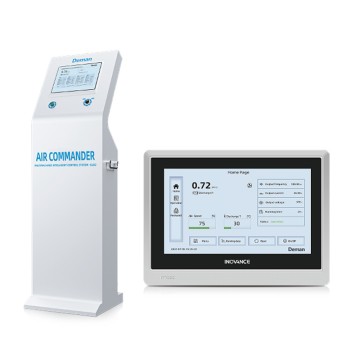
Shipbuilding operations involve round-the-clock structural steel preparation, including intense grit blasting, automated thermal plasma cutting assist, and the simultaneous operation of dozens of 1-inch drive pneumatic impact wrenches. Air delivery in shipyards requires massive CFM output under high line friction across extensive pipe headers. Centrally orchestrated compressor networks managed by the Air Commander Central Control System dynamically stage multiple air compressors to balance duty hours, eliminate blow-off wastage, and sustain steady high-CFM airflow to the dry docks.
Pioneering energy conservation, drafting national standards, and delivering world-class mechanical reliability since 1998.
Founded in 1998, Deman has been at the forefront of air compressor industry by leading the energy-saving initiatives in China. We are the primary drafter of China's industry standards for VSD Oil-injected (JB/T10972) and PM VSD Screw Air Compressors (JB/T 13345-2017).
As a China National High-tech Enterprise, Deman has integrated capabilities in R&D, manufacturing, sales, and service. We have a robust R&D team of over 140 technical professionals. Our factory, based in Ningbo, China is ISO9001:2015, ISO14001:2015, and ISO45001:2018 certified. Our product testing process strictly adheres to ASME and ISA1932 standards to ensure the delivery of safe and reliable compressors.
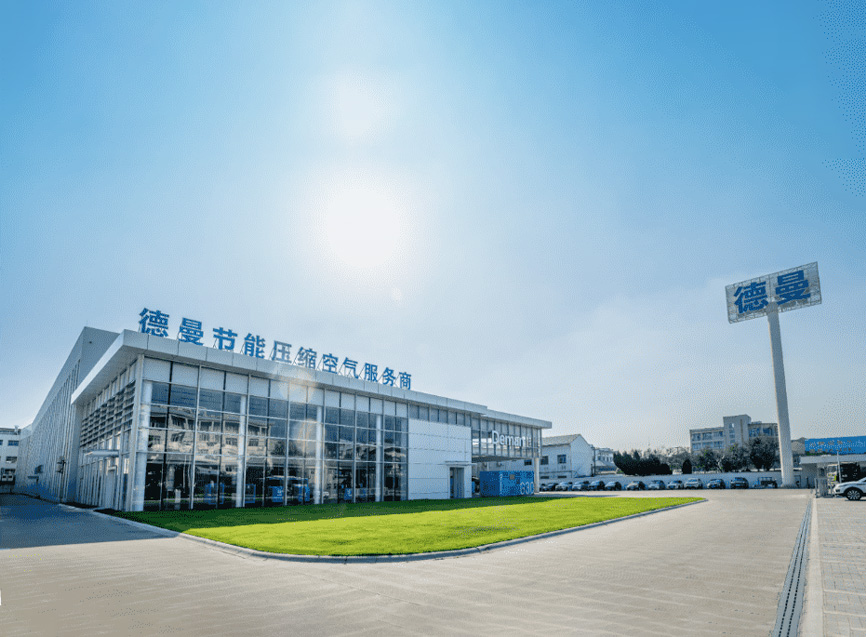
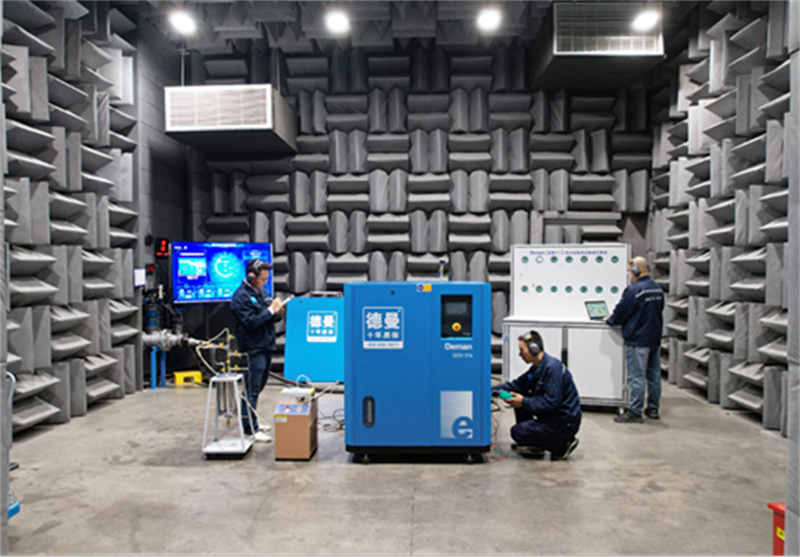
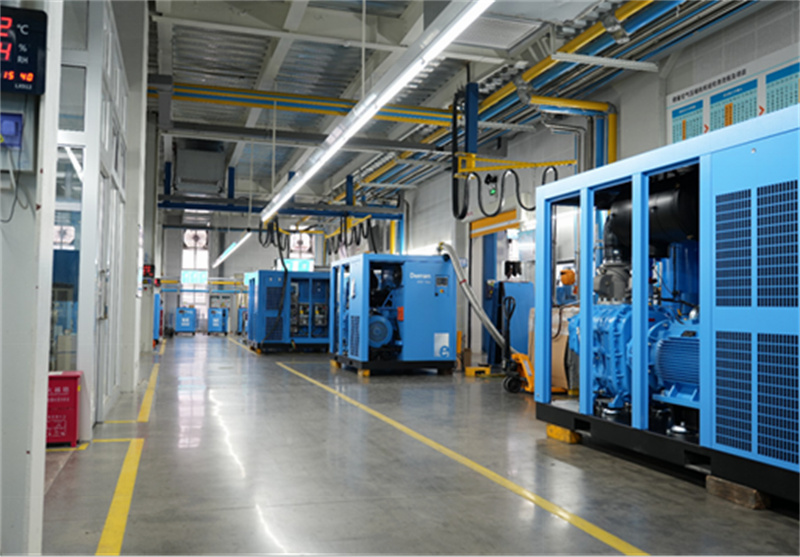
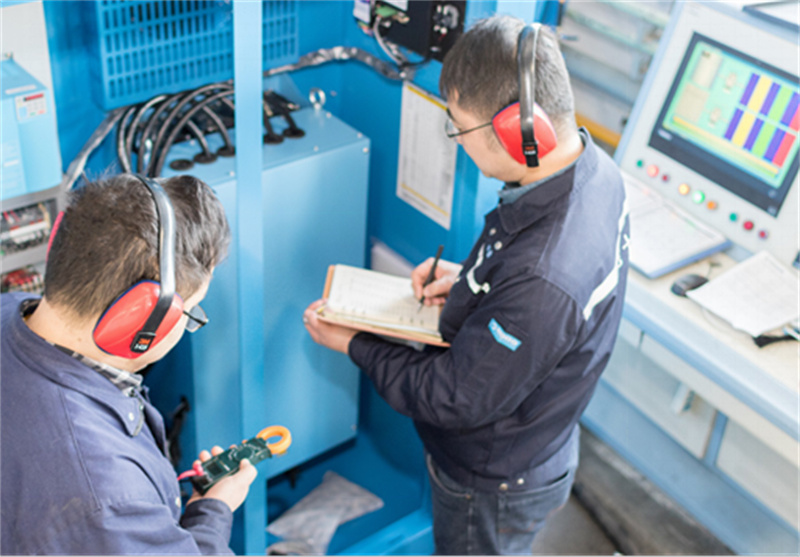
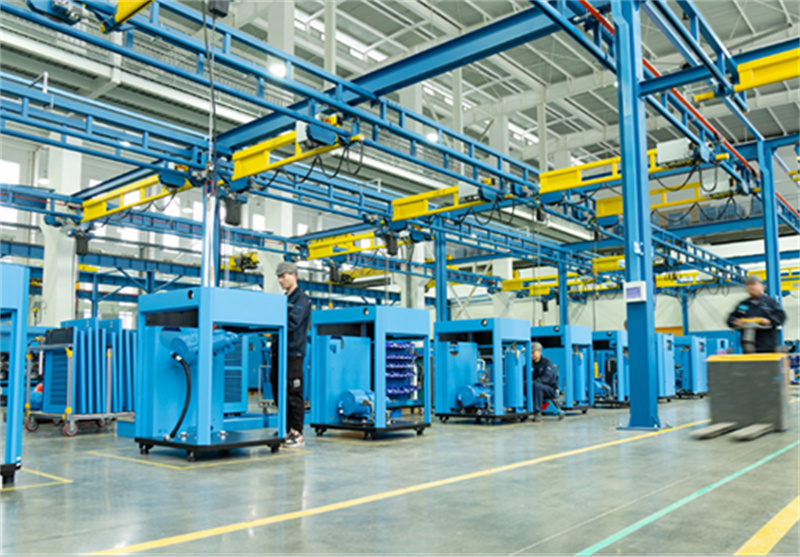
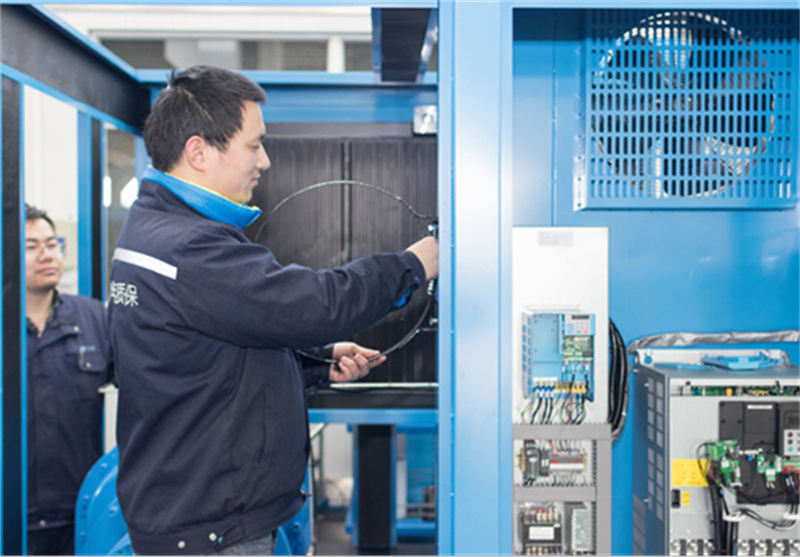
We follow six-end solutions to create infinite value for client's efficient use of compressed air across heavy industrial operations.
"No planning, no machine selling". We make sure to understand the air pressure, air flow, and air quality requirement of each air use terminal at client's factory, before selling anything. When most customers want to spend less for a better machine, we think it is necessary to invest time in planning, to avoid mismatched system that can reduce production efficiency.
Applying "Three-dimensional Customization", meaning customize the compressor station in terms of air pressure, air flow, and air quality requirements. By selecting the best combination of Deman air compressors + air dryers + heat recovery unit + "Air Commander" central control system, we make sure customers not only has improved production quality, but also reduced energy consumption.
In order to make customers' life easier, we established a professional team for designing and installing air pipe networks using Deman energy-saving aluminum alloy or stainless-steel green air pipe. Our scientific design, green materials, and professional installation ensures efficient air transmission with minimal pressure drop.
From responsive IoT telemetry to magnetic levitation and zero-loss thermal recovery.
In modern high-output factories, unplanned compressor downtime costs tens of thousands of dollars per hour. Emerging solutions integrate real-time vibration spectral analysis, oil degradation sensors, and thermal infrared monitoring directly on the rotor bearings. AI algorithms analyze micro-fluctuations in current draw and bearing vibration frequencies, alerting engineers to mechanical cavitation or bearing race wear hundreds of operating hours prior to component failure.
During mechanical compression, roughly 90% to 94% of electrical input energy is converted into heat and rejected into the atmosphere through oil coolers and aftercoolers. Progressive heavy industrial facilities integrate plate heat exchangers into their Deman screw compressors to harvest this thermal discharge. The recovered hot water (65°C to 80°C) is utilized for pre-heating boiler feedwater, industrial parts washing, paint shop cure ovens, or factory space heating, cutting total facility carbon footprints dramatically.
For large-scale industrial parks requiring steady baseloads surpassing 50 to 150 m³/min, Magnetic Levitation Centrifugal Air Compressors offer completely frictionless operation without lubricating oil. By floating the shaft on an active magnetic bearing cushion, mechanical wear is completely designed out of the air-end, offering decades of continuous duty with zero oil carryover, ultra-low acoustic signatures, and unrivaled lifetime energy savings.
Engineered for uncompromising duty cycles, maximum energy efficiency, and certified industrial longevity.
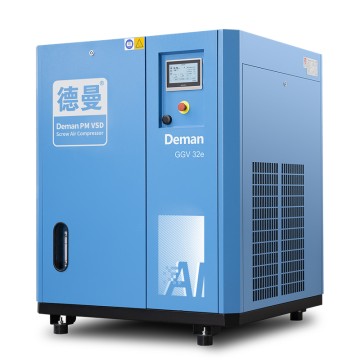

Answers to critical questions regarding system sizing, pressure drop mitigation, and air purity in heavy mechanical plants.
A frequent error in industrial station planning is calculating air consumption by simply adding tool nameplate CFM ratings. In heavy mechanical facilities, one must calculate using a Simultaneous Usage Factor (Diversity Factor) combined with an Operating Duty Cycle multiplier. Furthermore, an allowance of 10% to 15% must be provisioned for line friction losses and future machinery expansion. Operating a compressor constantly at 100% capacity produces elevated internal operating temperatures; selecting an adequately sized Deman PM VSD compressor allows the machine to modulate smoothly between 40% and 85% load, which represents the optimal thermodynamic efficiency zone.
While piston compressors remain common for intermittent vehicle workshops, they have a restricted duty cycle (typically 50% to 60%) to prevent valve overheating and piston ring seizure. For continuous heavy-duty mechanical manufacturing, rotary screw technology delivers 100% continuous duty cycle operation. The constant positive displacement mechanism with fluid-cooling eliminates cyclic thermal exhaustion, reduces noise emissions from over 85 dB(A) to under 68 dB(A), and delivers significantly lower oil carryover into delicate automation components.
Traditional black iron or galvanized steel pipe is vulnerable to internal oxidation, scale flaking, and rough friction coefficients. Over time, internal rust clogs in-line filter bowls and restricts pneumatic flow, creating severe pressure drops across long production floors. Deman advocates for energy-saving, smooth-bore aluminum alloy or stainless steel green piping networks. These systems exhibit an exceptionally low Darcy friction factor, guarantee zero corrosion byproduct contamination, and preserve dynamic header pressure directly to the mechanical workstation.