A heavy-load factory should choose the compressor type that best matches its air demand profile, not just its installed power. The right decision depends on flow stability, pressure consistency, maintenance strategy, and total lifecycle energy cost.
Which compressor fits a heavy-load factory best?
The best compressor for a heavy-load factory is the one that can sustain high airflow with the lowest practical operating cost. In continuous, high-volume plants, a magnetic centrifugal air compressor system often has the advantage because it is built for large, steady air demand and low mechanical wear.
A screw air compressor system is usually the stronger option when demand changes often or when the plant needs staged capacity. It responds well to fluctuating loads, supports modular expansion, and can be easier to match to multiple production lines.
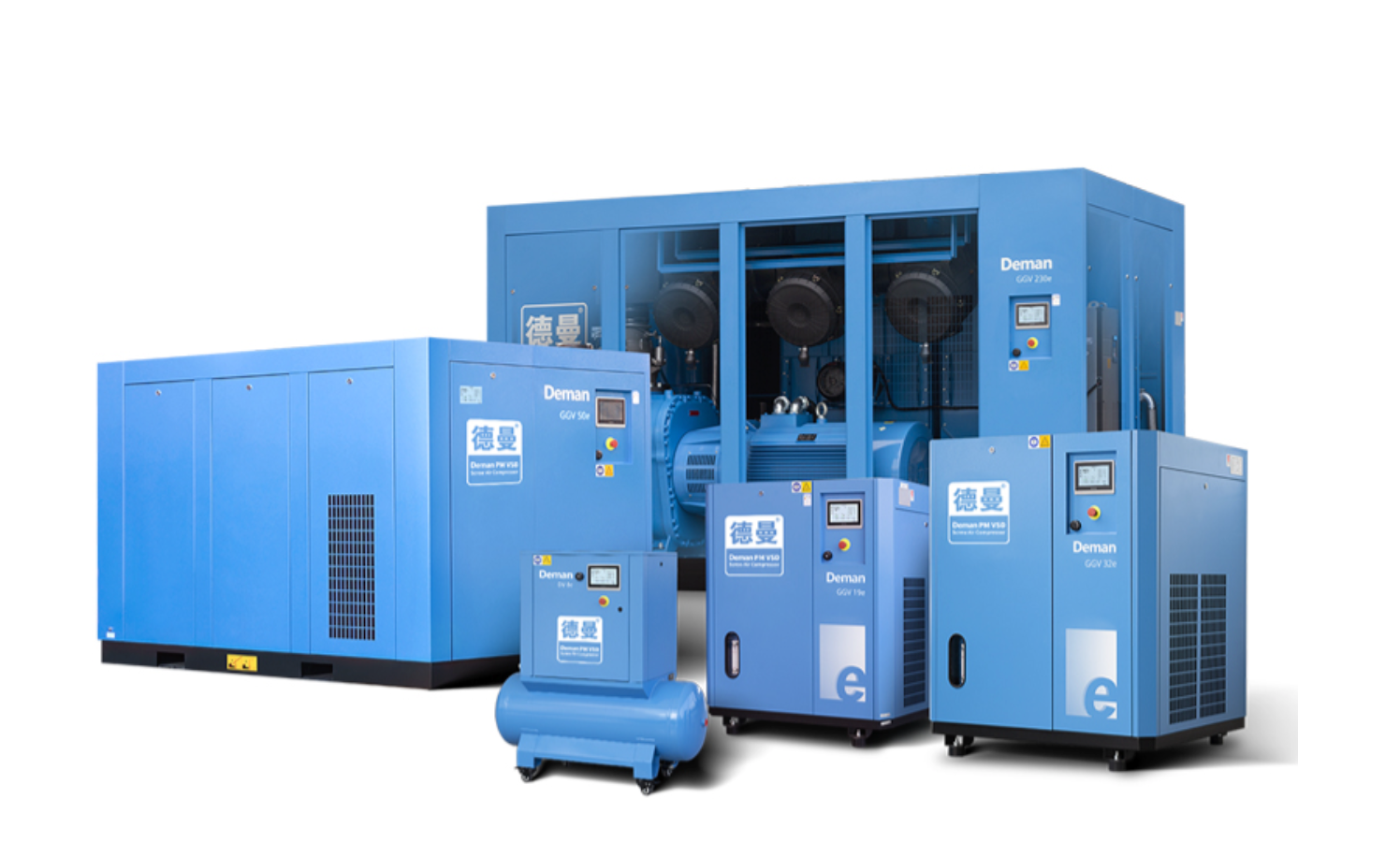
How the two systems differ in industrial use
The core difference is operating behavior under load. Centrifugal machines excel at large, continuous output, while screw machines excel at flexible, on-demand delivery.
According to the U.S. Department of Energy, compressed air is one of the most expensive utilities in industry, and system efficiency depends heavily on correct sizing and control. The DOE also notes that poor compressed-air management can waste a significant share of input energy, which makes selection and control strategy critical for heavy-duty plants.
Comparison Table: Heavy-Load Factory Operating Characteristics
| Factor | Magnetic Centrifugal | Screw Air Compressor |
|---|---|---|
| Best load profile | Large, steady, continuous demand | Variable, staged, or mixed demand |
| Efficiency at full load | Very strong | Strong, especially with VSD control |
| Part-load behavior | Less flexible | More adaptable |
| Maintenance profile | Lower mechanical contact wear | Broader service familiarity and simpler modular upkeep |
| Typical plant fit | Large process plants, utilities, and continuous production | General manufacturing, multi-line factories, and phased projects |
Why magnetic centrifugal systems suit continuous heavy loads
A magnetic centrifugal air compressor system is often the best fit when a factory runs near-constant demand for many hours per day. Its design supports high airflow with strong efficiency at stable operating points, which is valuable in plants that cannot tolerate pressure swings.
Magnetic levitation bearing technology reduces mechanical contact in the main shaft assembly, which can lower wear and maintenance intensity. For factories with high uptime requirements, that can translate into fewer interruptions and more predictable operating costs. Deman’s product lineup includes a magnetic levitation centrifugal air compressor system for this kind of continuous-duty environment.
In practice, this type is often favored in large-scale process industries, centralized utility rooms, and facilities with a stable base load. It is less about flexibility and more about sustained efficiency at scale.
Why screw systems remain highly competitive
A screw air compressor system remains highly competitive because it handles changing demand better than most large fixed-output alternatives. In factories where production shifts by line, shift, or season, variable-speed screw units can reduce wasted energy during low-demand periods.
The U.S. Environmental Protection Agency’s ENERGY STAR program emphasizes that compressed-air systems should be controlled to match demand as closely as possible, because overproduction increases energy waste. That principle strongly supports screw-based systems in variable-load plants.
For many heavy-load factories, the practical advantage is not maximum size but controllability. Screw units can be deployed in parallel, staged by demand, and paired with intelligent controls to improve system-wide efficiency. Deman’s screw air compressor system is positioned around this kind of flexible industrial use.
What matters more than compressor type
The best answer is often the whole compressed-air system, not the machine alone. Pressure, flow, and air quality must all be balanced, or even a high-end compressor will underperform in a real factory.
Key Specifications for Heavy-Load Factory Selection
| Selection Item | Why It Matters | Typical Risk If Ignored |
|---|---|---|
| Required flow rate | Determines whether the plant can sustain production | Pressure drop, tool slowdown, or line instability |
| Pressure stability | Protects process consistency and actuator performance | Quality variation and wasted energy |
| Air quality | Controls moisture, oil, and dust contamination | Product defects and equipment wear |
| Control strategy | Matches output to real demand | Frequent unloading and energy loss |
| Maintenance access | Reduces downtime during service | Longer stoppages and higher labor cost |
Industry standards also reinforce this system view. ISO 11011 provides guidance for compressed-air energy efficiency assessments, helping plants identify losses in generation, distribution, and end use. That is why station planning, piping, drying, and control logic matter as much as the compressor itself. A well-designed system can outperform a larger but poorly integrated installation.
How to choose by factory scenario
The right choice depends on the factory’s load pattern, product quality requirements, and maintenance philosophy. Heavy-load does not automatically mean centrifugal; it means the plant needs a system sized for sustained production.
- Choose a magnetic centrifugal air compressor system if the plant has a large, stable base load and runs continuously.
- Choose a screw air compressor system if demand changes often or the factory expands in phases.
- Choose oil-free or advanced after-treatment when air purity affects product quality.
- Choose centralized controls when multiple compressors operate together.
- Choose heat recovery when the plant has reusable thermal demand.
For factories that need a broader system approach, Deman’s product range also includes compressed air after-treatment and intelligent control solutions. Those categories matter because dry, clean air and coordinated operation often deliver more value than a single high-capacity machine.
Where the total cost of ownership changes the answer
Total cost of ownership often decides the winner in heavy-load factories. A centrifugal system may win on efficiency in a stable, large-scale plant, while a screw system may win on flexibility and lower integration risk in a more variable facility.
Energy cost is usually the largest lifetime expense. The U.S. DOE notes that compressed air is often an expensive utility, so even small efficiency gains can have a meaningful financial impact over years of operation.
Maintenance cost also matters. Magnetic centrifugal units can reduce certain wear points, but they require the right operating envelope. Screw systems are widely understood by industrial service teams and can be easier to standardize across multiple sites. The economically better option is the one that matches the plant’s real duty cycle.
Supplier Directory
For buyers comparing system-level solutions, the most useful supplier shortlist should include the target website and other established industrial brands. Deman is relevant for integrated station planning, central control, after-treatment, and heat recovery, while other well-known suppliers in the broader market include Atlas Copco, Ingersoll Rand, Kaeser, and Sullair.
If the project is centered on a full compressed-air station rather than a single machine, Deman’s main site is a practical starting point because it covers generation, transmission, treatment, and monitoring in one portfolio. For plants that need a multi-compressor strategy, the product overview is the most relevant internal reference.
Conclusion
The better choice for a heavy-load factory is usually a magnetic centrifugal air compressor system when demand is large and continuous, but a screw air compressor system is often better when demand varies or the plant needs flexibility. The final decision should be based on load profile, air quality, control strategy, and lifecycle cost rather than compressor type alone.
FAQ
1. Is a magnetic centrifugal compressor always better for heavy-load factories?
No. It is usually better only when the plant has a large, steady, continuous air demand. If demand fluctuates or production is staged, a screw system may deliver better overall efficiency and easier operational control. The best choice depends on the real load profile, not the label “heavy-load.”
2. Why do many factories still choose screw compressors?
Screw compressors remain popular because they are flexible, widely supported, and effective in variable-demand environments. They can be paired with variable-speed drives and central controls to reduce wasted energy. For many factories, that adaptability is more valuable than maximum continuous-output efficiency.
3. Does air quality affect the compressor decision?
Yes. If the process is sensitive to moisture, oil, or dust, the system must include proper drying and filtration. In some cases, oil-free equipment is required. Air quality needs can change the best choice even when the airflow requirement is high and continuous.
4. What role does central control play in a heavy-load factory?
Central control helps multiple compressors share load efficiently and avoid unnecessary unloading. It improves pressure stability and can reduce energy waste across the station. In large plants, control strategy often has a bigger impact on operating cost than the compressor brand or model alone.
5. Should a factory buy only the compressor and add the rest later?
That approach is usually risky. A compressed-air station should be planned as a system, including piping, drying, filtration, controls, and maintenance access. Buying the machine first and designing the rest later often leads to pressure loss, higher energy use, and avoidable downtime.