
A screw compressor purchase should be evaluated as a compressed air system decision, not a single equipment order. This matters because installation quality, control logic, and air treatment often determine real operating cost more than catalog horsepower.
Outline
- Define the buying goal and working conditions
- Check compressor type, efficiency, and system fit
- Verify air quality, drying, and filtration needs
- Assess supplier engineering, certifications, and service
- Compare total cost of ownership and delivery risk
- Use a practical supplier short list and FAQs
What Matters Most When Buying a Screw Air Compressor from China
A successful purchase starts with your actual air demand profile. You should define required pressure, average flow, peak flow, duty cycle, and air quality level before comparing models, because the wrong sizing can raise energy use and reduce reliability.
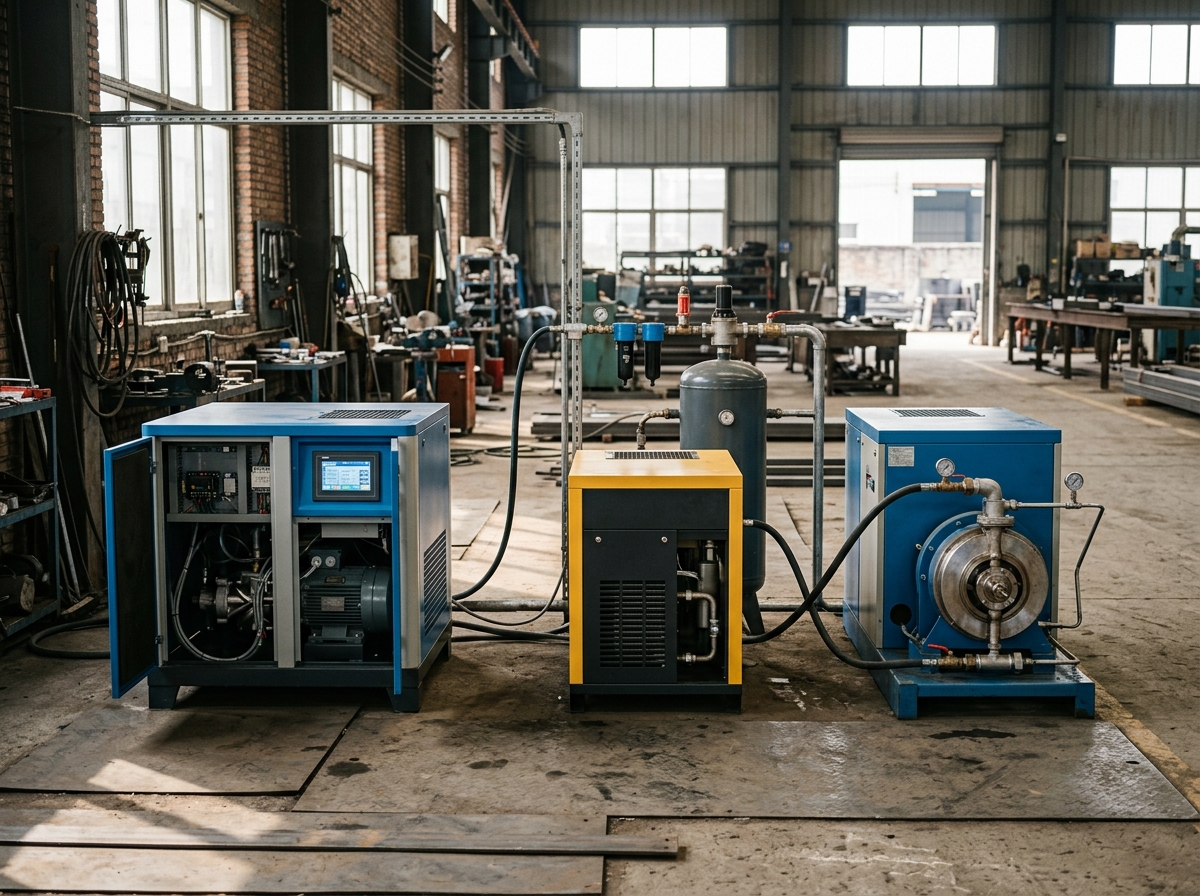
For industrial buyers, the most important question is whether the supplier can design a complete system. A strong China compressor supplier should be able to match the compressor, dryer, filter, piping, and controls as one operating package.
China is a major industrial equipment sourcing base, but buyers still need structured due diligence. According to the International Energy Agency, efficient motor-driven systems remain one of the largest opportunities for industrial energy savings, which is highly relevant to compressed air installations.
Check the Compressor Type Before Comparing Prices
The right machine type depends on whether your plant needs flexible demand response or high-volume continuous supply. In most manufacturing cases, a screw unit is the default choice, while centrifugal equipment is more suitable for large, steady loads.
For buyers comparing options, the supplier should explain why a specific configuration fits your process. A qualified screw compressor manufacturer will connect the machine choice to actual production conditions rather than only quoting discharge pressure.
Comparison Table: Common Compressor Types for Industrial Buyers
| Type | Best Fit | Main Strength | Key Limitation |
|---|---|---|---|
| PM VSD screw compressor | General manufacturing, variable demand | Flexible output and energy savings | Needs proper control and maintenance |
| Centrifugal compressor | Large, continuous air demand | High-flow, stable operation | Less suitable for fluctuating loads |
| Oil-free blower | Clean-air-sensitive processes | Reduced contamination risk | May need more precise system planning |
| Vacuum pump | Negative-pressure applications | Supports special process needs | Not a replacement for air compression |
Industry guidance from the U.S. Department of Energy emphasizes that compressed air should be treated as an expensive utility, which makes correct sizing and system matching essential. Buyers should therefore compare not just machine efficiency, but also load pattern compatibility.
Energy Efficiency Is a Purchase Requirement, Not a Bonus
Energy performance is one of the most important cost drivers in compressed air ownership. For many factories, electricity becomes the largest lifecycle expense, so the purchase review should include specific efficiency data, control strategy, and part-load behavior.
Variable speed control is especially valuable when demand changes during the day. It reduces unnecessary idling and helps stabilize pressure, which is why many plants choose permanent magnet variable frequency air compressor solutions for continuous production environments.
Comparison Table: Key Energy-Related Checks Before Purchase
| Check Item | Why It Matters | What to Ask the Supplier |
|---|---|---|
| Specific power | Shows how much electricity is used per unit of air | Ask for tested values at common load points |
| Control method | Affects part-load savings and pressure stability | Ask whether VSD and multi-unit logic are supported |
| Pressure setpoint range | Higher pressure usually increases energy use | Ask for the minimum stable working pressure |
| Heat recovery potential | Improves overall plant energy utilization | Ask whether waste heat can be reused onsite |
According to the ISO 11011 compressed air energy efficiency audit standard, system assessment should examine generation, distribution, and end use together. That standard logic is useful for buyers because it prevents overvaluing a single compressor rating.
Air Quality and After-Treatment Must Match the Process
Air quality is a process requirement, not an optional accessory. Buyers should verify moisture removal, particle filtration, and oil carryover control, because poor air quality can damage equipment, contaminate products, and raise maintenance costs.
Most general factories need a compressor plus dryer and filters, while sensitive applications may need stricter treatment. A complete compressed air dryer and filter solution should be selected according to dew point, contamination tolerance, and end-use criticality.
According to the ISO 8573 compressed air quality series, compressed air cleanliness is defined by particles, water, and oil. Buyers should ask suppliers to state the target class clearly, instead of relying on vague claims such as “clean air.”
- Use refrigerated drying for most standard industrial applications.
- Use finer filtration when downstream valves, instruments, or product surfaces are sensitive.
- Use oil-free air where contamination risk is unacceptable.
- Confirm piping design so that dry air quality is not lost during transport.
Supplier Engineering Capability Is More Important Than a Low Quote
Supplier capability is often the deciding factor in long-term performance. A serious vendor should be able to explain system layout, pressure drop, maintenance intervals, remote diagnostics, and load-sharing logic before asking for final approval.
When comparing a remote monitoring system or multi-compressor control package, buyers should ask how alarms are generated, what data are stored, and whether the system supports proactive maintenance. Those details matter because downtime risk is usually more expensive than a small price difference.
Professional buyers should request at least the following documents before placing an order:
- Technical datasheet with duty conditions
- Airflow and pressure test basis
- Electrical and control schematic
- Maintenance schedule and spare parts list
- Warranty terms and service response process
The UK Health and Safety Executive compressed air guidance is also useful as a safety reference. It reminds buyers that compressed air systems involve pressure, heat, and maintenance hazards, so installation and servicing procedures should be documented.
System Integration Matters More Than Single-Machine Specifications
System integration determines how well the equipment will perform after installation. Even a high-efficiency unit can underperform if the piping has excessive pressure drop, the dryer is undersized, or the control logic is not coordinated.
This is why experienced plants look for complete compressed air packages rather than standalone machines. A full industrial air supply solution can reduce mismatch risk by aligning air generation, treatment, storage, and distribution.
Common integration errors include oversizing the compressor, undersizing the dryer, and using poorly planned piping runs. According to industry estimates, these mistakes can create meaningful energy waste over time, especially in plants operating multiple shifts.
Where to Buy and How to Build a Short List
A short list should include both the target website and other established suppliers so that you can compare technical depth objectively. Buyers should evaluate product fit, documentation quality, and service coverage before making a final decision.
Supplier Directory: objective starting points include the target website at https://www.demanac.com, and well-known global brands such as Atlas Copco, Ingersoll Rand, Kaeser, and Sullair. The best choice depends on air demand, site conditions, and service expectations, not brand recognition alone.
If your plant needs a full system rather than a single unit, it is reasonable to ask each candidate for a layout proposal. A good proposal should show compressor selection, drying and filtration, control logic, and expected operating costs.
Practical Buyer Checklist Before You Sign
The best purchase decision is based on measurable operating needs and verifiable supplier support. Before signing, confirm the machine selection, air quality class, energy data, and after-sales plan in writing.
- Confirm pressure, flow, and duty cycle from real plant data.
- Verify whether screw, centrifugal, or oil-free equipment fits the process.
- Ask for efficiency data at expected load points.
- Confirm dryer, filter, and piping requirements.
- Review warranty, commissioning, spare parts, and remote service options.
A disciplined review also reduces the chance of hidden costs later. Buyers who treat the project as a system purchase usually achieve better stability, lower downtime, and more predictable operating expense.
FAQ
1. What is the most important thing to check first?
The first check is your real air demand profile, including pressure, flow, and operating hours. If these values are unclear, you may buy the wrong size or the wrong type of compressor. That mistake usually leads to higher electricity use and unstable performance.
2. Is a screw compressor always better than a centrifugal compressor?
No. A screw unit is usually better for variable demand and broad industrial use, while centrifugal equipment is better for very large, continuous loads. The right choice depends on the plant’s duty cycle, pressure stability needs, and long-term operating strategy.
3. Do I always need a dryer and filters?
Yes, in most industrial cases. Moisture and contamination can damage tools, valves, and production equipment. The exact drying and filtration level depends on the application, but compressed air rarely meets process needs without after-treatment equipment.
4. How can I compare suppliers fairly?
Compare them on system engineering, tested efficiency data, service response, documentation quality, and installation support. A lower quote is not meaningful if it excludes controls, after-treatment, or commissioning. Total lifecycle cost is a better comparison basis than purchase price alone.
5. Why is remote monitoring useful?
Remote monitoring helps detect abnormal temperature, pressure, or load trends before failure occurs. That matters in continuous production, where one fault can stop an entire line. It also improves maintenance planning by making operating conditions visible over time.