










What Is a Rotary Screw Compressor and How Does It Work?
Rotary screw compressors are highly efficient, positive-displacement machines that utilize a pair of meshing helical screws to compress air continuously. This comprehensive guide explains the fundamental engineering principles, operational mechanics, and strategic industrial applications of industrial rotary screw air compressors. Understanding these systems helps modern facilities optimize their continuous-duty pneumatic operations and improve overall energy efficiency.
What Is an Industrial Rotary Screw Air Compressor?
An industrial rotary screw air compressor is a mechanical device designed to deliver a continuous flow of compressed air for heavy-duty applications. Unlike reciprocating piston systems that rely on a pulsing motion, these units utilize dual intermeshing helical rotors to decrease volume and raise air pressure. This continuous operational design minimizes mechanical vibration, reduces heat generation, and ensures a dependable supply of compressed air.
Industrial manufacturing facilities prioritize heavy-duty rotary screw compressors because these systems operate reliably at 100% duty cycle. The continuous compression process eliminates the traditional cool-down periods required by standard piston models. Consequently, businesses seeking efficient air plant optimization integrate these machines to maintain uniform pneumatic pressure across complex automated assembly lines.
| Feature | Rotary Screw Compressor | Reciprocating Piston Compressor |
|---|---|---|
| Duty Cycle | 100% Continuous Duty | 60%–70% Intermittent Duty |
| Airflow Output | Smooth, Continuous Flow | Pulsating Flow |
| Noise Level | 60–75 dBA (Low) | 80–95 dBA (High) |
| Oil Carryover | Low (<3 ppm for lubricated) | High |
The Internal Mechanisms: How Does a Rotary Screw Compressor Work?
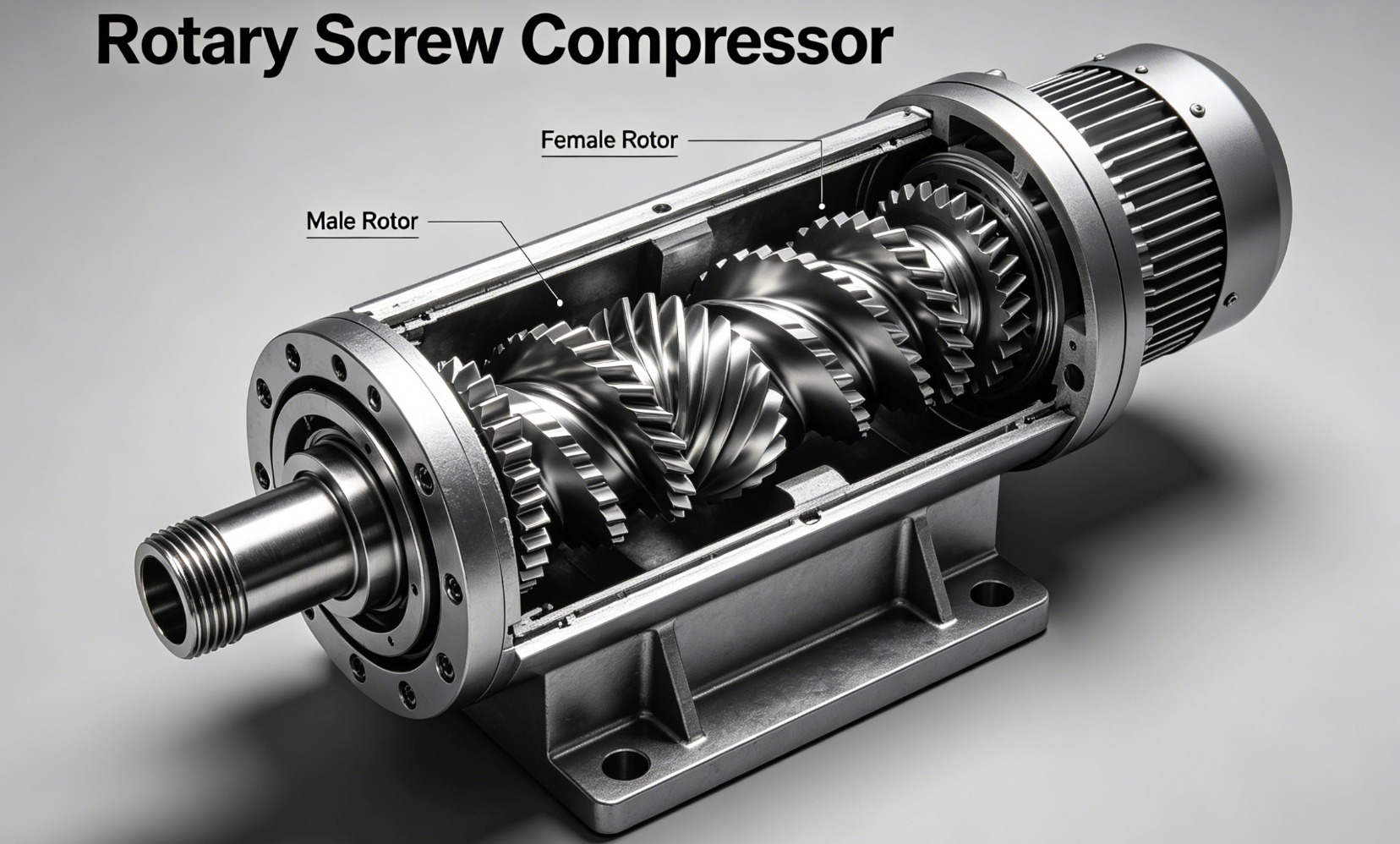
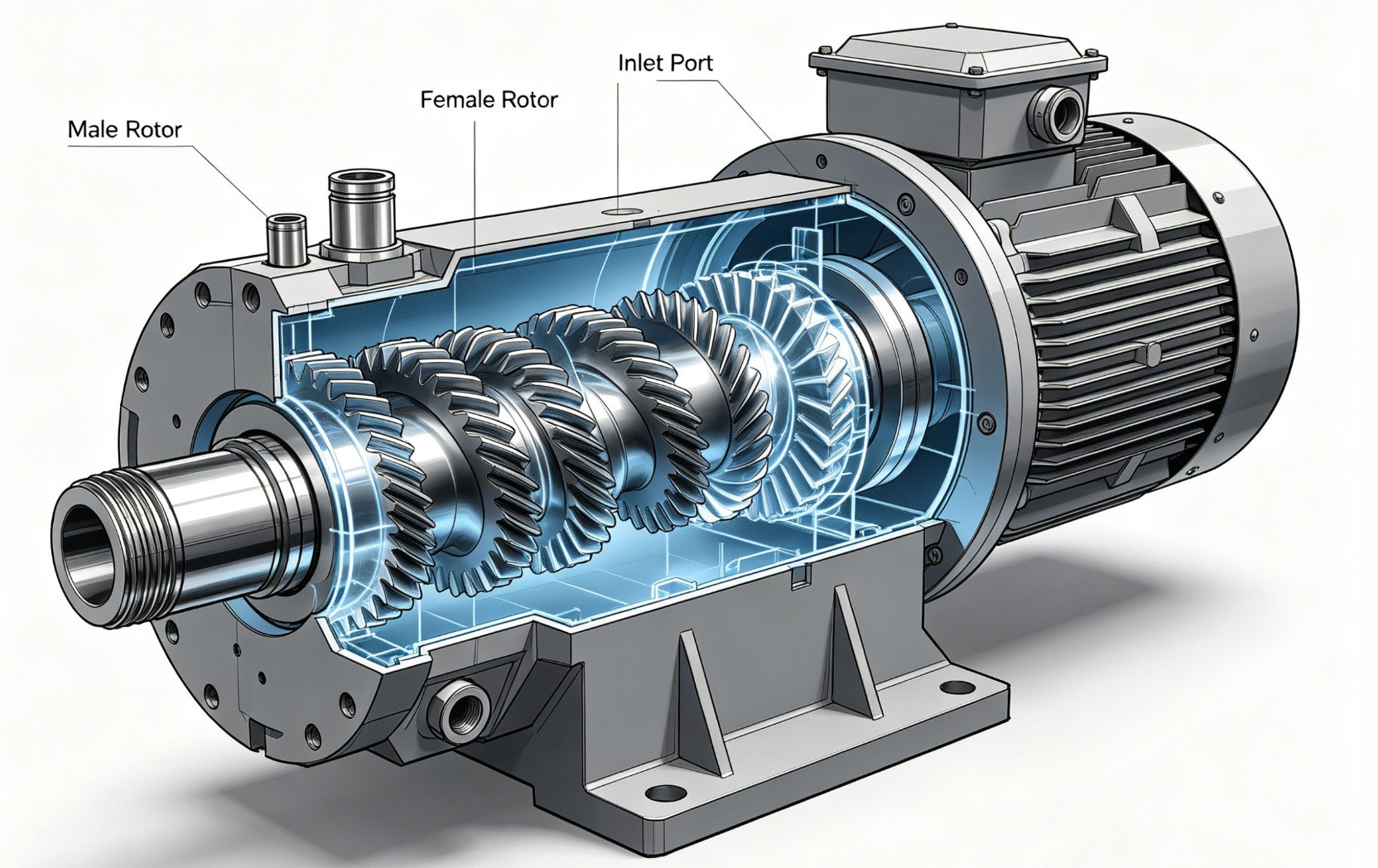
The primary operational framework of a rotary screw compressor depends on a male rotor and a female rotor housed within a precise metallic cylinder. Ambient air enters the machine through a specialized air intake filtration system, moving directly into the open voids between the two spinning helical screws. As the electric motor drives the rotors, the space between the helical ridges progressively narrows along the length of the main stator.
This continuous reduction in internal volumetric space traps the atmospheric air and increases the structural pressure of the gas molecules. The compressed air then moves directly toward the discharge port to supply downstream manufacturing processes. For high-demand facilities, integrating an efficient rotary screw air compressor ensures a stable, surge-free pneumatic energy supply that protects delicate production equipment.
Oil-Injected vs. Oil-Free Rotary Screw Air Compressors
Industrial facilities must select between oil-injected and oil-free rotary screw technologies based on their specific compressed air quality requirements. In an oil-injected system, synthetic fluid lubricates the rotors, seals the internal clearances, and absorbs the heat generated during the compression cycle. According to the Compressed Air and Gas Institute (CAGI), oil-injected models represent the most cost-effective solution for standard mechanical applications.
Conversely, oil-free models isolate the compression chamber completely from lubricants, utilizing specialized timing gears to prevent rotor contact. Industries such as pharmaceutical manufacturing, electronics assembly, and food processing install high-performance oil-free screw compressors to eliminate the risk of product contamination. Choosing the correct technology balances initial capital expenditure against long-term operational purity requirements.
| Selection Metric | Oil-Injected Compressors | Oil-Free Compressors |
|---|---|---|
| Contamination Risk | Low (Requires downstream filtration) | Zero Contamination Risk |
| Initial Capital Cost | Moderate | High |
| Maintenance Intervals | Standard fluid and filter changes | Intensive coating and gear checks |
| Best Application | Automotive, Metal Fabricating, Machinery | Medical, Food, Microelectronics |
Crucial Components of Modern Rotary Screw Air Systems
A commercial-grade rotary screw air package incorporates several integrated subsystems that monitor, clean, and regulate the compressed air output. The air intake valve controls the volume of ambient air entering the air-end based on real-time plant demands. Simultaneously, advanced electronic control panels track temperature variations, pressure differentials, and total running hours to prevent sudden mechanical failures.
Downstream of the primary air-end, an oil separator tank extracts residual lubricants from the discharge stream via mechanical impingement. The air then travels through an industrial compressed air dryer to remove moisture and prevent pipe corrosion. Proper maintenance of these auxiliary filters and separators ensures the longevity of the entire facility-wide pneumatic distribution framework.
Main Benefits of Installing Rotary Screw Air Compressors
- Continuous-Duty Performance: These systems function continuously without requiring periodic operational shutdowns, making them ideal for 24/7 manufacturing environments.
- Superior Energy Efficiency: Modern variable speed drive (VSD) variants adjust rotor speed to match real-time demand, reducing factory electricity expenses significantly.
- Low Noise and Vibration: The smooth rotational design allows businesses to install these units near workstations without violating safety standards.
- Minimal Oil Carryover: Multi-stage separation filters limit lubricant carryover to less than three parts per million, safeguarding downstream pneumatic tools.
- Compact Footprint: The high power-to-weight ratio allows facilities to maximize floor space compared to bulky reciprocating compressor installations.
How to Select the Right Rotary Screw Compressor for Your Facility
Choosing an appropriate compressor requires evaluating total volumetric flow, measured in Cubic Feet per Minute (CFM), and required operational pressure (PSI). Overestimating system demand leads to excessive energy consumption, while underestimating capacity causes drop-offs in tool performance and shortens equipment lifespans. Facilities should consult updated sizing handbooks, such as the U.S. Department of Energy Advanced Manufacturing Office Guidelines, to calculate exact system requirements.
Additionally, plant managers must evaluate environmental factors, including ambient operating temperatures, humidity levels, and airborne particulate concentrations. Integrating rugged portable screw compressors provides flexible, weather-resistant utility air for harsh construction sites or remote mining locations. Utilizing structured checklist tables streamlines the equipment selection process for engineering teams.
| Sizing Step | Required Action | Engineering Metric |
|---|---|---|
| 1. Peak Flow Calculation | Sum the CFM requirements of all pneumatic tools | Total System CFM |
| 2. Pressure Determination | Identify the highest required operating pressure | Maximum System PSI |
| 3. Electrical Evaluation | Verify available plant voltage, phase, and amperage | Volts / Phase / Hz |
| 4. Air Quality Selection | Define acceptable moisture and oil carryover limits | ISO 8573-1 Air Class |
Frequently Asked Questions (FAQ)
1. What is the average lifespan of an industrial rotary screw compressor?
With rigorous preventive maintenance, an industrial rotary screw air compressor typically operates efficiently for 40,000 to 60,000 hours before requiring an air-end rebuild. This longevity depends heavily on routine fluid analysis, timely separator replacements, and keeping the cooling system free from debris blockages.
2. Can a rotary screw air compressor run continuously for 24 hours?
Yes, industrial rotary screw air compressors are specifically engineered for 100% duty cycle applications, allowing them to run continuously 24 hours a day without overheating. The constant circulation of synthetic coolant ensures stable operating temperatures, unlike traditional reciprocating pistons that require frequent rest periods.
3. Why is a variable speed drive (VSD) screw compressor more efficient?
A variable speed drive screw compressor saves energy by utilizing an advanced inverter to adjust the motor speed directly to real-time air demand. Instead of running at full speed during low production periods, the machine slows down, reducing electrical power consumption and decreasing overall facility operating expenses.
4. How often should you change the oil filter in a screw compressor?
Facilities should change the oil filter, air intake filter, and fluid separator every 2,000 to 4,000 hours of operation, depending on environmental dust levels. Adhering to these strict maintenance schedules prevents premature bearing wear, maintains energy efficiency, and protects the internal components of the air-end.
5. What causes a rotary screw air compressor to overheat during operation?
Common causes of overheating include low lubricant levels, clogged thermal valves, dirty heat exchangers, or poor ventilation in the compressor room. If ambient temperatures exceed recommended operating thresholds, the system's safety sensors will trigger an automatic shutdown to prevent permanent thermal deformation of the rotors.