


What Does Waste Heat Recovery Mean?
In industrial production, air compressors are indispensable power cores. But what you may not know is that most of the energy you pay for in electricity bills is not actually used to compress air—it is converted into heat and discharged into the air in vain.
- A set of staggering figures
When an air compressor operates, only about 17% of the large amount of electricity consumed is converted into compressed air power required for production. The remaining 83% of energy is wasted in the form of heat, noise, vibration, etc. Among these, heat accounts for as much as 78%!
In other words, a 100kW air compressor generates approximately 78 kWh of heat released into the atmosphere per hour of operation. If this heat is recovered and reused, a considerable amount of costs can be saved in a year.
It is precisely because of this that waste heat recovery systems have emerged.
- What is Waste Heat Recovery?
Simply put, waste heat recovery collects the waste heat generated during air compressor operation and converts it into useful hot water or hot air through heat exchange technology. This recovered heat can be used for other heating needs in the factory—such as domestic hot water, boiler feed water, workshop heating, cleaning water, process heating, and more.
Throughout the process, the original operating status of the air compressor remains unchanged, and normal production is not affected. It simply turns otherwise wasted heat into valuable resources.
- Components of a Waste Heat Recovery System
A complete waste heat recovery system typically includes the following key equipment:
- Heat Exchanger: The core component that transfers heat from compressed air to water.
- Heat Pump (Optional): Upgrades heat quality to meet higher temperature requirements.
- Steam Generator (for specific scenarios): Produces steam for industrial processes.
- Energy Storage Equipment: Stores hot water to balance fluctuations in heating demand.
The system is custom-designed for different industrial scenarios (e.g., textile, chemical, metallurgical) to match the actual heating needs of enterprises.
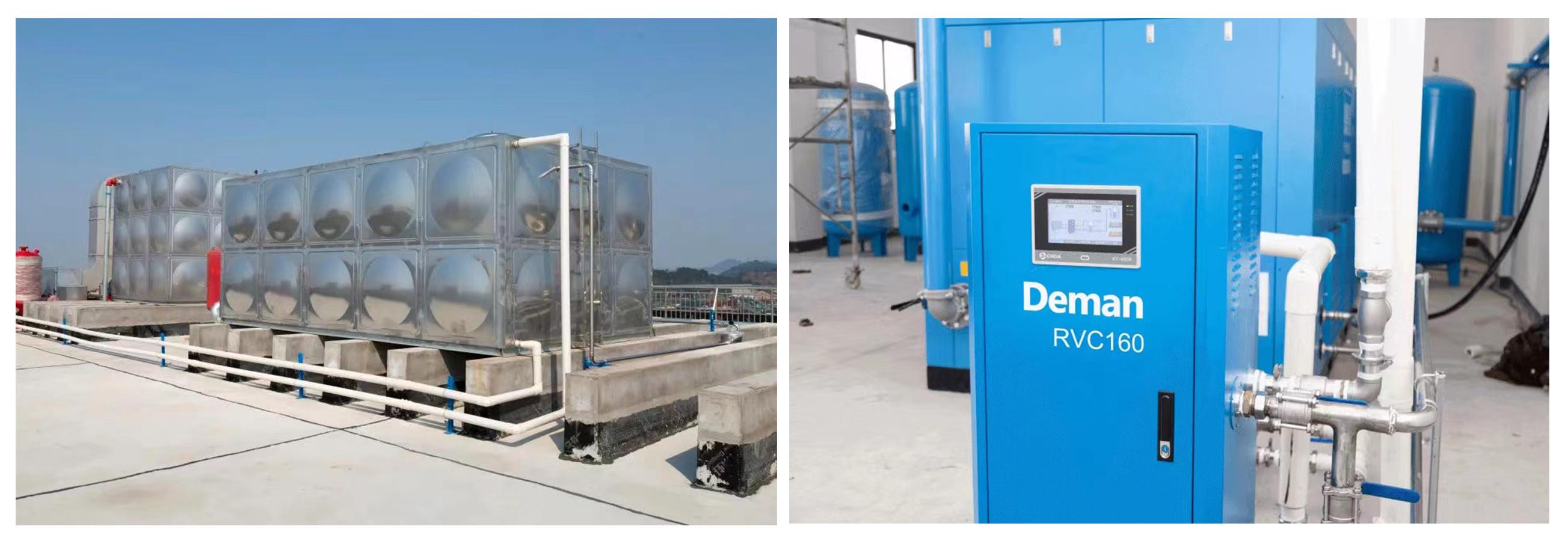
- Three Major Advantages of Waste Heat Recovery
①Significantly Reduce Operating Costs
Recovered heat replaces the costs originally incurred by electric, natural gas, or coal heating. Typically, the payback period for a waste heat recovery system is around 6–12 months, after which it generates pure net profit.
②Extend Air Compressor Service Life
By recovering exhaust heat, the operating temperature of the air compressor becomes more stable. This avoids issues such as oil degradation and carbon deposits caused by high temperatures, thereby improving air production efficiency and extending the machine’s service life.
③Green and Eco-friendly, Support Emission Reduction
Recovering 1 kWh of heat reduces corresponding primary energy consumption and carbon emissions. This not only fulfills enterprises’ social responsibilities but also aligns with China’s Dual Carbon strategic goals.
- Which Industries Are Suitable for Waste Heat Recovery?
Almost all industries with air compressors and simultaneous heating needs are suitable:
- Textile & Dyeing: Hot water for washing and setting.
- Chemical & Pharmaceutical: Constant-temperature reactions and distillation.
- Metallurgical Manufacturing: Cleaning and workshop heating.
- Food Processing: Sterilization and cleaning.
- Electronics & Semiconductors: Constant-temperature workshops.
- Even ordinary factories can get free domestic hot water and canteen water.
- Deman Waste Heat Recovery Team: Customized Solutions for You
Deman has an experienced waste heat recovery system team. After in-depth understanding of enterprises’ heating needs, we provide:
①On-site Survey: Evaluate air compressor installed capacity, operating hours, and heat generation.
②Demand Analysis: Understand specific requirements for hot water temperature, volume, and usage time.
③Solution Design: Customize waste heat recovery systems to replace traditional heating energy sources.
④Installation & Commissioning: Rapid construction without disrupting normal production.
⑤Effect Verification: Compare energy consumption before and after renovation to quantify energy-saving benefits.
Deman’s waste heat recovery solutions have helped numerous enterprises significantly reduce operating costs, achieving a win-win of high-quality air supply and low-cost heating.
The waste heat from air compressors is not garbage—it is an overlooked asset. If air compressors account for a high proportion of your factory’s electricity bills, contact us for a free waste heat recovery potential assessment. You may discover a whole new space for energy savings.