










What Are the Methods of Air Compressor Waste Heat Recovery?
During the operation of an air compressor, only approximately 17% of the large amount of electric energy consumed is converted into compressed air power for production. The remaining energy is wasted in the form of heat, noise, vibration and others, among which heat accounts for nearly 78%.
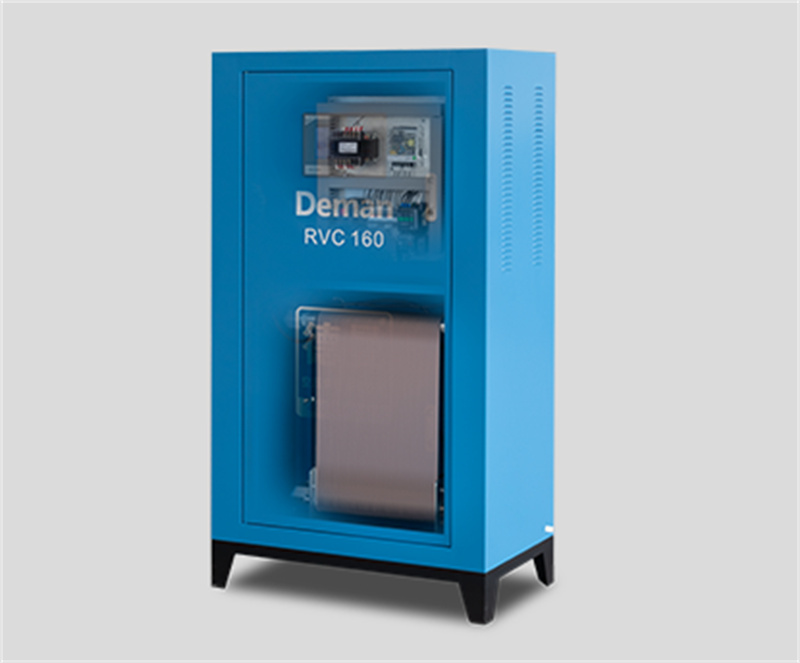
In response to such massive energy loss, the waste heat recovery system has come into being. Without altering the original operating state of the air compressor, it can rationally utilize the waste heat generated during operation to realize heat recovery and reuse, delivering considerable energy-saving benefits for enterprises.
What are the common methods of air compressor waste heat recovery? This article will give you a detailed introduction.
Principle: Heat is transferred from compressed air to the heating medium through a heat exchanger. As an internally partitioned device, the heat exchanger enables condensed water to flow back from the exhaust pipe of the compressor to the air inlet in reverse, ensuring optimal cooling performance.
Medium Selection: Available media include water, oil and other fluids. Thermal energy is transmitted to designated locations via the heat transfer medium to achieve waste heat reuse.
Circular Utilization: The medium can be delivered back to the air compressor through pipelines for cyclic use, further improving energy utilization efficiency.
Application Scenarios: Scenarios requiring hot water, such as factory domestic hot water supply, boiler water replenishment and space heating.
- Steam Recovery
Principle: By adjusting parameters including condenser conditions, steam composition and pressure, the waste heat generated by air compressors is converted into steam for production processes.
Features:
-Applicable to production processes with high technical requirements
-Directly applicable to working procedures such as heating and cooking
-Realizes energy conservation while improving production efficiency
Application Scenarios: Steam-required industries such as chemical, pharmaceutical and food processing.
- Power Recovery
Principle: Based on the thermoelectric effect, waste heat from air compressors is converted into electric energy, which is collected and utilized by thermoelectric power generation equipment and connected to the power transmission system.
Features:
-Turns waste heat into usable electric power
-Supplements partial power consumption for enterprises
-Maximizes cascaded energy utilization
Application Scenarios: Large-scale compressed air stations and production parks with high power demand.
- Comparison of Waste Heat Recovery Methods
|
Recovery Method |
Output Form |
Technical Complexity |
Applicable Industries |
|
Heat Exchange Type |
Hot Water / Hot Oil |
Moderate |
Universal, suitable for most factories |
|
Steam Recovery |
Steam |
Relatively High |
Chemical, Pharmaceutical, Food Processing, etc. |
|
Power Recovery |
Electric Energy |
High |
Large Compressed Air Stations, Industrial Parks |
There are a variety of air compressor waste heat recovery methods. Enterprises can select the most appropriate waste heat utilization solution based on their own energy consumption structure, production processes and economic benefits, so as to maximize energy utilization efficiency.
In addition to providing high-efficiency air compressor equipment, Deman is committed to offering customers systematic solutions covering energy-saving air supply and waste heat recovery. If you are interested in air compressor waste heat recovery, please feel free to contact us for customized energy-saving diagnosis and renovation solutions.