










Introduction
Choosing between a single-stage and two-stage air compressor affects far more than peak pressure. It influences duty cycle, heat management, energy use, maintenance demands, and how reliably your equipment can meet daily air demand. For shops with intermittent tools, a single-stage unit may be sufficient, while operations that need higher PSI or longer continuous runtime often benefit from a two-stage design. This article explains the mechanical differences, compares performance and operating costs, and shows where each type fits best so you can match compressor architecture to your workload instead of overspending or undersizing.
Why the Choice Between Two-Stage and Single-Stage Air Compressors Matter
Selecting the right air compressor architecture is a foundational decision for industrial and commercial facilities. The choice between a two-stage air compressor and a single-stage model dictates not only the maximum pressure available to pneumatic equipment but also the plant's long-term thermodynamic efficiency. Overlooking the mechanical differences between these systems often leads to premature equipment failure, inadequate air supply, or inflated utility bills.
Pressure, duty cycle, and air demand
Industrial applications are governed by strict pneumatic requirements, primarily measured in pounds per square inch (PSI) and cubic feet per minute (CFM). Single-stage compressors typically support intermittent duty cycles of 50% to 70%, meaning they require frequent cooling periods to avoid excessive heat buildup. In contrast, heavy-duty applications demand continuous air delivery, pushing duty cycles to 100%. Underestimating pressure and duty cycle requirements forces undersized compressors to run continuously, accelerating wear and risking thermal overload.
Energy and operating cost impact
The financial implications of compressor selection extend far beyond the initial capital expenditure. In industrial environments, energy consumption accounts for roughly 70% to 80% of an air compressor's total lifecycle cost over a standard 10-year operating period. Because two-stage compressors divide the compression workload and utilize intercooling, they require significantly less electrical energy to produce high-pressure air. Consequently, facilities with high, continuous air demand can leverage the superior efficiency of two-stage models to dramatically reduce their base load kilowatt-hour (kWh) consumption.
What a Two-Stage Air Compressor Is
A two-stage air compressor, sometimes referred to as a dual-stage compressor, utilizes two distinct cylinders to compress ambient air to the final required pressure. This sequential process is designed to overcome the physical limitations and excessive heat generation associated with compressing air to high pressures in a single mechanical stroke.
How two-stage compression works
The primary distinction of a two-stage system lies in its compression path. Ambient air is first drawn into a large, low-pressure cylinder where it is compressed to an intermediate pressure, typically around 90 PSI. Instead of being sent directly to the storage tank, this heated, partially compressed air is routed through an intercooler—a finned thermal exchange tube that dissipates heat into the surrounding atmosphere. Once cooled, the air enters a smaller, high-pressure cylinder where it is compressed a second time to reach the final target pressure before entering the receiver tank.
Key components and operating range
The intercooler is the most critical component differentiating two-stage mechanics from single-stage designs. By reducing the air temperature by approximately 100°F to 150°F before the second compression phase, the intercooler increases air density, making the second stroke substantially more efficient. Thanks to this thermal management, two-stage air compressors operate comfortably in a range of 150 PSI to 175 PSI, with some specialized industrial units exceeding 200 PSI. This operating range ensures a stable, high-pressure reservoir capable of driving heavy pneumatic machinery without experiencing rapid pressure drops.
Two-Stage vs Single-Stage Air Compressor Comparison
Directly comparing a two-stage air compressor to a single-stage counterpart highlights distinct mechanical and financial trade-offs. The right choice depends on analyzing output thresholds, capital constraints, and long-term operating costs.
| Specification | Single-Stage Compressor | Two-Stage Compressor |
|---|---|---|
| Max Pressure Range | 120 - 135 PSI | 150 - 175+ PSI |
| Typical Duty Cycle | 50% - 70% | Up to 100% |
| Heat Generation | High at peak pressure | Moderate (Intercooled) |
| Initial Capital Cost | Baseline | 30% - 50% Premium |
Performance and pressure output
Single-stage compressors often deliver slightly higher initial CFM per horsepower at lower pressures (typically under 100 PSI) because they utilize one large cylinder to push a high volume of air directly into the tank. However, their volumetric efficiency plummets as tank pressure rises. Two-stage compressors maintain a much flatter performance curve, delivering consistent, high-volume CFM even as the internal tank pressure approaches 175 PSI—an essential capability for heavy industrial processes.
Cost, maintenance, noise, and heat
The added complexity of a second cylinder and an intercooler means two-stage models command a 30% to 50% higher upfront purchase price. Maintenance requirements also increase slightly due to the additional valves, rings, and cooling components. However, this mechanical complexity pays dividends in thermal management. Single-stage units running at high pressures generate excessive heat, which degrades lubricating oil and accelerates piston wear. Two-stage units run significantly cooler, extending the lifespan of internal components and reducing the moisture content in the final compressed air.
Efficiency and lifecycle trade-offs
From an efficiency standpoint, compressing air in two stages requires approximately 11% to 15% less energy to reach pressures above 100 PSI compared to a single-stage model. This thermodynamic advantage is critical for facilities adhering to strict energy management standards mandated by bodies like ISO. While the initial investment is higher, the extended lifecycle—often exceeding 50,000 operating hours with proper maintenance—and the compounded energy savings make the two-stage compressor a highly efficient long-term asset for heavy commercial use.
When to Choose Two-Stage or Single-Stage
Determining when to deploy a two-stage or single-stage compressor requires a precise audit of the facility's pneumatic tools and daily operational workflow. Misaligning the compressor type with the application leads to either inadequate performance or wasted capital.
Best applications for two-stage models
Two-stage compressors are the standard for environments requiring sustained, high-pressure air delivery. Automotive repair shops operating pneumatic lifts, tire changers, and continuous-use impact wrenches rely on the 175 PSI capability to prevent bottlenecks. Similarly, medium-to-large manufacturing plants, CNC machining centers, and commercial painting facilities require the 100% duty cycle and consistent >15 CFM output that only a two-stage model can reliably provide without overheating.
When single-stage is enough
Single-stage compressors remain highly relevant for applications where peak pressure requirements fall below 120 PSI and usage is strictly intermittent. Woodworking shops, independent craft fabricators, and small garages using nail guns, light sanders, or blowguns do not require the high-pressure reserves of a two-stage system. In these scenarios, a single-stage model operating on a 50% duty cycle provides ample pneumatic power while minimizing upfront costs and conserving floor space.
A simple selection process
To simplify the selection process, facility managers should utilize a basic decision matrix based on maximum pressure and daily usage.
| Requirement Profile | Recommended Compressor Type | Key Rationale |
|---|---|---|
| < 120 PSI, Intermittent Use | Single-Stage | Cost-effective, sufficient pressure, lower footprint |
| > 120 PSI, Intermittent Use | Single-Stage (High-Capacity) | Capable of reaching spikes without the two-stage premium |
| < 120 PSI, Continuous Use | Single-Stage or Rotary Screw | High CFM needed, but extreme pressure is unnecessary |
| > 120 PSI, Continuous Use | Two-Stage | Prevents overheating, maximizes energy efficiency at high PSI |
By calculating the total simultaneous CFM demand of all active tools and identifying the single tool with the highest PSI requirement, operators can map their needs directly to this matrix.
How to Make the Best Long-Term Air Compressor Decision
Procuring commercial air compression equipment is a capital investment that impacts operational productivity for decades. The final decision must balance immediate technical specifications with total lifecycle economics.
Balancing technical fit and total cost
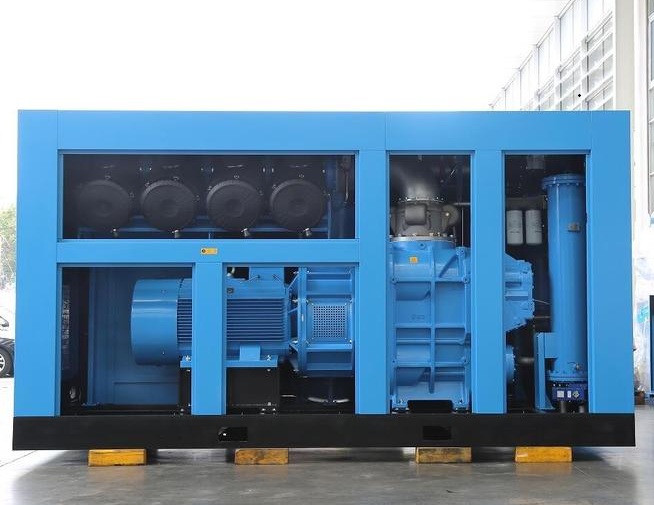
Achieving the best long-term outcome requires calculating the Total Cost of Ownership (TCO). Consider a scenario comparing a heavy-duty single-stage compressor priced at $2,000 against a two-stage unit costing $3,500. If the facility operates continuously at 125 PSI, the single-stage unit will run inefficiently, drawing excess amperage and generating damaging heat. The two-stage unit, operating within its optimal thermodynamic curve, can easily yield $500 to $800 in annual electricity savings (assuming an average industrial rate of $0.12/kWh). In this model, the initial $1,500 premium for the two-stage compressor is recovered in less than three years. Furthermore, by adhering to global industrial efficiency practices referenced by institutions like the World Bank, facilities can ensure their capital investments yield sustainable, long-term profitability. Ultimately, buyers must prioritize their continuous CFM and PSI requirements over baseline sticker prices to secure reliable, cost-effective pneumatic power.
Key Takeaways
- The most important conclusions and rationale for Two-Stage Air Compressor
- Specs, compliance, and risk checks worth validating before you commit
- Practical next steps and caveats readers can apply immediately
Frequently Asked Questions
When is a two-stage air compressor better than a single-stage model?
Choose a two-stage unit when your system needs 150–175+ PSI, steady CFM, or near-continuous operation. It fits demanding industrial tools and production lines better than single-stage compressors.
Does a two-stage air compressor save energy?
Yes, especially in high-demand facilities. By compressing air in two steps with intercooling, it reduces heat and electrical use, which can lower long-term operating costs.
What pressure range can a two-stage air compressor deliver?
Most two-stage compressors operate around 150–175 PSI, and some industrial models exceed 200 PSI. This makes them suitable for heavier pneumatic applications.
Why does intercooling matter in a two-stage air compressor?
Intercooling removes heat between compression stages, often dropping air temperature by 100°F to 150°F. Cooler air is denser, so the second stage works more efficiently and with less stress.
Where can I compare industrial two-stage air compressor options?
You can review compressor systems and related air treatment solutions at Demanac. Start with their rotary screw compressor and after-treatment product pages to match pressure, CFM, and duty cycle needs.