
Introduction
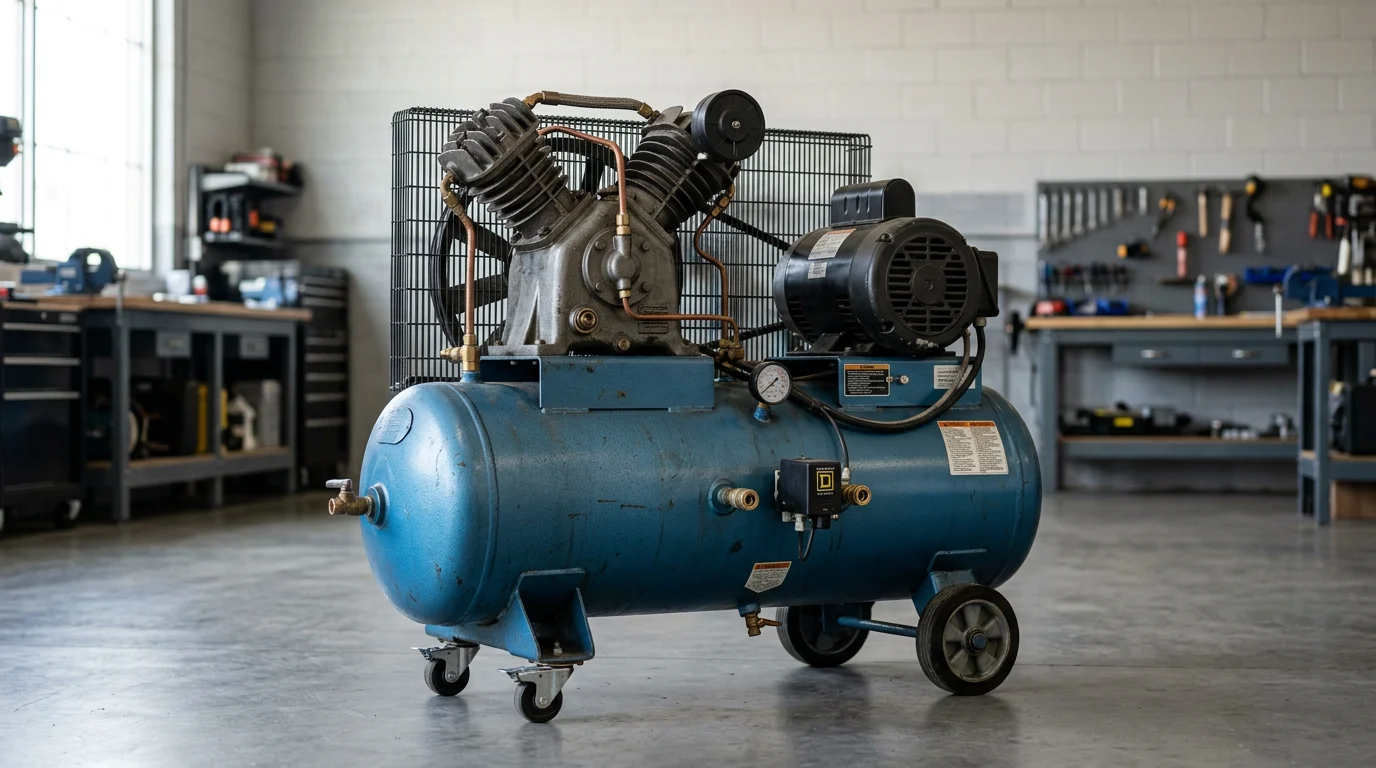
When air systems must deliver higher pressure without sacrificing reliability, compressor design becomes a practical decision rather than a technical detail. A two-stage air compressor compresses air in two steps, allowing it to reach greater pressures more efficiently and with better heat control than many single-stage models. This matters in workshops, manufacturing plants, automotive service, and other settings where equipment runs hard and often. In the sections ahead, you’ll see how two-stage compression works, why it improves performance and operating efficiency, and which applications benefit most from its higher-pressure, continuous-duty capability.
Why a Two-Stage Air Compressor Matters
Industrial operations rely heavily on consistent, high-pressure compressed air to drive pneumatic machinery, perform automated tasks, and maintain continuous production lines. While standard compressors suffice for light-duty applications, rigorous industrial environments demand more robust solutions. A two-stage air compressor addresses these demanding requirements by utilizing a sequential compression method that maximizes both pressure output and thermal efficiency. Understanding the foundational capabilities of this equipment is critical for facility managers and engineers looking to optimize plant performance.
Pressure capability
A defining characteristic of a two-stage air compressor is its enhanced pressure capability. While single-stage models compress air directly to its final pressure in one stroke, typically maxing out between 100 and 120 Pounds per Square Inch (PSI), two-stage units divide the workload. By compressing air twice, these systems comfortably and consistently generate pressures ranging from 150 to 175 PSI. Specialized industrial models can even exceed 500 PSI for high-pressure applications. This elevated pressure threshold ensures that heavy-duty pneumatic tools and manufacturing equipment receive the necessary force to operate without performance drops.
Best operating conditions
Beyond raw pressure, two-stage systems are engineered for rigorous, continuous operating conditions. Single-stage compressors are generally designed for intermittent use, often requiring a 50% duty cycle to prevent critical overheating and premature component failure. In contrast, two-stage compressors feature superior heat dissipation mechanisms, allowing them to sustain a 100% duty cycle in demanding environments. This makes them the optimal choice for continuous manufacturing shifts, automotive repair shops, and large-scale industrial plants where equipment downtime directly translates to lost revenue.
How a Two-Stage Air Compressor Works
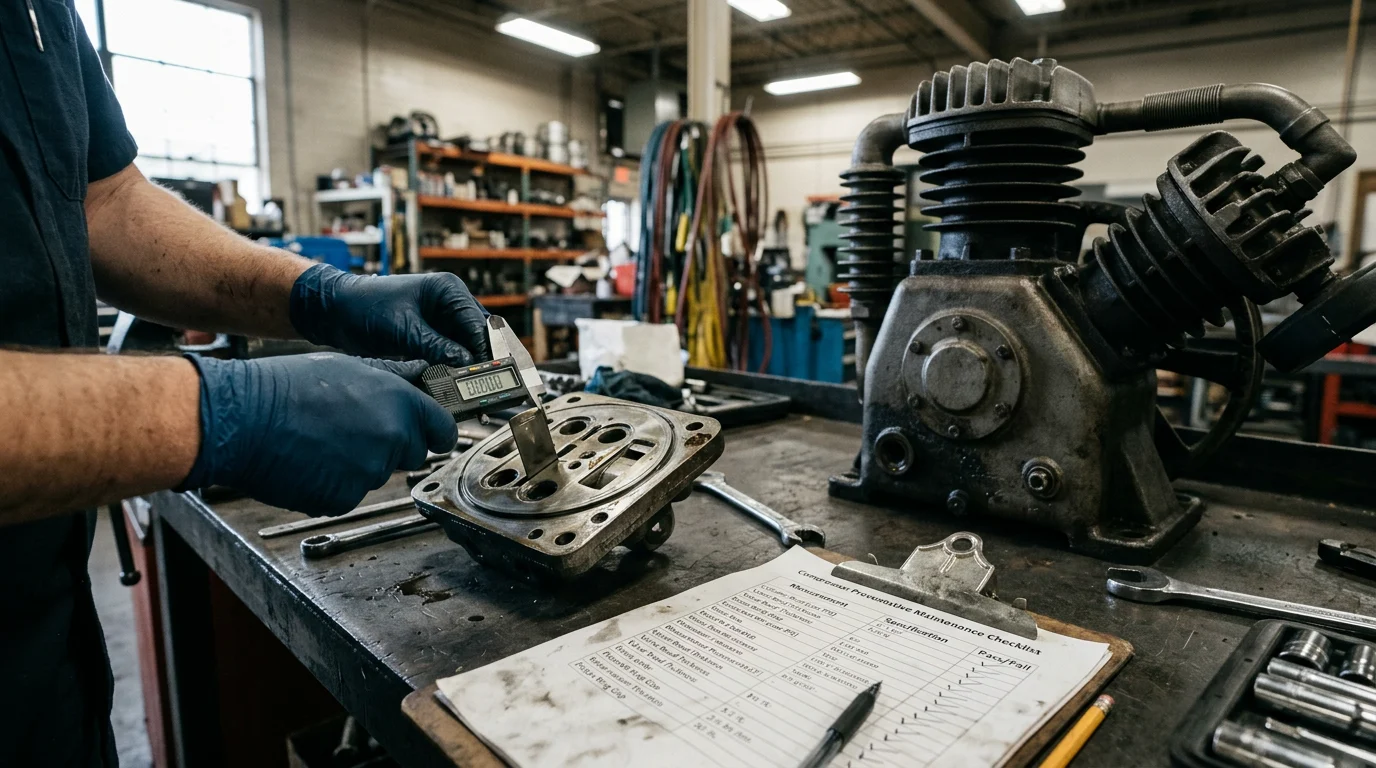
The mechanical architecture of a two-stage air compressor involves sequential compression, a design that fundamentally alters how air is processed and delivered. By dividing the compression workload across multiple cylinders and incorporating intermediate cooling, the system achieves higher pressures with greater mechanical stability.
Compression process and intercooling
The compression cycle begins when ambient air is drawn into the initial, larger low-pressure cylinder. Here, it is compressed to an intermediate pressure—usually around 50 to 90 PSI. Compressing air naturally generates significant heat, which reduces volumetric efficiency. To counteract this, the partially compressed air is routed through an intercooler, typically a finned tube exposed to a cooling fan. This intercooling process can drop the air temperature by up to 300°F (150°C). The cooled, denser air then enters the second, smaller high-pressure cylinder, where it is compressed to the final target pressure before being discharged into the storage tank.
Key specifications to compare
When evaluating these systems, engineers focus on specific metrics to ensure adequate pneumatic supply. The most critical specifications are Cubic Feet per Minute (CFM), which measures the volume of air delivered, and PSI, which measures the pressure. Two-stage compressors typically offer substantial output, often ranging from 5 to 30 horsepower (HP) and delivering anywhere from 15 to 100 CFM at 175 PSI. Additionally, tank size is a vital specification; industrial two-stage units usually feature receiver tanks ranging from 60 to 120 gallons to provide an adequate buffer for continuous air demand and reduce the frequency of motor cycling.
Two-stage vs single-stage comparison
A direct comparison clarifies the mechanical and operational divergence between the two main types of reciprocating compressors. Facility engineers must weigh these baseline specifications to match equipment capabilities with plant requirements.
| Specification/Feature | Single-Stage Compressor | Two-Stage Compressor |
|---|---|---|
| Compression Steps | One | Two |
| Maximum Pressure | 100 - 120 PSI | 150 - 175+ PSI |
| Duty Cycle | Typically 50% (Intermittent) | Up to 100% (Continuous) |
| Intercooler | No | Yes |
| Typical HP Range | 1 HP - 5 HP | 5 HP - 30+ HP |
| Best For | Residential, light commercial | Heavy industrial, manufacturing |
Benefits and Trade-Offs
Investing in a two-stage air compressor presents distinct advantages that directly impact a facility's bottom line and operational reliability. However, the added mechanical complexity and robust construction also introduce specific trade-offs that must be carefully considered during the procurement process.
Energy, air quality, and equipment life
The primary benefit of the two-stage design lies in its thermal and energy efficiency. Because the intercooler reduces the temperature of the air before the second compression stage, the machine expends roughly 10% to 15% less energy to reach the final pressure compared to a single-stage unit attempting the same workload. Furthermore, this cooling process causes suspended moisture to condense and precipitate out of the air stream. By the time the air reaches the final storage tank, it contains significantly less water, making it easier to meet stringent ISO 8573-1 air quality standards for industrial applications. Lower operating temperatures also preserve the integrity of internal seals, valves, and lubricating oils, extending the overall equipment life by thousands of operational hours.
Main trade-offs
Conversely, the advanced engineering of a two-stage compressor introduces notable trade-offs, primarily in capital expenditure and physical footprint. The inclusion of a second cylinder, an intercooler, and a heavier cast-iron block means these units carry a higher upfront cost—often 30% to 50% more than a single-stage compressor of similar horsepower. Additionally, these systems are substantially heavier and bulkier. A standard 80-gallon industrial two-stage compressor can easily exceed 400 lbs (180 kg), requiring dedicated floor space, reinforced mounting, and professional hardwired electrical installation (typically 230V or 460V three-phase power). Maintenance also becomes slightly more complex, requiring technicians to service two sets of valves and monitor intercooler integrity.
Applications and Sizing
Selecting the correct two-stage air compressor requires aligning the equipment's volumetric and pressure capabilities with specific industrial applications. Proper sizing prevents both equipment underperformance, which stalls production, and unnecessary capital expenditure on oversized machinery.
Industries and use cases
Heavy-duty sectors such as automotive manufacturing, aerospace, metalworking, and large-scale woodworking rely extensively on two-stage compressors. In automotive repair and collision centers, multiple technicians simultaneously operate air sanders, impact wrenches, and paint booths. These tools not only require steady pressures between 90 and 120 PSI but also consume massive volumes of air continuously. Similarly, in manufacturing environments, automated pneumatic cylinders and robotic arms require a fail-safe, continuous air supply to maintain assembly line synchronization. A two-stage unit's ability to run continuously without thermal degradation makes it the standard choice for these high-demand scenarios.
Step-by-step sizing process
The sizing process must be approached methodically to ensure the compressor can handle peak facility demand. First, identify the CFM requirements of all pneumatic tools and equipment that will operate simultaneously. Sum these figures to find the peak concurrent demand. Next, apply a safety margin—typically multiplying the total CFM by 1.3 (a 30% buffer) to account for system leaks, future expansion, and to prevent the compressor from running at absolute maximum capacity constantly. Finally, ensure the chosen unit delivers this total CFM at the required operating pressure (PSI).
| Pneumatic Tool / Equipment | Average Air Consumption (CFM @ 90 PSI) |
|---|---|
| 1/2-inch Impact Wrench | 4 - 5 CFM |
| Dual Action Sander | 11 - 13 CFM |
| HVLP Paint Spray Gun | 12 - 15 CFM |
| Heavy-Duty Die Grinder | 8 - 10 CFM |
| Pneumatic Hoist | 25 - 30 CFM |
Note: If a shop runs two sanders and a paint gun simultaneously, the baseline demand is approximately 41 CFM. With a 30% safety factor, the facility requires a compressor rated for at least 53 CFM.
How to Decide if It Is the Right Choice
Finalizing the procurement of a two-stage air compressor requires a holistic evaluation of facility needs, balancing immediate capital outlay against long-term operational efficiency. Decision-makers must move beyond basic specifications to consider the Total Cost of Ownership (TCO) and the strategic importance of compressed air reliability in their specific environment.
Operational, financial, and reliability criteria
Organizations must weigh operational demands against financial constraints and reliability criteria. While the initial purchase price of a two-stage unit is higher, the TCO over a standard 7 to 10-year lifespan is often lower for high-demand users. Energy consumption accounts for approximately 70% to 80% of a compressor's lifetime cost. Because two-stage units are 10% to 15% more energy-efficient at high pressures, a facility running a compressor for more than 4 to 6 hours daily will quickly recoup the higher initial investment through reduced electrical bills. Furthermore, the enhanced reliability and 100% duty cycle mean fewer production stoppages, mitigating the hidden costs of unplanned downtime, which can exceed thousands of dollars per hour in a manufacturing plant.
Final decision factors
The ultimate decision hinges on a few definitive operational thresholds. If a facility's total air demand is consistently below 15 CFM, tools are used intermittently, and required pressure never exceeds 100 PSI, a single-stage compressor is likely the most cost-effective choice. However, if the operation requires a continuous air supply exceeding 20 CFM, operates tools that demand 120 PSI or higher, or runs multi-shift production schedules where compressor cooling time is unavailable, a two-stage air compressor is not just a recommendation—it is an operational necessity. Evaluating these factors ensures that the chosen pneumatic infrastructure will support current operations and scale effectively with future industrial growth.
Key Takeaways
- The most important conclusions and rationale for Two-Stage Air Compressor
- Specs, compliance, and risk checks worth validating before you commit
- Practical next steps and caveats readers can apply immediately
Frequently Asked Questions
What pressure can a two-stage air compressor typically deliver?
Most industrial two-stage units deliver 150–175 PSI consistently, while specialized models can exceed 500 PSI for high-pressure tasks.
When should I choose a two-stage air compressor over a single-stage model?
Choose two-stage when you need continuous operation, higher PSI, or reliable air for heavy-duty pneumatic tools and production equipment.
How does intercooling improve a two-stage air compressor?
Intercooling lowers air temperature between compression stages, improving efficiency, reducing heat stress, and helping the compressor reach higher pressure more reliably.
Which specifications matter most when selecting a two-stage air compressor?
Focus on PSI, CFM, horsepower, and tank size. For industrial use, many buyers compare 15–100 CFM, 5–30 HP, and 60–120 gallon tanks.
Where can I find industrial two-stage air compressor solutions from DEMAN?
You can explore DEMAN industrial compressed air solutions and product options at demanac.com/product/ for high-pressure and continuous-duty applications.