
How Can a Screw Air Compressor Support CNC Machining Center Operations?
A screw air compressor supports CNC machining by delivering a stable supply of compressed air for chip removal, tool changes, pneumatic clamping, lubrication assistance, door operation, and other auxiliary functions. The best system combines correctly sized compression with receivers, dryers, filters, reliable piping, monitoring, and a control strategy matched to the machining center's actual demand.
- Continuous CNC production generally benefits from a rotary screw air compressor because its operating profile suits sustained plant demand.
- CNC machine compressed air requirements vary by machine function, duty cycle, pressure, flow, and air quality.
- Dry, filtered air helps protect valves, tooling interfaces, sensors, and finished parts from moisture and contamination.
- Correct system design matters as much as compressor efficiency because pressure loss, leakage, and poor control can create avoidable operating cost.
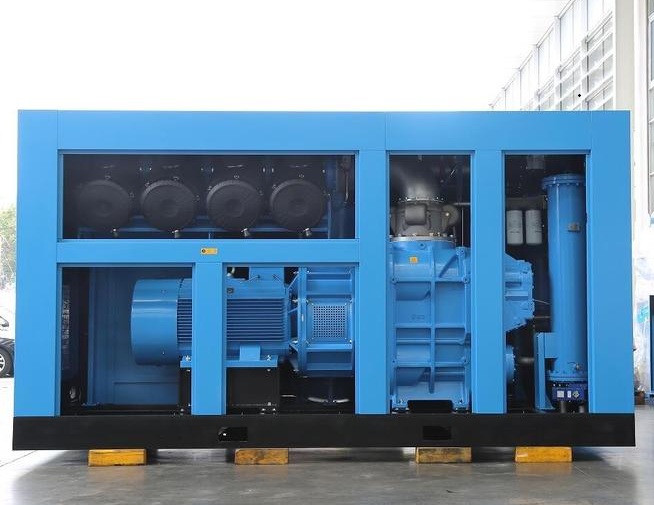
Compressed air is often treated as a utility, but it directly affects machining reliability, cleanliness, and throughput. A rotary screw compressor uses a male rotor and a female rotor rotating in opposite directions to draw in and compress air, as explained by Atlas Copco's compressor guide. This article explains how to translate CNC machine compressed air requirements into a dependable system design, including capacity planning, air treatment, controls, maintenance, and practical selection criteria.
Where Compressed Air Is Used in a CNC Machining Center
Compressed air supports several separate machine functions, so a shop should evaluate each demand rather than size equipment from the machine name alone. CNC routers and machining centers can have different demand patterns for holding, actuation, and cutting support, a distinction also noted by Brabazon's CNC machining application overview.
- Chip and coolant management: Air blast can clear chips from a cutting zone, fixture, tool, or workpiece. The demand may be intermittent but can rise during aggressive machining.
- Tool changing: Pneumatic tool-release mechanisms require clean and stable pressure to complete automatic tool changes consistently.
- Pneumatic clamping: Fixtures, vises, pallets, and workholding devices may use air to clamp or confirm position.
- Machine doors and actuators: Some automation systems use compressed air for doors, slides, grippers, and part-transfer equipment.
- Spindle and enclosure functions: Certain machine designs use air for spindle purging, seal protection, or enclosure-related functions. The machine manual remains the controlling specification.
- Vacuum or auxiliary equipment: A CNC cell can include vacuum equipment, blow-off tools, and other devices with demand patterns separate from the machining center itself.
The key conclusion is that intermittent demand can still create a serious pressure problem when several devices operate at the same time. A shop should record the pressure and flow requirement for every connected machine, then add only a justified allowance for simultaneous operation and future expansion.
Why a Rotary Screw Design Fits Continuous CNC Production
A rotary screw design is usually a strong fit when a CNC shop needs steady, repeated air availability across multiple machines. The compression process is continuous rather than based on repeated piston strokes, and manufacturers commonly position this design for continuous machining operations, as described by Werther International's CNC machine shop application page.
The main advantage is operational continuity, not simply the compressor type. A correctly controlled unit can modulate output as demand changes, while a receiver absorbs short peaks and reduces unnecessary cycling. This approach is especially useful when several machining centers, robots, and auxiliary tools share one air station.
A piston compressor can remain appropriate for a small shop with short, irregular demand, but it may be less suitable when several machines operate for long production shifts. Selection should therefore reflect duty cycle, total flow, required pressure, available electrical service, noise limits, maintenance capability, and the cost of a production interruption.
How to Translate CNC Air Demand into a System Specification
The correct specification begins with a demand study rather than a purchase request for a compressor with a convenient nominal rating. The machine builder's documentation should identify minimum inlet pressure, expected flow, air quality, connection size, and any special requirements for the spindle, tool changer, or workholding system.
- List every air-consuming device. Include machining centers, pallet changers, robots, blow guns, fixtures, dryers, and future equipment.
- Separate continuous and intermittent loads. Continuous loads influence base capacity, while short peaks influence receiver size and control response.
- Record operating pressure at the machine. Measure the point of use rather than relying only on pressure at the compressor outlet.
- Review simultaneous operation. Identify production states in which multiple tool changes, clamps, or blow-off operations occur together.
- Check the distribution path. Account for filters, dryers, valves, bends, pipe length, elevation, and possible leakage.
- Define a growth allowance. Base it on a credible expansion plan, not an arbitrary oversized compressor.
The result should be a system design that protects the lowest-pressure device at the farthest point of use. Oversizing can increase capital and part-load cost, while undersizing can cause tool-change faults, clamp alarms, nuisance trips, and quality risk.
| Assessment stage | Numerical identifier | Primary question | Design output |
|---|---|---|---|
| Equipment inventory | 1 | What consumes air? | Connected-load register |
| Demand classification | 2 | Which loads are continuous or intermittent? | Base-load and peak-load profile |
| Pressure verification | 3 | What pressure reaches the machine? | Point-of-use pressure target |
| Air treatment review | 4 | What contamination risks exist? | Dryer and filtration specification |
| Expansion planning | 5 | What equipment may be added? | Documented capacity allowance |
Air Quality: Dryness, Particles, Oil, and Pressure Stability
Air quality should be treated as a four-part requirement: water, particles, oil, and pressure stability. Moisture can corrode components and interfere with valves; particles can damage precision interfaces; oil can contaminate sensitive processes; and unstable pressure can cause pneumatic functions to fail even when the compressor has adequate nameplate capacity.
A refrigerated dryer is commonly suitable for general industrial service, while demanding applications may require a higher level of drying or filtration. The appropriate choice depends on the machine builder's specification, ambient conditions, distribution layout, and the consequences of contamination. A compressor system should also include automatic drains and serviceable filters, because a neglected condensate path can undermine otherwise effective treatment.
Oil-free air is worth evaluating when contamination could affect a sensitive manufacturing process, clean production area, or product surface. It should not be selected solely as a marketing preference; the decision should follow the required air-quality class, process risk, and total lifecycle cost.
| Air-quality dimension | Control number | Typical risk | System response |
|---|---|---|---|
| Water | 1 | Corrosion, sticking valves, wet chips | Dryer, drains, correct piping slope |
| Particles | 2 | Wear and blocked pneumatic components | Appropriate particulate filtration |
| Oil | 3 | Surface or process contamination | Oil separation or oil-free source where justified |
| Pressure | 4 | Tool-change or clamping faults | Receiver, low-loss treatment, monitoring |
System Components Beyond the Compressor
The compressor is only one part of a reliable compressed-air installation. A complete system normally includes compression, storage, drying, filtration, piping, controls, and point-of-use equipment.
- Air receiver: Stores compressed air, supports short demand peaks, and can reduce rapid compressor cycling.
- Dryer: Removes moisture to a level appropriate for the application and operating environment.
- Filters: Remove particles, liquid water, and oil aerosols when the selected filter stages are correctly matched to the process.
- Distribution network: Delivers air with low pressure loss and provides isolation for service without shutting down the entire shop.
- Master controls: Coordinate multiple compressors and can assign base-load and trim-load roles as demand changes.
- Monitoring: Tracks pressure, temperature, runtime, alarms, and energy trends so abnormal behavior can be addressed before a breakdown.
Piping design deserves particular attention because leaks and pressure loss can make an efficient compressor appear ineffective. Ring-main layouts, suitable pipe sizing, accessible isolation points, and a formal leak survey can improve end-use stability without increasing compressor capacity.
Energy and Reliability Improvements
Energy optimization comes from matching supply to demand across the entire system, not from focusing only on the compressor motor. Variable-speed control can reduce unloaded operation and frequent starts when demand varies, while multi-unit sequencing can prevent several compressors from operating inefficiently at partial load.
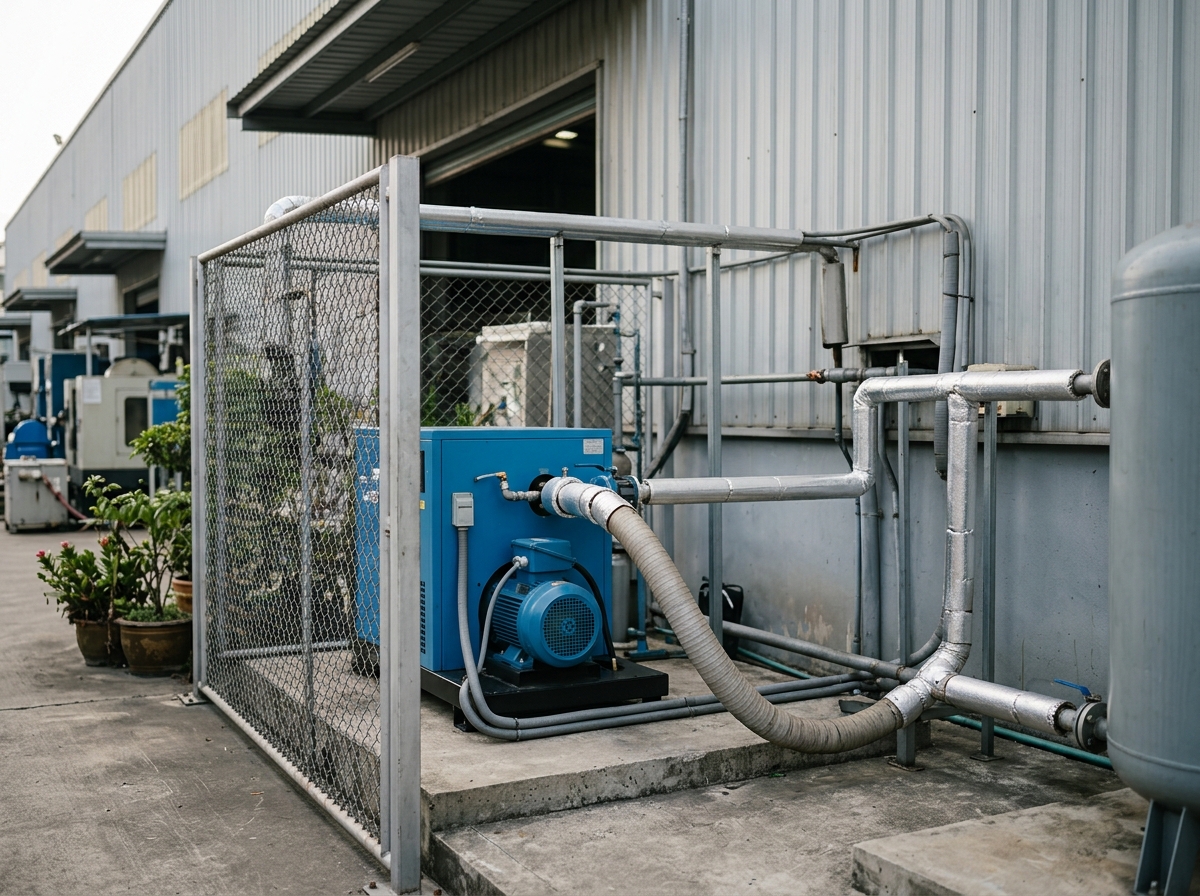
Heat recovery can improve total energy use when the recovered heat has a stable application, such as process water or space heating. The project should verify temperature requirements, operating hours, installation cost, and seasonal demand before treating recovery as a guaranteed saving.
Remote monitoring improves maintenance visibility by identifying trends such as rising discharge temperature, repeated condensate alarms, filter restriction, excessive starts, or pressure decay during nonproduction periods. These indicators support planned maintenance and can reduce the chance that a small fault becomes a machining stoppage.
Practical Selection Checklist for a CNC Shop
The best purchase decision balances performance, lifecycle cost, serviceability, and production risk. A useful review should include the following items:
- Confirm the machine manufacturer's pressure and flow requirements.
- Measure actual demand during representative production states.
- Specify air quality at the point of use, not only at the compressor outlet.
- Compare fixed-speed, variable-speed, and multi-compressor control strategies.
- Evaluate receiver volume, dryer performance, filter pressure loss, and drain reliability.
- Review electrical installation, ventilation, noise, access, and service clearances.
- Request a maintenance plan covering filters, oil, separators, drains, belts or couplings, and control alarms.
- Define response times, spare-parts support, remote diagnostics, and commissioning responsibility.
A real-world CNC cell may appear to need only a compressor, but its reliability depends on the interaction between the source, treatment train, pipework, controls, and end devices. Commissioning should include a pressure check at the most remote machine, verification of condensate removal, alarm testing, and confirmation that the system behaves correctly during simultaneous demand.
Frequently Asked Questions
1. Is a screw air compressor suitable for a CNC machining center?
It is often suitable for continuous or repeated production because rotary screw technology can provide steady compressed air for multiple machines and auxiliary devices. The final choice must still follow the machine builder's pressure, flow, and air-quality requirements.
2. What are the main CNC machine compressed air requirements?
Common requirements include pressure stability, sufficient flow during peak events, dry air, filtration, and dependable delivery to tool changers, clamps, chip blow-off devices, and automation equipment. The exact values must come from the machine documentation and a site demand study.
3. Do CNC machines need a dryer?
Most industrial CNC installations benefit from moisture control. A dryer helps prevent condensate-related corrosion, valve problems, and contamination, but the dryer type should match the required air quality and operating conditions.
4. Should the compressor be sized for every machine running at once?
It should be sized around measured or documented base demand plus credible simultaneous peak demand. An engineer should verify production scenarios rather than simply adding every theoretical device flow, because that can produce an unnecessarily large and inefficient system.
5. Is oil-free air necessary for metal cutting?
Not always. Oil-free equipment is most valuable when contamination could affect a sensitive process, clean area, or product. Standard lubricated systems may be appropriate when downstream separation and filtration meet the documented application requirement.
6. Can a receiver solve low-pressure problems?
A receiver can support short demand peaks and stabilize pressure, but it cannot compensate for a compressor that is persistently undersized, a blocked filter, excessive leakage, or poorly sized piping. The underlying cause should be diagnosed first.
7. How can a CNC shop reduce compressed-air cost?
Start with leak detection, pressure optimization, correct sequencing, filter maintenance, dryer control, and elimination of unnecessary blow-off. Variable-speed control or a multi-compressor strategy may help when the measured demand changes substantially over the production schedule.
About Deman
Deman develops compressed-air solutions for industrial users that need dependable production support rather than a standalone machine sale. Its approach considers compressor selection, air treatment, storage, piping, control, monitoring, maintenance, and the operating profile of the customer. For CNC machining projects, customers can use this system-based review to clarify requirements, compare lifecycle priorities, and plan a reliable installation. Contact Deman to discuss a site assessment and application-specific proposal.
Conclusion
A screw air compressor can support CNC machining center operations effectively when it is selected as part of a complete compressed-air system. The strongest design begins with verified demand, then adds suitable storage, drying, filtration, low-loss distribution, control, and monitoring. This approach protects machine functions, reduces avoidable energy waste, and gives the shop a more dependable foundation for continuous production.