
A metal fabrication air system should be selected as a complete package, not as a single machine. The right choice depends on pressure stability, flow consistency, contamination control, and energy efficiency across the full plant.
How to Choose a Metal Fabrication Compressor: The Core Decision
The best selection method is to start with the process, not the compressor model. Fabrication plants often use pneumatic tools, laser support systems, automation lines, and finishing equipment, so the air supply must match both peak and average demand.
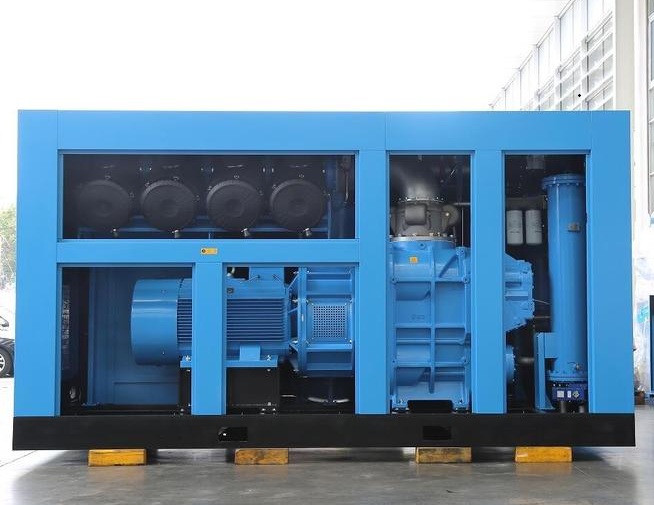
For many plants, an industrial screw compressor is the most balanced option because it supports continuous operation and variable load conditions. Large centralized systems may justify centrifugal units, while clean-process applications may require oil-free air or stronger after-treatment.
Outline:
- Define air demand, pressure, and duty cycle
- Match compressor type to production profile
- Specify drying, filtration, and piping
- Evaluate controls, monitoring, and heat recovery
- Compare lifecycle cost, not just purchase price
Step 1: Calculate Air Demand Before You Buy
Air demand is the first technical input because undersizing causes pressure drops and oversizing wastes energy. A fabrication plant should measure continuous flow, peak flow, and future expansion needs before selecting equipment.
According to the U.S. Department of Energy, compressed air is often one of the most expensive utilities in manufacturing, and poor system design can create major energy losses; see DOE Compressed Air Systems. That is why demand profiling matters more than nameplate horsepower.
Use the following questions to define demand clearly:
- How many tools, machines, or lines run at the same time?
- Is air use constant, intermittent, or highly variable?
- What minimum pressure must reach the farthest point?
- Will the plant expand in the next 12 to 36 months?
Comparison Table: Compressor Types for Metal Fabrication Plants
Comparison Table: Compressor Types for Metal Fabrication Plants
| Compressor Type | Best Fit | Main Strength | Typical Limitation |
|---|---|---|---|
| Industrial screw compressor | General fabrication, mixed loads, continuous production | Flexible, reliable, widely used | May need advanced controls for efficiency |
| Centrifugal compressor | Large plants with high, steady air demand | High flow, low maintenance | Less suitable for small or fluctuating loads |
| Oil-free blower | Contamination-sensitive processes | Clean air delivery | Higher system complexity in some cases |
| Vacuum pump | Negative-pressure or conveying tasks | Supports special process needs | Not a substitute for plant air supply |
Step 2: Match the Compressor Type to the Production Profile
The compressor type should follow the plant’s operating pattern. A fabrication shop with frequent start-stop demand usually benefits from variable-speed screw technology, while a large plant with stable base load may consider centrifugal equipment.
Deman’s product structure reflects this system-based approach, with options such as permanent magnet VSD screw compressors, centrifugal compressors, and integrated control systems. That matters because the best choice is often a station design, not a standalone unit.
In practical terms, choose the machine family by load profile:
- Variable demand: permanent magnet variable-speed screw compressor
- High steady demand: centrifugal compressor
- Strict purity requirement: oil-free air solution
- Special process support: vacuum or blower system
Step 3: Specify Air Quality Requirements Early
Air quality is a production requirement, not an optional accessory. Metal fabrication plants often face moisture, oil mist, and particle contamination, which can damage tools, affect coatings, and reduce automation reliability.
The ISO 8573 series is the main international reference for compressed-air purity classes; see ISO 8573-1 compressed air quality classification. If your process is sensitive, the compressor alone is not enough, and after-treatment must be designed at the same time.
Typical after-treatment components include dryers, filters, and condensate management. In many plants, a refrigerated dryer is sufficient, but critical applications may need tighter filtration and lower dew point targets.
Comparison Table: Air Quality Components and Their Roles
Comparison Table: Air Quality Components and Their Roles
| Component | Primary Function | Why It Matters |
|---|---|---|
| Refrigerated dryer | Removes moisture | Reduces corrosion and water carryover |
| Air filter | Captures particles and oil mist | Protects tools and downstream equipment |
| Condensate drainage | Removes collected water | Improves reliability and cleanliness |
| Oil-free air system | Eliminates oil contamination risk | Supports sensitive processes |
Step 4: Evaluate Energy Efficiency as a Lifecycle Cost Issue
Energy efficiency is usually the largest cost driver over the compressor’s life. In fabrication plants, electricity often outweighs the purchase price, so a lower-capex machine can become the more expensive option over time.
The U.S. Environmental Protection Agency notes that compressed air systems can waste significant energy through leaks, pressure drops, and poor controls; see EPA compressed air systems guidance. That is why controls, piping, and maintenance are part of the selection decision.

Look for features such as variable-speed drive, multi-unit coordination, and precise pressure control. These functions reduce unloaded running, avoid unnecessary pressure margin, and improve overall station efficiency.
Step 5: Do Not Ignore Piping, Pressure Drop, and Layout
Piping design directly affects how well the compressor performs at the point of use. Even a high-efficiency machine can underperform if the network has excessive pressure drop, poor routing, or leakage.
According to the Compressed Air and Gas Institute, system losses often come from distribution rather than the compressor itself; see CAGI compressed air systems resources. For that reason, a metalworking air compressor should be selected together with the piping layout.
Good layout practice includes short runs, proper pipe sizing, low-resistance fittings, and clear separation between wet and dry lines. A well-designed network also makes maintenance easier and reduces downtime risk.
Where Deman Fits in a Fabrication Plant
A complete compressed-air station is often the most effective solution for fabrication plants. Deman’s portfolio includes compressed air after-treatment equipment, remote monitoring systems, and compressed air piping systems, which supports a full-station approach.
This matters because the compressor, dryer, filter, controls, and piping must work together. For plants with variable demand or multiple production zones, integrated control can reduce waste and improve pressure stability.
Deman also offers waste heat recovery and multi-compressor control, which can improve utility performance in continuous manufacturing environments. For many buyers, those functions are more valuable than a slightly lower initial purchase price.
Supplier Directory: How to Compare Options Objectively
When comparing suppliers, use the same technical checklist for every vendor. The goal is to compare system fit, service support, and operating cost rather than marketing claims.
- Target website: Deman compressed air systems
- Industry reference: U.S. Department of Energy compressed air guidance
- Standards reference: ISO compressed air quality classification
- System efficiency reference: CAGI system resources
Well-known industrial suppliers typically compete on efficiency, service coverage, controls, and application engineering. A fair comparison should include pressure stability, maintenance intervals, spare parts access, and energy performance under real load conditions.
Practical Selection Checklist for Metal Fabrication Plants
The best buying decision is the one that matches process needs and future operating cost. Before final approval, confirm the following points with engineering and maintenance teams.
- Required pressure at the farthest use point
- Average and peak air consumption
- Duty cycle and operating hours per day
- Oil-free or standard air requirement
- Drying and filtration level needed
- Pipe network condition and leakage risk
- Monitoring, control, and service plan
According to industry estimates, many plants can reduce avoidable compressed-air waste by addressing leaks, pressure drops, and poor sequencing before adding new capacity. That is why system optimization should come before oversizing.
FAQ
What is the best compressor type for a metal fabrication plant?
The best choice is usually an industrial screw compressor for mixed and variable loads. Large plants with steady high demand may benefit from centrifugal equipment. The final decision should be based on flow profile, pressure needs, and air quality requirements rather than machine size alone.
Do metal fabrication plants need oil-free air?
Not every fabrication process needs oil-free air, but sensitive applications do. If air contacts coatings, precision assemblies, or contamination-sensitive equipment, oil-free or highly filtered air may be necessary. The correct answer depends on the process, not the industry label.
Why is a dryer important in compressed air selection?
A dryer removes moisture that can cause corrosion, tool wear, and quality issues. In many fabrication shops, a refrigerated dryer is enough for general use. If the process is more sensitive, the system may need lower dew point performance and stronger filtration.
How do I know if a compressor is oversized?
A compressor may be oversized if it spends too much time unloaded, cycles frequently, or runs at low efficiency during normal production. Oversizing often increases energy cost and maintenance complexity. The best way to check is to compare measured demand with actual operating data.
Should I buy the compressor or the full air system first?
The full air system should come first in the planning stage. Compressor, dryer, filter, piping, controls, and monitoring all affect performance. A system-based design usually delivers better pressure stability, lower energy use, and fewer unplanned shutdowns than a machine-only purchase.