- Stable air supply is a system outcome, not just a compressor specification.
- Appliance plants need consistent pressure, adequate flow reserve, and clean, dry air.
- Multi-unit control, aftertreatment, and low-pressure-drop piping are as important as the compressor itself.
- Demand-based control can reduce wasted energy while improving pressure stability.
- Planning from the point of use backward is the fastest way to avoid downtime and quality loss.
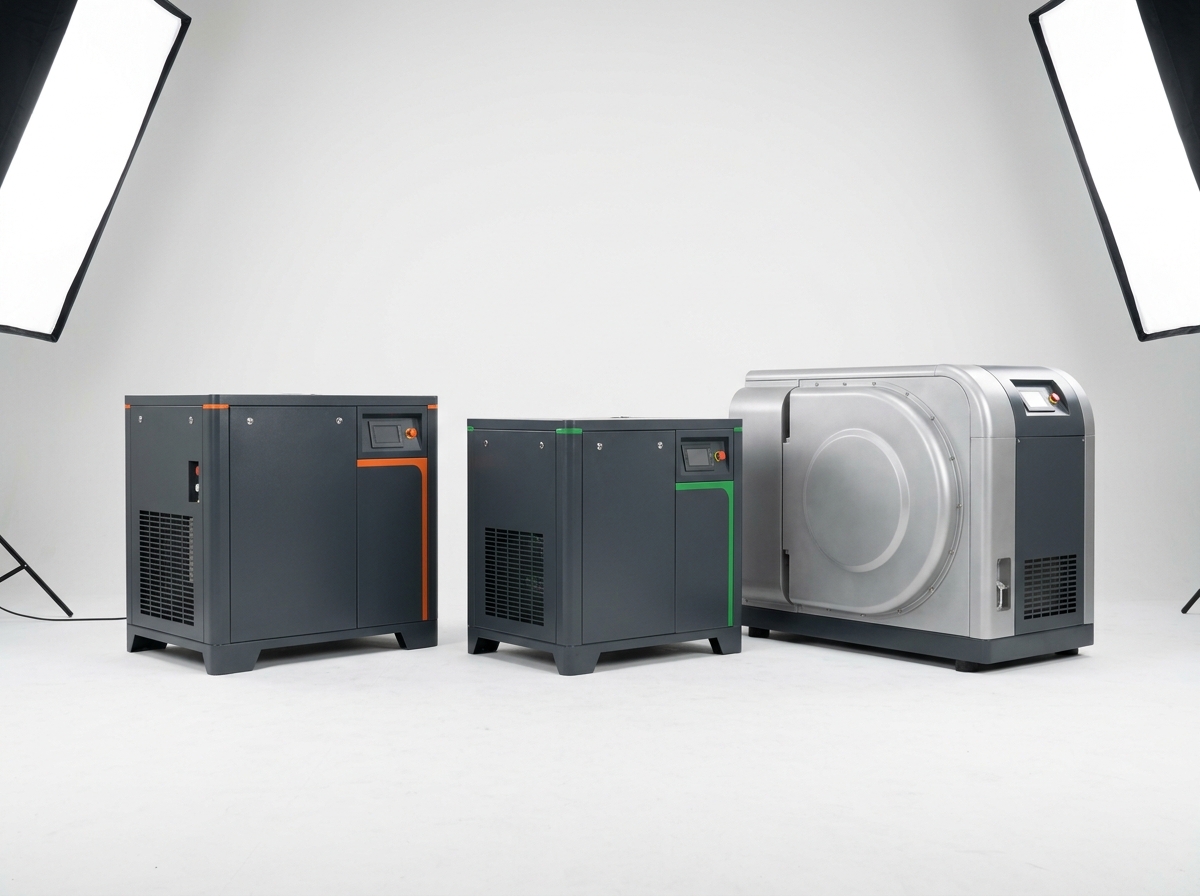
An industrial air compressor solution for appliance manufacturing must keep pressure steady enough to support automated lines, and that usually means designing around the plant’s actual load profile instead of buying a machine by horsepower alone. In precision manufacturing, even small pressure swings can matter: ISO 6358-1:2013 defines pneumatic flow testing methods, while ISO 1217:2009 specifies how compressor capacity is measured, helping buyers compare machines on a consistent basis. If your plant also cares about system efficiency, it is worth reviewing the compressor family behind the screw air compressor range, the centrifugal air compressor lineup, and the oil-free air compressor options to match flow, duty cycle, and air quality requirements. For distribution and monitoring, the intelligent control system and the heat recovery system show how plant-level optimization extends beyond the compressor room.
Why stable air supply matters in appliance manufacturing
Stable air supply is a production control issue, not a utility detail. Appliance plants rely on pneumatic cylinders, vacuum handling, robotic grippers, leak testers, and tooling systems that all respond to pressure quality in real time.
When pressure dips, clamp force drops, actuators slow, and cycle times become inconsistent. When pressure overshoots, valves chatter, seals wear faster, and energy use rises. The result is usually not a single dramatic failure, but a pattern of minor instability that increases scrap, rework, and maintenance calls.
For appliance manufacturers, the biggest risk is often hidden variability. A line may run acceptably in the morning and then degrade after lunch when multiple machines start together, or when one air dryer cycles on and off. That is why the right industrial air compressor solution has to address peak demand, transient demand, and air quality together.
Industrial air compressor solution design starts with demand profiling
A stable system starts by measuring when and where air is consumed. Appliance plants should map the real load profile before choosing capacity, control logic, or receiver size.
The practical mistake is to estimate demand from installed equipment list alone. That method ignores simultaneity, idle losses, short bursts, and future expansion. A better design uses actual running data from production shifts, including start-up peaks, cleaning cycles, leak periods, and maintenance bypass conditions.
| Design variable | Why it matters | Typical plant impact | Quantitative reference |
|---|---|---|---|
| Pressure | Controls actuator force and tool behavior | Too low causes slow cycles; too high wastes energy | 10 psi higher pressure can raise compressor power demand by about 7 percent, according to U.S. Department of Energy guidance |
| Flow | Determines whether demand spikes can be covered | Insufficient flow creates pressure sag | Compressor capacity should be compared using ISO 1217:2009 test conditions |
| Air quality | Protects product quality and valves | Water, oil, and dust increase rejects and wear | Cleanliness targets are commonly verified using ISO 8573-1 classification |
These three variables are the foundation of any stable air supply strategy. In practice, the compressor room, dryer, filters, storage tank, and piping should be engineered as one compressed-air network.
How pressure stability is achieved in a compressed air system
Pressure stability comes from control logic, storage buffering, and low distribution loss. It does not come from oversizing a compressor and hoping the extra capacity will solve every problem.
Variable-speed drive compressors are often the most effective tool for matching output to demand because they reduce the gap between supply and consumption. In plants with changing workloads, they can lower unload time and reduce pressure swings. Multi-machine sequencing is even better when several compressors operate together, because one unit can trim the pressure while others stay in efficient load zones.
That is why multi-unit coordination matters. A system that uses intelligent load sharing, such as the Deman Cloud remote monitoring platform, can detect abnormal pressure behavior early and alert operators before the line quality drops. For larger plants, Air Commander multi-compressor control can distribute load automatically, reduce unnecessary running hours, and keep the plant closer to the target pressure band.
| Control method | Best use case | Stability level | Energy efficiency note |
|---|---|---|---|
| Fixed-speed single unit | Small, steady loads | Moderate | Less efficient under variable demand |
| Variable-speed single unit | Changing production demand | High | Better trim control, less unload loss |
| Sequenced multi-unit control | Multiple lines and shifting load | Very high | Improves whole-station efficiency and pressure balance |
The conclusion is simple: if your appliance plant has multiple shifts, mixed product types, or frequent line starts, control architecture matters as much as compressor capacity.
Air quality is part of stable air supply, not a separate feature
Air quality is the hidden variable behind many pneumatic reliability problems. In appliance manufacturing, moisture, oil carryover, and particulate contamination can affect surface finish, sensor life, and actuator performance.
For many factories, this means the compressor alone is not enough. Aftertreatment must be matched to the process. Drying, filtration, and pressure drop management should be chosen according to the most sensitive point of use, not only the compressor outlet.
ISO 8573-1 is the most widely used compressed-air purity standard because it classifies contaminants by particles, water, and oil. If your line includes painting, precision assembly, or leak testing, tighter air quality control can reduce defects and improve repeatability.
In textile or surface-sensitive applications, even small contamination issues can become visible product defects. In appliance plants, the same logic applies to valve stickiness, seal wear, and inconsistent actuator response. That is why an industrial air compressor solution should include filters, dryers, and maintenance intervals from the start.
Why low-pressure-drop piping improves compressor stability
Distribution design has a direct effect on usable pressure. A compressor may be properly sized, but if the pipe network is undersized, poorly looped, or full of unnecessary fittings, the end user sees a weaker and less stable supply.
Low-pressure-drop piping reduces the need to run the system at a higher setpoint just to compensate for losses. That lowers energy use and keeps the pressure closer to the actual process requirement. In many plants, the pipe network is the cheapest place to recover stability because it fixes a problem that no amount of extra compressor horsepower can fully solve.
A useful rule is to design the air network as a loop where possible, keep main headers properly sized, and place receivers near demand peaks. The goal is to minimize velocity spikes and local restrictions. This matters especially in appliance plants where several pneumatic systems may start at the same time.
- Measure pressure at the compressor room and at the farthest point of use.
- Identify pressure loss during peak production, not only idle periods.
- Remove unnecessary elbows, undersized branches, and long dead-end runs.
- Verify that filters and dryers do not create excessive pressure drop.
- Recheck the system after any production line expansion.
What standards help buyers compare compressor systems fairly
Standards make compressor selection more trustworthy because they remove marketing ambiguity from capacity claims.
ISO 1217:2009 defines acceptance testing for displacement compressors and allows buyers to compare free air delivery under consistent conditions. ISO 8573-1 defines air purity classes. ISO 6358-1:2013 provides methods for pneumatic components and flow characteristics, which matters when sizing valves, manifolds, and downstream equipment.
For engineering teams, standards are not paperwork. They are the only reliable way to compare one quote against another. Without them, two compressors with the same nominal rating may deliver very different real-world performance.
| Standard | What it covers | Why appliance plants should care | Selection outcome |
|---|---|---|---|
| ISO 1217:2009 | Compressor performance testing | Helps compare capacity honestly | Better sizing and vendor comparison |
| ISO 8573-1 | Compressed-air purity classes | Protects product quality and pneumatics | Correct dryer and filter specification |
| ISO 6358-1:2013 | Pneumatic component flow testing | Useful for valve and line sizing | More stable end-of-line pressure |
For companies evaluating a broader platform, it may also help to review the air compressor system overview to see how supply, treatment, control, and recovery fit together.
How smart monitoring reduces downtime in appliance plants
Smart monitoring turns compressed air from an invisible utility into a managed production asset. This is especially valuable in distributed factories where maintenance teams cannot watch every machine continuously.
Remote monitoring platforms can track pressure, temperature, operating hours, fault codes, and abnormal load patterns. In practice, that allows maintenance teams to respond before a small issue becomes a shutdown.
For example, rising discharge temperature may indicate fouled cooling surfaces or poor room ventilation. Sudden changes in duty cycle may signal leaks, blocked filters, or a control fault. When these changes are visible in time, the plant can intervene during scheduled windows rather than after an unscheduled line stop.
This is one reason compressed-air systems are increasingly managed like industrial assets rather than utility devices. The more variable the plant, the more valuable predictive visibility becomes.
How to choose the right industrial air compressor solution for appliance manufacturing
The right solution depends on how your plant uses air, not just how much air it consumes.
A factory with stable, continuous demand may benefit from a large base-load compressor and an efficient trim unit. A plant with multiple start-stop processes may need more storage and faster control response. A site with contamination-sensitive operations may require oil-free or enhanced aftertreatment. A multi-building campus may need remote monitoring and coordinated sequencing.
Use the checklist below to narrow the right design.
- Define peak demand, average demand, and short-burst demand separately.
- Measure pressure at the farthest user, not only at the compressor outlet.
- Specify air quality by process requirement, not by habit.
- Plan for future line additions before finalizing the capacity.
- Include maintenance access, ventilation, and heat rejection in the room design.
- Verify control compatibility between multiple compressors and dryers.
Where energy recovery fits into stable air supply strategy
Heat recovery improves total system efficiency without compromising air delivery when it is designed correctly. Compressors reject a significant amount of heat during operation, and capturing part of that energy can support space heating, process water preheating, or domestic hot water systems.
This matters because many appliance plants run long hours and therefore have a steady thermal opportunity. A well-integrated recovery system can improve lifecycle economics while keeping the compressed-air system focused on its primary job: stable supply.
Heat recovery should be viewed as part of station optimization, not as an afterthought. If the recovered energy can be used consistently, the payback becomes much more attractive. If not, the system should still prioritize reliability and pressure stability first.
Common failure modes in appliance plants and how to prevent them
Most unstable air supply problems are predictable and preventable.
The most common failure mode is leakage. Small leaks waste energy continuously and can mask real demand spikes. Another common issue is filter or dryer pressure drop, which quietly reduces usable pressure at the point of use. A third problem is control mismatch, where multiple compressors hunt against each other instead of working as a coordinated station.
Operators should also watch for undersized receivers, overheated compressor rooms, and poor ventilation. Each of these can reduce the system’s ability to maintain stable output during production peaks.
- Perform ultrasonic leak surveys on a fixed schedule.
- Track differential pressure across filters and dryers.
- Review load/unload patterns monthly.
- Verify that room temperature stays within the compressor manufacturer’s operating range.
- Audit pressure at the point of use after every major line change.
FAQ: industrial air compressor solution for appliance manufacturing
What is the most important factor for stable air supply?
The most important factor is consistent pressure at the point of use, supported by sufficient flow and suitable air quality.
Should appliance plants choose fixed-speed or variable-speed compressors?
Variable-speed compressors are usually better when demand changes throughout the day, while fixed-speed machines can work well for steady loads.
Do air dryers really affect pressure stability?
Yes. An undersized or poorly maintained dryer can add pressure drop and reduce usable pressure downstream.
How much pressure loss is acceptable in a plant?
That depends on the process, but the general goal is to keep the distribution network efficient enough that the end user does not need artificially high compressor setpoints.
Why is multi-machine control important?
Because coordinated sequencing reduces load conflicts, improves efficiency, and helps keep plant pressure closer to target.
When should oil-free air be used?
Oil-free air is most appropriate when product quality, cleanliness, or contamination risk makes oil carryover unacceptable.
How can a plant reduce energy waste without hurting supply stability?
By fixing leaks, lowering pressure drop, using intelligent control, and matching capacity to real demand instead of peak guesswork.