


How Air Pipelines Affect Compressor Efficiency
Imagine buying a top-of-the-line, energy-efficient sports car, only to drive it with a clogged exhaust and deflated tires. You wouldn't blame the engine for the terrible performance, right?
The same logic applies to industrial air compressors. Companies often spend tens of thousands of dollars on high-efficiency compressors, only to realize their energy bills are still sky-high. The culprit? The pipeline network.
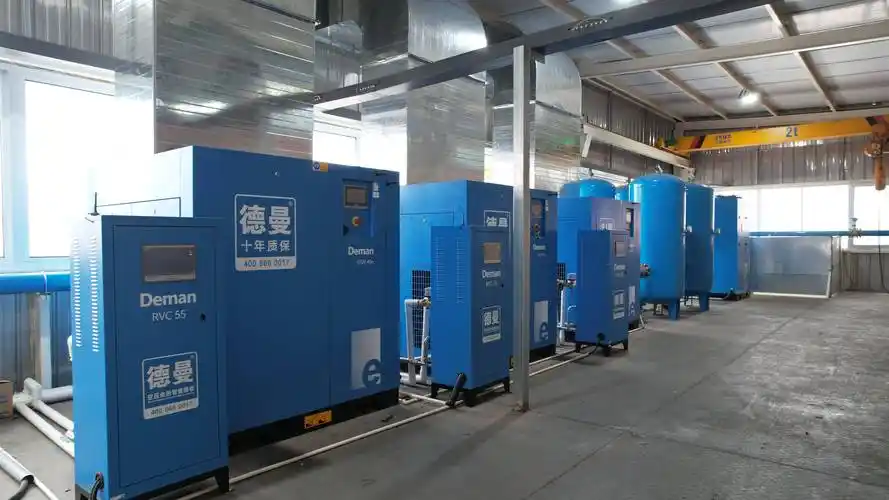
The piping system is the vascular system of your compressed air setup. If it’s poorly designed, your compressor has to work twice as hard to deliver the same amount of power. Let’s break down exactly how air pipelines affect compressor efficiency—and how you can fix it without needing a degree in fluid dynamics.
- The Enemy Called “Pressure Drop”
In a perfect world, if your compressor pumps out 100 PSI (pounds per square inch) of air, your tools at the end of the line should receive 100 PSI. In reality, air loses energy as it travels through pipes due to friction. This loss is called pressure drop.
If your piping system causes a significant drop—say, 15 PSI—your compressor has to over-compensate by ramping up its output to 115 PSI just so your tools can function.
The Cost of Pressure Drop: As a rule of thumb, every 2 PSI of unnecessary pressure increase forces the compressor to consume about 1% more energy. A poorly optimized pipe network can quietly drain thousands of dollars from your budget every year.
- Pipe Material: Smoothness Matters
What your pipes are made of plays a massive role in friction.
Black Iron/Galvanized Steel: Traditionally popular because they are strong and cheap. However, they are highly prone to corrosion and rust over time. The interior becomes rough, creating massive friction, scaling, and eventual air leaks.
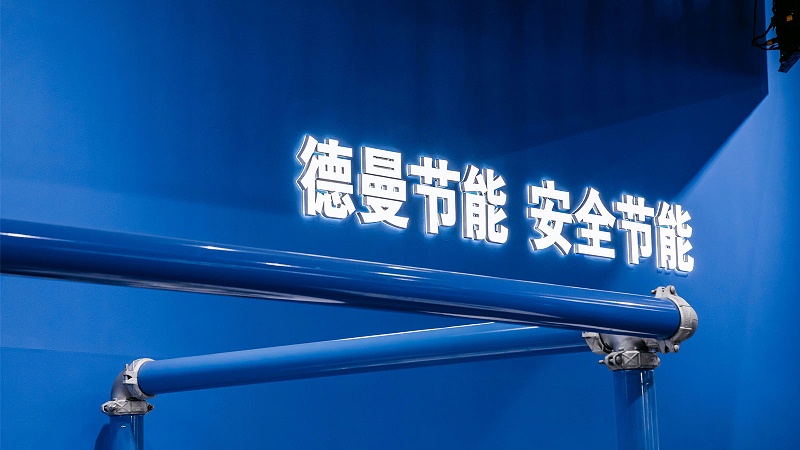
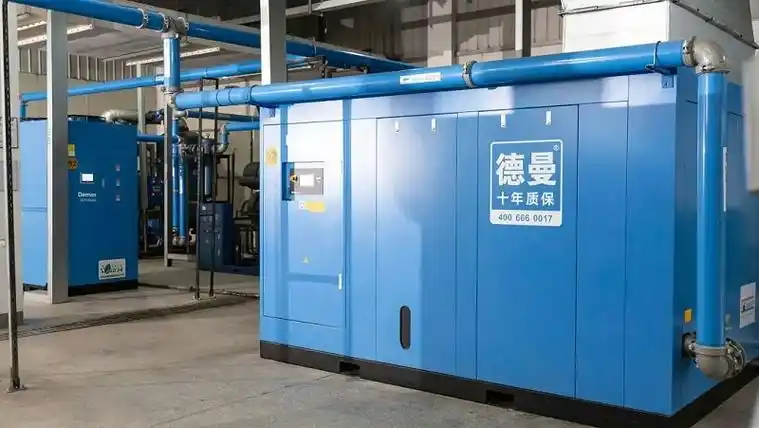
Aluminum: The modern industry standard. Aluminum pipes are lightweight, completely corrosion-resistant, and have a mirror-smooth interior. Smooth walls mean less friction, minimal pressure drop, and peak compressor efficiency.
- Layout and Sizing: Size Matters, Sharp Bends Don't
When it comes to compressed air, layout geometry is everything.
①Pipe Diameter
If your pipe diameter is too small, you are trying to force a massive amount of air through a narrow straw. This skyrockets the air velocity, leading to extreme turbulence and friction. Sizing pipes based on the maximum potential flow of your system—rather than just matching the compressor's outlet size—is crucial. Elbows and T-Joints
②Elbows and T-Joints
Every sharp 90-degree bend is like a brick wall for flowing air. It causes the air to slam into the wall, creating turbulent swirls that destroy pressure.
Using smooth, sweeping 45-degree bends or loop designs instead of sharp T-joints allows the air to glide smoothly, preserving energy.
- The “Closed-Loop”Advantage
Many old workshops use a straight-line (dead-end) piping layout, where air travels from the compressor down a single main line to the farthest tool. The tool at the very end always suffers from the lowest pressure and highest starvation.
A much more efficient design is a Ring Main or Closed-Loop system. By looping the pipeline in a continuous circle around the facility, air can travel in two directions to reach any given tool. This effectively cuts the distance the air has to travel in half, balances the pressure across the entire shop, and heavily reduces the load on the compressor.
- Moisture and the “Drop Leg”Problem
Compressing air squeezes out a lot of water. If your pipelines don't account for this, water pools inside the pipes, causing rust (in iron pipes) and restricting airflow.
To maintain efficiency, main headers should always slope slightly downward away from the compressor, leading to a drain. Furthermore, when taking an air line down to a machine, always pull the air from the top of the main pipe (a "gooseneck" or "Swan Neck" design) rather than the bottom. This prevents water from draining straight into your tools and destroying them.
- The Bottom Line
Your air compressor is only as good as the pipes connected to it. If you are looking to cut energy costs and boost productivity, stop looking only at the machine itself. Look at the walls, look at the ceilings, and check your plumbing.
By upgrading to smooth materials like aluminum, sizing up your pipe diameters, and designing a smart loop layout, you can ensure your compressor runs smoothly, breathes easily, and operates at peak efficiency.