






Compressed Air Station Bid Specification: Separating Equipment, Piping and Commissioning Scope
Home / Services / Rotary Screw Compressors / Bid Specification

Tender Guide · Compressed Air Systems
Compressed Air Station Bid Specification: Separating Equipment, Piping and Commissioning Scope
A compressed air station tender fails at the boundaries, not the parameters. How to write equipment, plant piping and commissioning as three lots with their own deliverables, acceptance tests and risk owners.
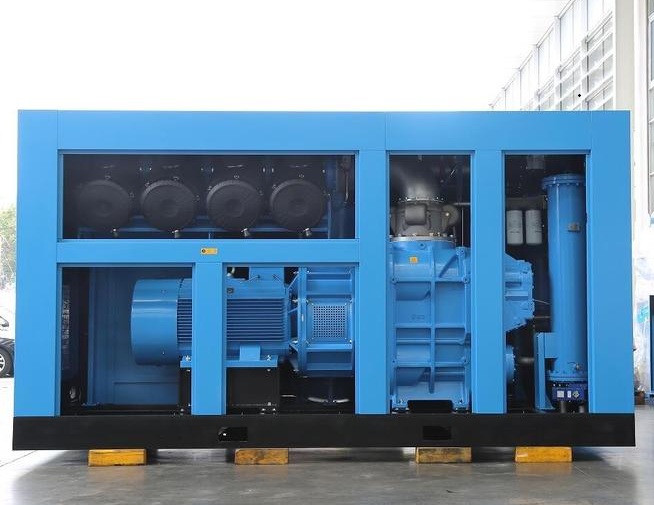
All three lots in one frame: the compressors as equipment, the overhead pipework that carries the air to the point of use, and the monitoring layer where commissioning is judged and then kept under watch.
TL;DR — The Short Answer
- The weakness of a compressed air station tender is rarely the technical parameters; it is the boundaries between scopes. Equipment, plant piping and commissioning each need their own deliverables, their own acceptance test and their own owner, or the gaps are filled late by change orders.
- The three scopes are not a filing convention, they are how the supply is actually organised. Our published service scope lists station planning and design, after-treatment selection, complete plant piping planning and on-site equipment installation as separate lines, because they are separate lines of work with separate evidence.
- Piping is the scope most often assumed to be inside the equipment price. It is an engineering lot: material, supports, drainage, pressure testing, blowing and the interface points, and it carries its own pressure-loss and corrosion risk.
- Commissioning is where the contract is actually closed. Survey, design to the required efficiency class, data monitoring, machine selection and combination, installation, central control integration, and 24/7 monitoring after handover.
The Three Lots · Why Split
Why the scope splits at all
Ask a procurement team which line of a compressed air tender they would defend in a claim and you will usually find that the answer is the equipment line, because that is the line that carries a price. But equipment is also the easiest part to compare, because it has a model number and a performance sheet. The money and the arguments live in the two lines around it: the plant piping that carries the air to the point of use, and the commissioning that decides whether the station performs as designed.
This article is written for procurement and supply chain managers who have to write, or read, that tender, and it uses our own published material: the compressed air service scope, the rotary screw compressor range, and a station upgrade case study showing how a real award was structured.
The three lots exist because the work has three kinds of owner and three different failure modes. Equipment is manufactured and warranted. Piping is engineered and installed on site. Commissioning is a process that ends with a measurement.
Our own published service scope makes the same separation. It lists plan and design of compressed air station, after-treatment products selection, complete plant piping planning, on-site equipment installation, prompt after-sales technical service, product warranty, 24/7 maintenance tracking, a free rental programme and a satisfaction commitment — with a dedicated installation team supporting smooth installation and intended performance from day one, plus comprehensive after-sales assistance and a 24/7 remote monitoring system.
Read that list as a tender schedule and it is already telling you what to write: the first two lines are engineering decisions made before anything is ordered, the third is the piping lot, the fourth is installation, and the rest is what happens after handover. Because a tender that merges design, supply, installation and service into one line cannot be evaluated, cannot be paid against milestones and cannot be disputed cleanly, so separating the lots is what makes the award defensible, and the separation has to exist in the document rather than in the vendor’s mind.
Lot One · Equipment
Lot one: equipment, and the paperwork that arrives with it
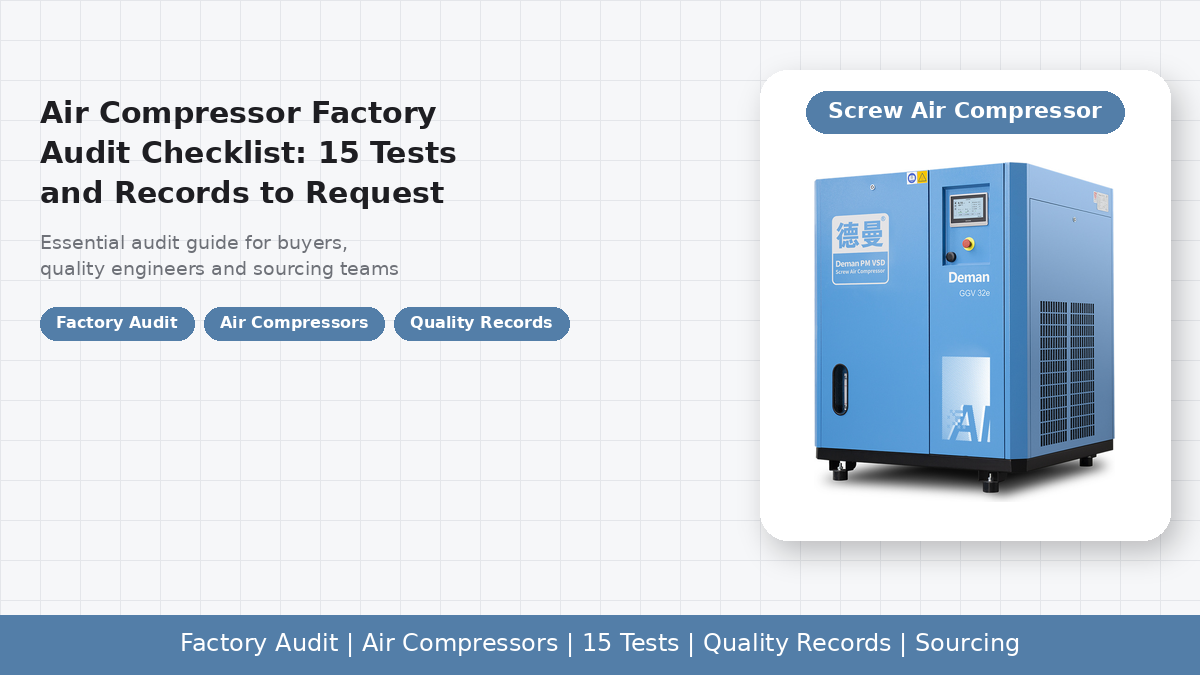
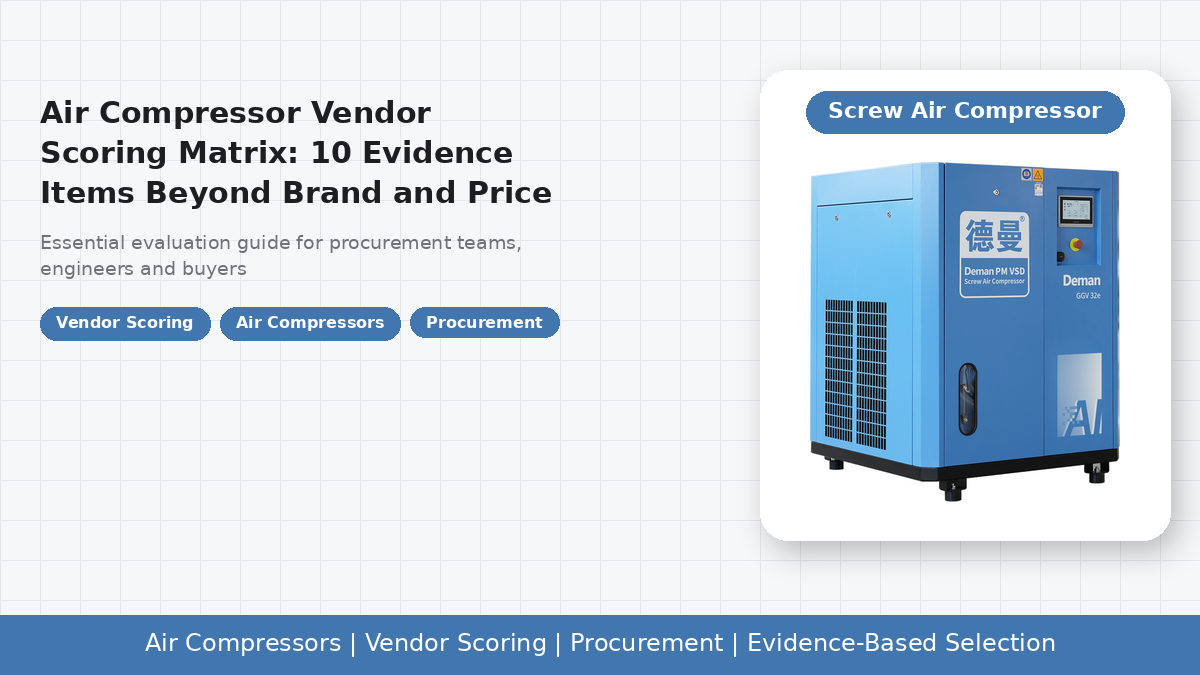
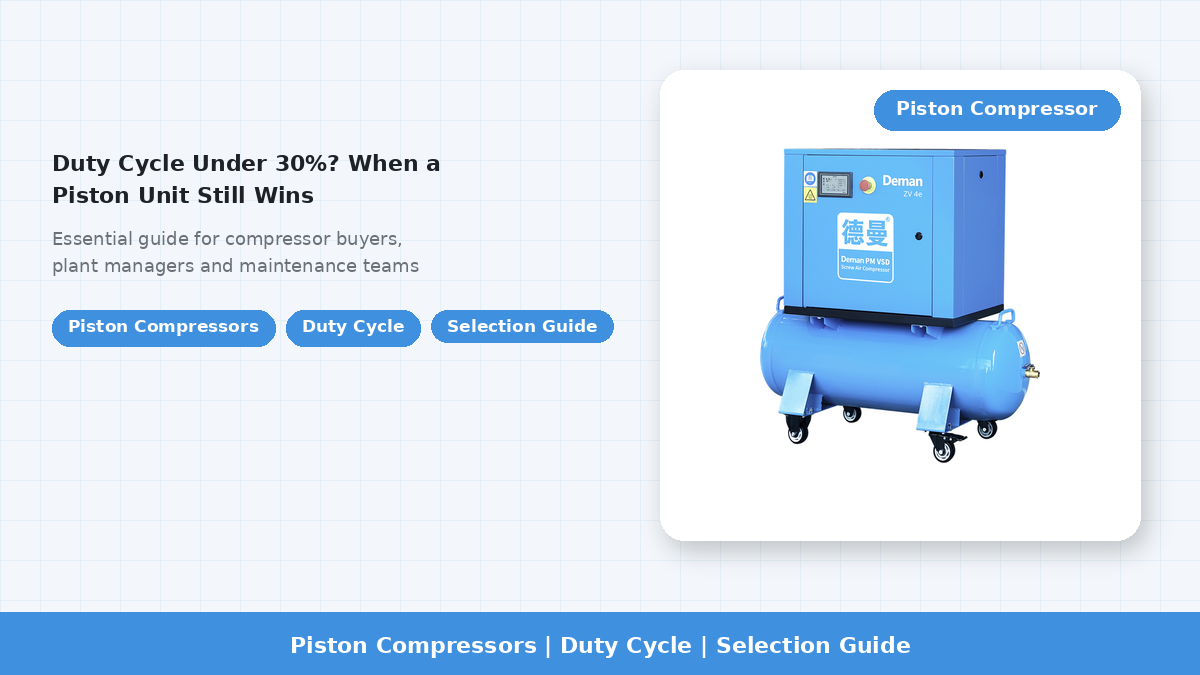
Equipment scope is the easiest lot to write and the easiest to compare, because the supplier’s published range is organised by series rather than by adjectives. Our rotary screw range covers the GGVe flagship dual-stage PM VSD quad-screw machine with tailored discharge pressure and tailored FAD, the SSVe series, the ZVe single-stage PM VSD unit and a ZVe variant with an integrated air receiver, the PGVe PM VSD screw vacuum pump, the EHVe laser-cutting machine at a stable 16 bar with an IE5 oil-cooled motor, and the LBV with a 0.3–0.45 MPa adjustable pressure range. Beside them sit the “Air Commander” central control, magnetic levitation machines and RVC and RVB heat recovery.
For the tender, the equipment lot needs three things beyond the model list. The first is the pressure basis, because every downstream calculation starts from it: in our published case study the station was built to a custom pressure of 0.68 MPa, with selection made against the customer’s actual production needs rather than a catalogue default. The second is the documentation that travels with the machine: test records, warranty terms and manuals. The third is the supplier’s own qualification: our Ningbo factory is certified to ISO 9001:2015, ISO 14001:2015 and ISO 45001:2018, product testing follows ASME codes and standards and ISA1932, and we are the primary drafter of China’s industry standards for VSD oil-injected compressors (JB/T 10972) and PM VSD screw air compressors (JB/T 13345-2017).
Lot Two · Piping
Lot two: piping, the scope most often assumed to be included
Piping is where compressed air tenders get vague, and the reason is understandable: to a buyer it looks like pipe. It is not. Air travels through it under pressure, so every diameter, bend, support and joint is a pressure-loss decision, and the total loss across the station usually determines the pressure the compressors must produce.
We sell piping as its own product line and treat it as its own line in the service scope. The case study shows why material matters: the upgrade used our aluminium alloy super piping system, described as corrosion-resistant and rust-free and as effectively reducing pressure loss. That is a specification, not a description — the difference between a ring main that stays clean in a humid plant and one that has to be re-piped after a few years.
For the tender, the piping lot should state at minimum the pipe material and diameter schedule, the support and hanger arrangement, the drainage and condensate provisions, the pressure testing and blowing requirement, and the interface points with the equipment — flanges, connections, and who owns each one. Because an undefined interface is where a commissioning delay becomes a variation order, so naming the interface points in the tender is what keeps a delay from becoming a price dispute.
Installations also sit inside local mechanical and safety codes: in the United States, air receivers and compressed air piping are covered by federal rules such as 29 CFR 1910.94. A tender that does not say who carries code compliance for receivers, safety valves and pipework leaves that to be argued after the order.
Lot Three · Commissioning
Lot three: commissioning and services, where the contract closes
Commissioning is the part of a compressed air station that a tender usually describes in a single line, and it determines whether the buyer gets the performance the equipment was chosen for.
Our published case study describes the sequence as it actually runs: multiple on-site surveys and assessments; the solution designed from the early planning stage against the standards of a Class 1 energy efficiency station; extended data monitoring and analysis; and then the compressed air solution tailored by selecting and combining different machines according to the customer’s actual production needs. Equipment and after-treatment arrive as described — three DDV200e two-stage PM VSD compressors, a 5DV PM VSD refrigerated air dryer and a heat recovery system — and then the control layer comes on top: the “Air Commander” multi-compressor central control system, which keeps each unit inside its most efficient operating range and adjusts to deviations, together with the “Deman Cloud” intelligent remote monitoring and control system, which continuously monitors the installed machines and their safe running.
That is a sequence with deliverables, not a promise with adjectives. Written properly, the commissioning lot states the survey, the design basis, the data period, the acceptance test and the instrumentation it is judged on, and what happens to the warranty if measured performance is short. Air quality at the point of use should be written as a class rather than a description, for example against ISO 8573-1, which sets the purity and pressure dew point classes a dryer is bought to deliver. Beyond that, the service scope keeps the station performing after handover: 24/7 remote monitoring and maintenance tracking, prompt after-sales technical service and the product warranty.
Case Study · Changhua Group
A worked example: how a real award was structured
The published Changhua Group case study is worth reading as a tender template, because it names the problem, the scope and the outcome in the same document.
The customer is Ningbo Changhua Changsheng Auto Parts, established in 2006 and a subsidiary of Changhua Group, described as among the top private enterprises in China’s fastener industry, active in formulating national industry standards, with more than 70% domestic market coverage and long-term supply relationships with major OEMs including Dongfeng Honda, FAW-Volkswagen and SAIC-GM. The published problem statement is an aged compressed air station: high energy consumption, frequent failures from aging machines, excessive moisture, high maintenance costs and no intelligent control.
The published answer is the four-part scope above, and the published result is specific: a plant-wide six-end application, 61.6% power transmission efficiency, and 1,020,000 kWh of electricity saved per year against the previous system. The station is described as the first 120 m³ Class 1 energy efficiency compressed air station in the auto parts industry, and the upgrade moved it from Class 4 efficiency to ultra Class 1.
For a procurement reader, the useful part is not the result but the structure. Because the case names what was delivered and what it achieved, so it demonstrates that the efficiency class is a deliverable that has to be written into the tender and then measured, and that a station which is only specified by equipment list is a station whose efficiency class has been left to chance.
Tender Template · Three Lots
How to write the three lots into the tender
| Lot | What it delivers | How it is accepted | Where the risk sits |
|---|---|---|---|
| Equipment | Machine model, pressure basis, after-treatment, control hardware, documentation, warranty | Delivery against the model list and the factory acceptance records; warranty starts at a defined event | The supplier, for build quality and specification compliance |
| Piping | Material and diameter schedule, supports, drainage, testing and blowing, interface points | Pressure test and blow records; measured pressure loss against the design basis | Shared, and it moves to whichever party owns the interface |
| Commissioning and service | Survey, design to the efficiency class, data monitoring, machine selection and combination, installation, central control integration, remote monitoring | Measured performance against the written efficiency class and pressure basis, on named instrumentation | The supplier until handover, the buyer afterwards — so the handover point must be dated |
Three practical points follow. First, interface points belong in the tender document, beside the lots, because that is where a piping contractor’s flange and the compressor supplier’s connection meet. Second, ask what is explicitly excluded: civil works, electrical supply to the station and local authority inspection are the three that most often arrive unpriced. Third, because performance is judged against a measured value, so an acceptance criterion that names no instrument and no measurement period cannot be enforced, and that clause is the one worth spending legal review on.
Our own position on this is on the record in the founder’s message published on our company page: the mission is to maximise the customer’s return on investment, and because we are the experts, we should tell the customer what is the right choice rather than simply cater to the request.
FAQ · Procurement Questions
Frequently asked questions
Q.01Is plant piping normally included in a compressor quotation?+
It depends on how the quotation is written. Piping appears as its own product line and its own line in the published service scope, because it is a designed lot with its own material, supports, drainage, testing and interface points. So the tender should name it either way rather than leaving it to be assumed from a total price.
Q.02How do I write a custom working pressure into the specification?+
Give it as a number with a basis. In our published case study the station was designed to a custom pressure of 0.68 MPa, with machine selection made against actual production needs rather than a catalogue default. The pressure basis also propagates into the piping lot and the acceptance test, so it belongs once at the top and then in each lot that depends on it.
Q.03When should a buyer split the three lots across two suppliers?+
When the buyer already has a piping contractor it trusts, or when the plant has an existing air network with constraints only the owner understands. The cost is coordination: interface points, sequencing and acceptance evidence must then be managed by the buyer rather than one supplier. On a first award, a single supplier carrying all three lots is usually the cheaper risk.
Q.04Who is responsible if the station does not reach the specified performance?+
That depends on where the gap is, which is why the tender should decide it in advance. A shortfall from machine selection or control tuning sits with the commissioning scope; a shortfall from pressure loss in the network sits with the piping lot; a shortfall from the production profile is a design-basis issue belonging to the buyer. Naming the measurement and instrument in the tender is what makes that argument possible.
Q.05Does a retrofit tender differ from a new-build tender in how the scope is written?+
The lots are the same, but the survey carries more weight. In a published upgrade the process began with on-site surveys and assessments and extended data monitoring before the solution was designed, because an existing station’s air demand, aging equipment and moisture problems have to be measured rather than assumed. A new-build tender starts from the production profile; a retrofit tender starts from the plant as it is, and that survey belongs in the commissioning lot as a dated deliverable.
Next Step · Tender Review
Writing a compressed air station tender?
Send us your production profile and site constraints — our engineering desk returns a three-lot scope structure with acceptance criteria you can defend.
Last verified: 2026-10-29 · All published service scope, product and case study data re-checked on the verification date