

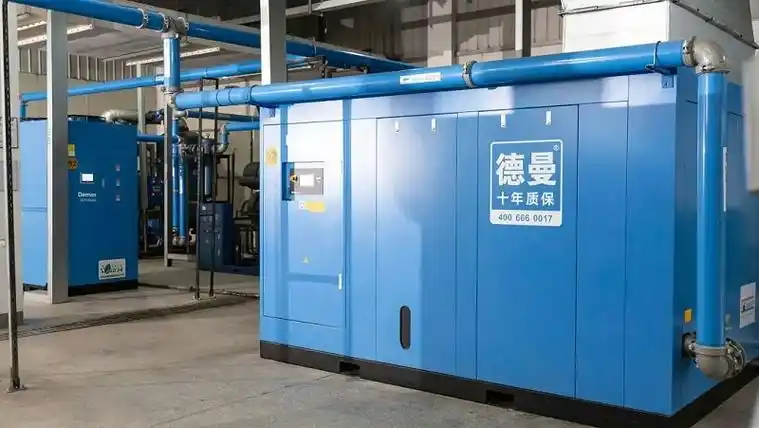
- Most compressor failures are symptoms of system imbalance, not isolated machine defects.
- Pressure, flow, and air quality must be diagnosed together to avoid repeat breakdowns.
- Energy waste often comes from leaks, excessive pressure settings, and poor load management.
- Stable troubleshooting depends on measuring trends, not guessing from a single alarm.
Common air compressor problems and solutions are easier to solve when you treat the compressor as part of a full compressed air system, not a standalone unit. In industrial air systems, even a modest pressure drop can waste meaningful energy: the U.S. Department of Energy notes that a 2 psi reduction in system pressure can reduce energy consumption by about 1 percent in many compressed air systems. That is why compressor troubleshooting should start with pressure, flow, and air quality, then move to green piping system, heat recovery system, and plant-wide control logic.
Why common air compressor problems are usually system problems, not single-part failures
The first conclusion is simple: most air compressor problems are caused by mismatch between demand, distribution, and control. A compressor can be mechanically healthy and still perform poorly if the plant has hidden leaks, undersized piping, dirty filters, or unstable load patterns.
This matters because compressed air is expensive to generate. The U.S. Department of Energy states that compressed air can account for 10 to 30 percent of a manufacturing facility’s electricity use in some plants. When the system is inefficient, the loss is usually spread across the whole network rather than appearing as one obvious fault.
For that reason, experienced technicians diagnose the site in this order: demand, distribution, treatment, controls, then the compressor package. That sequence reduces the chance of replacing a healthy component while ignoring the real source of the problem.
| Problem area | Typical symptom | Likely root cause | Immediate check |
|---|---|---|---|
| Pressure instability | Tools slow down, alarms appear | Oversized demand swing or poor control logic | Log pressure trend for 24 hours |
| High energy use | Power bill rises without production growth | Leaks, high setpoint, unload losses | Compare kW, load hours, and pressure |
| Water in line | Rust, product defects, valve sticking | Dryer failure or excessive humidity load | Check dew point and drain function |
| Overheating | Shutdowns on hot days | Poor ventilation or fouled cooler | Inspect ambient temperature and airflow |
Pressure loss in air compressor systems: causes and solutions
Pressure loss is one of the most common compressor troubleshooting complaints because it creates visible production pain fast. Operators notice weak tools, slow actuators, and unstable cycles before they see the real cause.
The most common causes are clogged filters, undersized piping, excessive bends, leaking hoses, and poorly set regulators. In many plants, the problem is not at the compressor outlet; it is in the distribution network and points of use. A properly designed piping system should minimize friction and pressure drop, especially when multiple machines draw air at the same time.
Industry practice often targets a low pressure-drop air treatment chain, because each extra psi at the source increases compressor workload. If your plant runs on variable demand, a smart pressure control strategy is usually more effective than raising the setpoint. This is where multi-compressor control becomes valuable: it helps distribute load automatically instead of forcing one machine to overcompensate.
| Cause | What you observe | What to measure | Solution |
|---|---|---|---|
| Dirty intake filter | Reduced output, higher temperature | Filter differential pressure | Replace or clean filter element |
| Leakage in distribution | Compressor runs longer than expected | Off-shift pressure decay | Ultrasonic leak survey and repair |
| Undersized pipe | High drop at peak demand | Pressure before and after header | Increase pipe diameter or redesign layout |
| Bad regulator setting | Local tools starve while header pressure looks normal | Point-of-use pressure | Reset regulator and verify under load |
One practical rule is to measure pressure at the compressor, main header, and critical end-use point. If the difference is large, the issue is rarely the compressor itself.
Air leaks in compressor troubleshooting: the hidden cost most users miss
Air leaks are the most underestimated problem in compressed air systems because they are silent, gradual, and expensive. Many plants accept them as normal, but they can become one of the largest avoidable energy losses in the facility.
The U.S. Department of Energy reports that typical systems can lose 20 to 30 percent of compressed air to leaks. In some poorly maintained plants, the percentage can be even higher according to industry estimates. That means leak management is not maintenance trivia; it is an energy strategy.
Leaks usually appear at quick couplers, worn hoses, threaded fittings, solenoid valves, and aging seals. The best solution is a scheduled leak survey, followed by tagging, repair, and rechecking. If the plant uses multiple compressors, a control platform such as Air Commander can help reduce waste by avoiding unnecessary standby running when demand is already covered.
- Survey the system during low-production hours.
- Mark each leak by location and severity.
- Fix the largest leaks first, because they usually deliver the fastest savings.
- Verify the repair with a second pressure or ultrasonic check.
- Track leak rate monthly to prevent regression.
Overheating in air compressors: why it happens and how to fix it
Overheating is often the result of airflow problems, contamination, or excessive ambient temperature rather than a single internal fault. This is especially true in enclosed compressor rooms with poor ventilation.
When cooler surfaces are dirty, heat rejection drops and discharge temperature rises. When ambient air is already hot, the machine has less margin to shed thermal load. Oil level, oil quality, fan function, and intercooler performance all matter. In oil-injected screw compressors, heat management is part of reliability, not just efficiency.
A practical limit is to keep the compressor room close to the manufacturer’s recommended ambient range and ensure enough inlet and exhaust airflow. If the system also supports heat recovery, waste heat can be redirected for facility use instead of being released into the room. See heat recovery system for a system-level approach.
| Overheating trigger | Effect | Diagnostic sign | Corrective action |
|---|---|---|---|
| Restricted ventilation | High discharge temperature | Room temperature rises during load | Add ducting or improve exhaust path |
| Dirty oil cooler | Poor heat transfer | Temperature climbs at steady load | Clean cooler core and fins |
| Low oil level | Lubrication and cooling loss | Oil sight glass below normal | Restore correct oil level and inspect for leaks |
| High ambient dust | Faster filter blockage | Frequent temperature alarms | Improve intake filtration and room cleanliness |
If a compressor overheats only on peak days, the root cause is often capacity margin, not a defective sensor. That is a control and environment issue, not only a mechanical one.
Oil contamination and air quality problems in compressed air systems
Air quality problems can damage products, tools, and downstream equipment even when pressure looks normal. In sensitive industries such as textiles, automotive parts, and electronics-adjacent processes, oil, water, and dust contamination may show up as surface defects, sticky valves, or failed pneumatic actuators.
This is where after-treatment becomes essential. Dryers, filters, drains, and separators determine the quality of the air delivered to the process. The ISO 8573-1 standard classifies compressed air purity by particles, water, and oil content, which gives buyers a shared language for specifying performance rather than relying on vague terms like “clean air.”
For plants with stricter contamination limits, oil-free technology may be appropriate for selected processes. A broader system design should include oil-free blower options, matching the application rather than oversizing protection everywhere.
| Air quality issue | Production impact | System element to check | Typical fix |
|---|---|---|---|
| Water carryover | Rust, corrosion, valve sticking | Dryer, drain, dew point | Repair dryer and verify drainage |
| Oil mist | Surface contamination, seal damage | Separator, filters, oil carryover | Replace filters and inspect separator |
| Particle contamination | Tool wear, nozzle blockage | Intake filtration and line filters | Upgrade filtration stage |
| Pressure dew point too high | Moisture at point of use | Dryer capacity and load | Match dryer to actual peak demand |
The key point is that air quality troubleshooting must include the whole chain from intake to point of use. A perfect compressor cannot overcome a failed dryer.
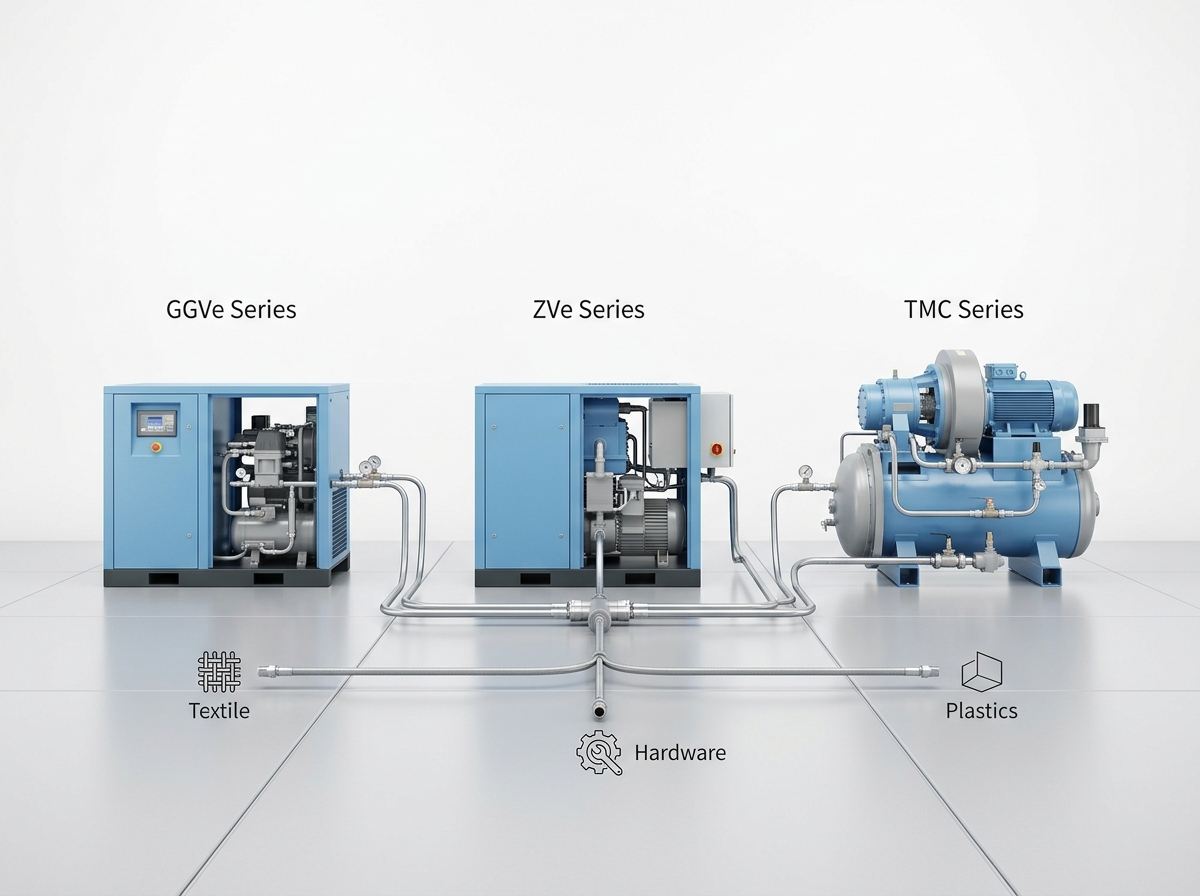
Unstable load, short cycling, and poor compressor control
Short cycling is a control problem that wastes energy and increases wear at the same time. It happens when the compressor starts and stops too frequently because the control band is too narrow, the receiver is too small, or demand is too variable.
Variable speed and intelligent sequencing can solve many of these issues when they are applied to real demand patterns. The idea is not simply to lower speed; it is to keep output aligned with consumption so the machine does not spend unnecessary time unloading. This is why screw compressor systems paired with smart control are often more stable than fixed-speed units in fluctuating-load plants.
In multi-machine plants, a centralized strategy can reduce conflicts between individual compressors. Load sharing, pressure band optimization, and standby rotation all help reduce idle losses. A good control scheme also protects maintenance intervals by preventing one unit from carrying all demand.
- Log start-stop frequency for one full production shift.
- Check whether demand swings exceed receiver capacity.
- Review pressure band settings and control hysteresis.
- Confirm that sequencing logic matches production priority.
- Measure energy use before and after the control change.
How to troubleshoot compressor problems step by step
The best troubleshooting process is structured, repeatable, and measurable. Random part swapping usually creates more downtime than it solves.
Start with a simple hierarchy: confirm the complaint, observe the trend, isolate the system section, test the suspected component, then verify the fix under load. This approach works because compressed air systems are dynamic, and many problems only appear under production conditions.
- Confirm the symptom at the point of use, not only at the compressor panel.
- Check pressure, flow, temperature, and dew point together.
- Inspect filters, drains, couplings, hoses, and the main header.
- Review controller history for alarms, restarts, and unload time.
- Test after the repair during peak demand.
If the plant has multiple compressors, a multi-unit control layer improves diagnosis because it preserves operating history and shows whether the issue is local or system-wide. That is also where remote monitoring tools such as Deman Cloud help maintenance teams detect abnormal trends early.
Decision table for common air compressor troubleshooting
The right solution depends on which indicator is failing first. The table below helps narrow the issue quickly.
| Observed symptom | Most likely cause | Priority test | Recommended action |
|---|---|---|---|
| Pressure falls at peak load | Insufficient capacity or heavy leakage | Demand versus supply trend | Repair leaks, then reassess capacity |
| High power but low output | Unload losses or excessive setpoint | kW per delivered m3/min | Optimize control and lower pressure |
| Water downstream | Dryer or drain failure | Pressure dew point | Service treatment equipment |
| Frequent shutdowns | Thermal or electrical fault | Alarm history and temperature trend | Check cooling, wiring, and sensor calibration |
| Tool performance weak only at distance | Line pressure drop | Header-to-point pressure difference | Redesign piping or increase line size |
Standards and numbers that matter in compressor troubleshooting
Standards make troubleshooting more reliable because they define what to measure and how to describe it. ISO 8573-1 is the main reference for compressed air quality classification, while ISO 1217 is widely used for performance testing of displacement compressors. For efficiency-minded buyers, using standard language reduces confusion between supplier claims and actual site results.
The U.S. Department of Energy also emphasizes practical measurement: pressure, leakage, and control settings are among the highest-value variables to monitor. In real plants, a pressure reduction of just 2 psi can cut energy use by about 1 percent, which is why small improvements in pressure control often create meaningful savings.
That is also why system design matters so much. A plant that combines proper air treatment, low-loss piping, and coordinated control can often improve reliability more effectively than one that simply buys a larger machine.
- Measure pressure at multiple points, not only at the receiver.
- Track unload time, start-stop frequency, and dew point together.
- Repair leaks before raising pressure.
- Specify air quality by application, not by guesswork.
For a broader system approach, many industrial users also evaluate centrifugal compressor solutions for large continuous loads, because the best fix for recurring compressor problems may be a different architecture, not another repair cycle.
FAQ about common air compressor problems and solutions
Why does my air compressor keep losing pressure?
Pressure loss usually comes from leaks, restricted filters, pressure drop in piping, or excessive demand at peak time. Measure the pressure at the compressor and at the point of use to identify where the loss begins.
Why is my air compressor running all the time?
Continuous running often means the system is leaking air, the set pressure is too high, or the compressor capacity is too small for current demand. Review trend data before changing hardware.
What causes water to come out of the air line?
Water usually appears when the dryer, drain, or after-treatment system is not removing moisture effectively. High ambient humidity can make the problem worse.
What causes an air compressor to overheat?
Common causes include poor ventilation, dirty coolers, low oil level, and excessive ambient temperature. Overheating often reflects a cooling or installation problem rather than a core mechanical failure.
How do I know if compressed air leaks are serious?
If the compressor runs longer than normal during non-production hours, or if pressure decays quickly after shutdown, leaks are likely significant. A scheduled ultrasonic survey is the most reliable check.
Should I increase pressure to solve weak air tools?
Not first. Raising pressure can increase energy use and mask the real problem, which may be pressure drop in the piping or undersized point-of-use components.
When should I consider a system upgrade instead of repair?
If the plant repeatedly suffers from pressure instability, contamination, or high energy use even after maintenance, the issue is likely architectural. In that case, a full review of control, treatment, and distribution is more effective than repeated repairs.