






Clean Molding Rooms: Oil-Free Air for Cosmetic Packaging
Cosmetic Packaging · Compressed Air
Clean Molding Rooms: Oil-Free Air for Cosmetic Packaging
Why cosmetic packaging molding rooms need oil-free compressed air, how ISO 8573-1 Class 0 is met, and what maglev centrifugal compressor technology changes for the production line.
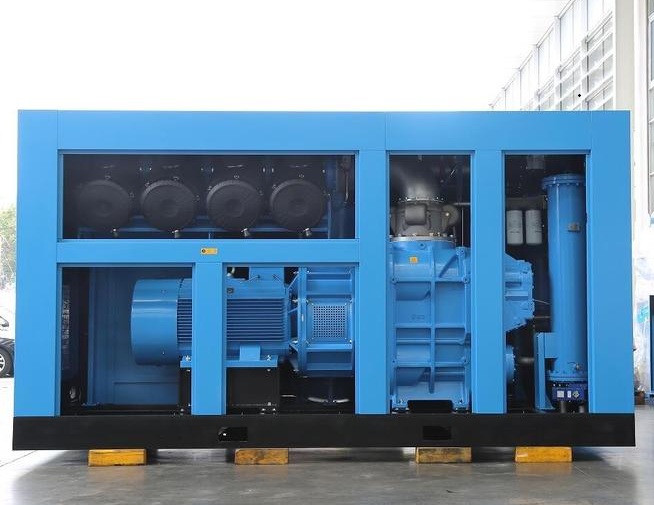
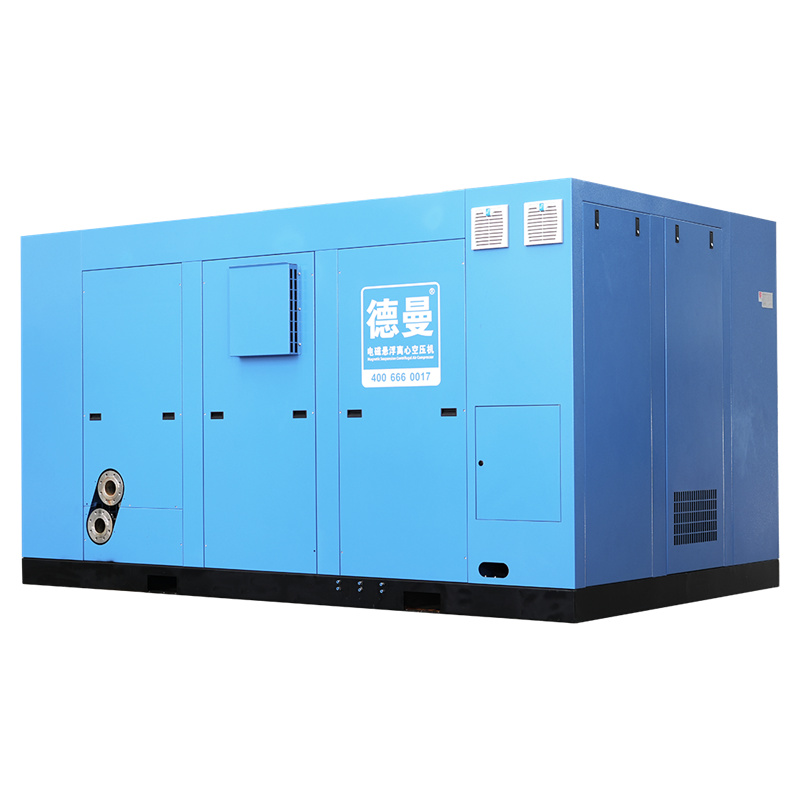
— Oil-free magnetic levitation centrifugal air compressor for cosmetic packaging molding rooms.
Why Does Cosmetic Packaging Demand Oil-Free Compressed Air?
Cosmetic packaging — lipstick cases, mascara tubes, compacts, perfume bottles, lotion pumps, airless jars — is injection-moulded or blow-moulded from polymers that range from ABS and SAN to PP and PETG. The moulding process uses compressed air for three jobs: driving the injection or blow unit, ejecting the part, and operating the pneumatic clamps and actuators that move the part between stations. Every cubic metre of that compressed air eventually contacts the cosmetic part, the cosmetic's inner surface, or the cosmetic's exterior finish.
Three failure modes surface when oil reaches the cosmetic packaging line.
Regulatory failures. Cosmetic products sold in the EU must comply with EU Cosmetics Regulation 1223/2009. Cosmetic products sold in the US must comply with FDA 21 CFR (the parts that apply to cosmetics). A failed batch traceability event on a packaging line can trigger a regulatory review of the entire cosmetic.
Process contamination. Oil that does not produce a visible defect can still transfer to the cosmetic during the fill step. The contamination is invisible, but the customer sees it on the skin.
ISO 8573-1 Air Purity Classes — and What "Oil-Free Class 0" Actually Means
Per ISO 8573-1:2010 (Compressed air — Contaminants and purity classes), the standard specifies purity classes for solid particles, water, and total oil. Each contaminant has its own class table. The methodology for measuring oil aerosol at the point of use is ISO 8573-2 (Test method for oil aerosol content).
| Contaminant | Class 0 | Class 1 | Class 2 | Class 3 |
|---|---|---|---|---|
| Total oil (aerosol + vapor) | < 0.01 mg/m3 (as agreed by user and supplier, per ISO 8573-1) | < 0.1 mg/m3 | < 1 mg/m3 | < 5 mg/m3 |
| Particulates (max particle size per class) | As specified by user | 0.1 mg/m3, ≤ 0.1 µm | 1 mg/m3, ≤ 1 µm | 5 mg/m3, ≤ 5 µm |
| Water (pressure dewpoint) | As specified by user | ≤ -70°C PDP | ≤ -40°C PDP | ≤ -20°C PDP |
Class 0 is a stretch class for a reason. The standard sets the methodology (ISO 8573-2 oil aerosol measurement) and the contractual framework, but the actual numerical target is set in the spec between the buyer and the equipment supplier. This is the same way "Class 0" works in any other compressed-air spec: the methodology is fixed, the target is contractually defined, the verification is measured at the point of use.
Where Oil Gets Into a Molding Room's Air — and Where It Ends Up
Oil enters a moulding room's compressed air line from three sources. The first is the compression chamber itself, in the case of an oil-injected screw compressor. The second is the compressor intake air, which on a factory roof can carry oil aerosol from nearby vehicle traffic, parking decks, or other exhaust. The third is the after-treatment chain itself: a saturated coalescing filter that has reached end-of-service life, a spent activated carbon filter, a contaminated condensate drain.
Once the oil is in the air line, it travels at line pressure through the receiver tank, the dryer, the after-treatment chain, the distribution piping, and into the moulding machine. The point of use is the moulding machine nozzle, the ejector pin, or the pneumatic actuator. The oil deposits on the cosmetic packaging surface, on the inner wall of the mould cavity, or on the cosmetic fill interface.
For a cosmetic packaging line, the most operationally honest point-of-use measurement is at the moulding machine nozzle, with the line running and the machine cycling. The measurement protocol is ISO 8573-2 (oil aerosol measurement), with results reported in mg/m3. The acceptance criterion is the Class 0 numerical target named in the spec. The measurement cadence is typically quarterly for a continuous line, with an additional check after any compressor service or filter change.
Oil-Injected vs Oil-Free Compressors for Cosmetic Molding — A Side-by-Side
Two technology paths deliver ISO 8573-1 Class 0 air to a cosmetic packaging line. The choice is not a marketing preference; it is a function of operating cost, after-treatment chain, and tolerance for oil-related batch rejection.
Path A — Oil-injected screw + multi-stage filtration
An oil-injected screw compressor is the workhorse of the plastics industry, and the platform is mature, efficient, and widely understood. The displacement measurement that anchors the compressor rating is ISO 1217 (Displacement compressors — Acceptance tests). For cosmetic packaging, the compressor itself is paired with a multi-stage after-treatment chain: refrigerated dryer or desiccant dryer for water removal, particulate filter for solid particles (test method per ISO 21501-4), coalescing filter for oil aerosol, activated carbon filter for oil vapor, and a catalyst for trace hydrocarbons. The chain reaches Class 0, but the chain is the operational liability: each filter has a service interval, each filter contributes pressure drop, and a missed service interval means a non-conforming batch.
Path B — Oil-free by design (maglev centrifugal or oil-free screw)
An oil-free compressor by design moves the oil question upstream of the air line. The compression chamber contains no oil, so the after-treatment chain only needs to deal with intake-side contaminants (particles, water vapor, ambient hydrocarbons). The point-of-use measurement becomes a confirming measurement rather than a primary control. The oil-free maglev centrifugal compressor is a representative Path B equipment class. The impeller rides on active magnetic bearings, so the bearing lubrication that introduces oil into a conventional centrifugal is removed entirely. The compression chamber is a clean rotor-stator cavity, with the only air-path materials being stainless steel and aluminum.
Decision matrix — which path, when
| Variable | Path A: Oil-injected + filtration | Path B: Oil-free by design |
|---|---|---|
| Compression chamber | Contains lubricant oil | Contains no lubricant |
| ISO 8573-1 oil class by design | Class 2 (reaches Class 0 only with full filter chain) | Class 0 by design |
| After-treatment chain | Refrigerated/desiccant dryer + particulate + coalescing + activated carbon + catalyst | Refrigerated/desiccant dryer + particulate only |
| Pressure drop (clean filters) | 0.3-0.5 bar across the filter chain | 0.05-0.15 bar across the dryer + filter |
| Maintenance interval (filter service) | Quarterly to semi-annually per stage | Annually for the dryer pre-filter |
| Single point of failure | Yes (a missed activated carbon change) | No (oil is not in the air stream to begin with) |
| Energy efficiency (VSD) | Comparable | Comparable |
| Capex (per m3/min at 7-10 bar) | Lower | Higher |
| Lifecycle cost (10-year) | Higher (filter + service + risk) | Lower (less consumable, lower risk) |
| Best fit | Multi-purpose plant with non-cosmetic lines also served | Dedicated cosmetic / pharmaceutical line with strict batch traceability |
For a dedicated cosmetic packaging line, Path B is the operationally honest answer. For a multi-purpose plant where the cosmetic line shares an air system with other production lines, Path A is often the cost-effective compromise. The spec writer's job is to be honest about which path the line is on, and to write the verification protocol that catches the failure mode of that path.
Why Magnetic Levitation (Maglev) Centrifugal Compressors Set the Standard
Magnetic levitation centrifugal compressors set a new design standard for oil-free compressed air because they remove oil from the entire compression train, not just from the compression chamber. The bearing system is the difference. A conventional centrifugal compressor uses oil-lubricated journal or thrust bearings, which introduce trace oil into the gear housing and, in some designs, into the compression air stream. A maglev compressor uses active magnetic bearings, which levitate the impeller shaft without any lubricant. The compression chamber is a clean cavity; the bearing housing is a separate, sealed cavity with no air path to the compression chamber.
Three operational benefits of the maglev design show up in the cosmetic packaging plant's annual report.
First, the filter chain is shorter. Without an oil-removal after-treatment train, the only filters in the line are a pre-filter at the air intake and a particulate filter at the discharge. The pressure drop across the chain is 0.05-0.15 bar instead of 0.3-0.5 bar. The compressor runs at a lower discharge pressure for the same working pressure at the moulding machine, which saves energy.
Second, the maintenance cost is lower. The bearing system has no oil to change, no oil filter to replace, and no oil-seal to wear. The annual maintenance is an air filter change, a vibration check, and a control-system diagnostic. The 10-year service interval is achievable on the bearing system with no oil-related service.
Third, the point-of-use measurement is a confirmation, not a control. The compression chamber contributes no oil to the air stream, so the residual oil at the point of use is determined by the intake air and the after-treatment chain, both of which are small contributors. The measurement is a verification, not a primary control loop. The cosmetic packaging line runs with a high level of confidence that the batch will not be rejected for oil.
5-Step Specification Protocol for a Cosmetic Packaging Molding-Room Air System
Step 1 — Set the air purity class against ISO 8573-1
Decide the purity class. For most cosmetic packaging the spec is ISO 8573-1:2010 Class 0 for total oil (less than 0.01 mg/m3), Class 1 for particulates, and Class 1 for water. Write the class numbers in the spec by name, with the ISO clause. The acceptance criterion for Class 0 is the supplier's measurement protocol and the numerical target agreed in the spec, not a generic class name.
Step 2 — Decide compressor type: oil-injected + filtration vs oil-free by design
Two paths. Path A: oil-injected screw + multi-stage filtration to reach Class 0. Path B: oil-free maglev centrifugal or oil-free screw, which delivers Class 0 by design. Path B is shorter and operationally cleaner for cosmetic lines; Path A is the cost-effective compromise for a multi-purpose plant. The choice is set in the spec, with a written justification.
Step 3 — Lock the pressure, flow, and turndown range
Define the working pressure (typically 7-10 bar for cosmetic molding), the rated flow in m3/min, and the turndown range. VSD (variable speed drive) is standard; spec the turndown range (e.g. 30-100%) to match shift-load variation. The plastics industry reference case for cosmetic packaging is a turndown to 30% on a 100% rated flow.
Step 4 — Specify the after-treatment chain and the test method
Name the after-treatment chain: refrigerated dryer, desiccant dryer, particulate filter, activated carbon filter (if Path A). State the oil aerosol test method per ISO 8573-2 and the residual oil target. The chain is in the spec by component, not by generic term.
Step 5 — Define verification, monitoring, and energy contract
Set the verification protocol (residual oil measurement at the moulding machine point-of-use), the monitoring cadence, and the energy contract. ISO 1217 displacement and ISO 21501-4 particle counts are the common spec anchors for the after-treatment chain. The verification protocol is in the spec by name, not by generic term. For plants operating under ISO 22716 (Cosmetics — GMP), the air system is named as a utility that must meet defined purity and monitoring criteria; ISO 8573-1 is the air purity standard, and ISO 22716 is the GMP framework.
How to Read a Cosmetic-Packaging Case Study (Jieli) Without Cherry-Picking
Case studies are useful when they are read for the spec, not the headline. The Ningbo Jieli cosmetic packaging case study is a Deman reference case. Reading it well means looking past the kW savings and the equipment model to the actual spec items: which air purity class was targeted, which after-treatment chain was used, which point-of-use measurement protocol was followed, which batch-rejection rate resulted.
Five questions to ask when reading a case study:
- Which ISO 8573-1 class was targeted? (Class 0 for oil is the cosmetic packaging target. If the case study says "Class 1" or "industry standard," the case is not anchored to a spec.)
- Which after-treatment chain was specified? (Refrigerated dryer + particulate only for Path B; full filter chain for Path A. The chain tells you which path.)
- Which point-of-use measurement protocol was followed? (ISO 8573-2 for oil aerosol. Quarterly cadence. Measurement at the moulding machine nozzle.)
- Which batch-rejection rate resulted? (If the case study reports a rejection rate, the number is the spec anchor. If not, the case is not complete.)
- Which maintenance intervals were applied? (For Path B: annual air filter change, 10-year bearing service life. For Path A: quarterly to semi-annual filter service.)
A case study that does not answer all five questions is a marketing piece, not a spec anchor. The Jieli case study is structured to give you all five.
What to Ask a Compressor Supplier Before You Commit
Five questions that catch 80% of the issues before a purchase order is committed. The questions sound basic; they catch real failures.
- What is the oil content guarantee at the compressor outlet, and at the point of use? The two numbers are different. The point-of-use number is the spec anchor. A supplier that quotes only the outlet number is hiding the filter-chain performance.
- What is the after-treatment chain required to reach ISO 8573-1 Class 0? For Path A, the chain is multi-stage. For Path B, the chain is short. The supplier's answer tells you which path the spec is on.
- Is the bearing system oil-lubricated, oil-free, or magnetic-levitation? A maglev compressor is the only design that physically excludes oil from the bearing system. The supplier's answer tells you the design point of the equipment.
- What is the turndown range and the part-load efficiency? VSD turndown to 30% is standard for cosmetic packaging. The part-load efficiency at 50% load is the operating point for most cosmetic plants during a single-shift run.
- What is the verified field case study for a similar cosmetic packaging application? A reputable supplier has a published case study with the spec items, the operating data, and the point-of-use measurement results. The Jieli case is the Deman reference case for a Chinese cosmetic packaging plant.
One last thing: ask for a sample compressed air test report on a reference installation. A legitimate oil-free supplier will provide a third-party residual oil report on a similar cosmetic packaging line. The cost of asking is the noise of the cost of a misfit compressor.
Conclusion — Why an Oil-Free Maglev Line Is Cheaper Than an Oil-Injected Line at 10-Year Lifecycle
Oil-free compressed air for cosmetic packaging is a fitment-first discipline in the same way that the cosmetic line itself is a fitment-first discipline: lock the air purity class, decide the technology path, name the after-treatment chain, define the verification protocol, and validate against a field case study. The cost of oil contamination is one rejected batch, not a 10-year capex line item.
We have walked through what we do at Deman — 29+ years producing VSD oil-injected compressors, two-stage PM VSD systems, and oil-free maglev centrifugal compressors, 127 patents, a ten-year warranty, and a factory that combines German quality standards with Chinese manufacturing expertise. The cosmetic packaging line is a daily use case for our air systems, and the Jieli reference case is the proof point that the spec lands when the air purity class, the technology path, the after-treatment chain, and the point-of-use verification are all named in the spec.
If you are specifying compressed air for a cosmetic packaging line, or upgrading an existing line to a Class 0 oil-free operation, our engineering team can run a free air system review with you. Send us your current air purity class, your moulding machine working pressure, and your annual air consumption, and we will come back within 24 hours with a written spec recommendation.
FAQ
Frequently Asked Questions
Q.01What does oil-free compressed air mean in cosmetics manufacturing?+
Oil-free compressed air in cosmetics manufacturing means the air delivered to the moulding machine is free of oil aerosol and oil vapor at the level specified by ISO 8573-1:2010. Class 0 specifies total oil below 0.01 mg/m3, Class 1 below 0.1 mg/m3. The oil-free claim is verified at the point of use, not at the compressor outlet.
Q.02What is ISO 8573-1 Class 0?+
ISO 8573-1:2010 Class 0 is the strictest purity class in the standard. It specifies total oil (aerosol plus vapor) below 0.01 mg/m3, with a method-defined limit. It is the operational target for cosmetic packaging, pharmaceutical, and food-contact applications.
Q.03Can an oil-injected compressor serve a cosmetic packaging moulding room?+
Yes, with multi-stage filtration. An oil-injected screw compressor is typically paired with a coalescing filter, an activated carbon filter, and a catalyst to reach Class 0. The after-treatment chain adds pressure drop, maintenance cost, and a single point of failure if a filter is missed at service. Oil-free by design is the shorter and operationally cleaner path for cosmetic lines.
Q.04What is a magnetic levitation (maglev) centrifugal air compressor?+
A maglev centrifugal air compressor is an oil-free centrifugal compressor in which the impeller is supported by active magnetic bearings, not oil-lubricated bearings. The compression chamber contains no lubricant. The result is ISO 8573-1 Class 0 air by design, with no oil-removal filters required downstream of the compression chamber.
Q.05What pressure does a cosmetic packaging moulding machine typically need?+
Cosmetic packaging injection moulding and blow moulding machines typically run at 7-10 bar working pressure. The exact pressure is set by the moulding machine OEM and must be confirmed in the spec. Some thin-wall packaging applications run at 12-14 bar for higher injection speed.
Q.06How is residual oil in compressed air measured?+
Residual oil aerosol and vapor in compressed air is measured per ISO 8573-2. Common methods include the impinger method (laboratory reference) and portable oil-in-air analyzers using photoionization or infrared detection at the point of use. The measurement point matters: oil measured at the compressor outlet is not the same as oil measured at the moulding machine nozzle.
Q.07What after-treatment chain is needed for a Class 0 cosmetic packaging line?+
The after-treatment chain is determined by the compressor type. For an oil-injected screw: refrigerated dryer + particulate filter + coalescing filter + activated carbon filter + catalyst, with point-of-use verification. For an oil-free maglev centrifugal: refrigerated or desiccant dryer + particulate filter only, since the compression chamber contributes no oil.
Q.08Does ISO 22716 cover compressed air for cosmetic manufacturing?+
ISO 22716 is the Good Manufacturing Practice (GMP) standard for cosmetics, and it covers the manufacturing environment including utility systems. Compressed air is named as a utility that must meet defined purity and monitoring criteria. ISO 8573-1 is the air purity standard, and ISO 22716 sets the GMP framework for using that air in cosmetic production.
Q.09How much energy does a VSD compressor save in a cosmetic packaging plant?+
VSD compressors save 30-50% on energy versus fixed-speed compressors in plants where air demand varies with shift loading. The savings come from matching motor speed to actual air demand rather than running the motor at full speed and unloading.
Q.10What should I ask a compressor supplier before buying for a cosmetic packaging plant?+
Five questions: (1) What is the oil content guarantee at the compressor outlet, and at the point of use? (2) What is the after-treatment chain required to reach ISO 8573-1 Class 0? (3) Is the bearing system oil-lubricated, oil-free, or magnetic-levitation? (4) What is the turndown range and the part-load efficiency? (5) What is the verified field case study for a similar cosmetic packaging application?
Send Your Spec — Get a Free Air System Review
Next Step · Free Review
Send Your Spec — Get a Free Air System Review
If you are specifying compressed air for a cosmetic packaging line, or upgrading an existing line to Class 0 oil-free operation, send us your current air purity class, your moulding machine working pressure, and your annual air consumption. Our engineering team will come back within 24 hours with a written spec recommendation.
Contact the Deman engineering team View maglev centrifugal compressor
Last verified: 2026-10-14 · Published on Deman