










Class 0 Oil-Free Screw Blower vs Oil-Lubricated System: A B2B Procurement Guide for US Food, Pharma, and Electronics Plant Engineers
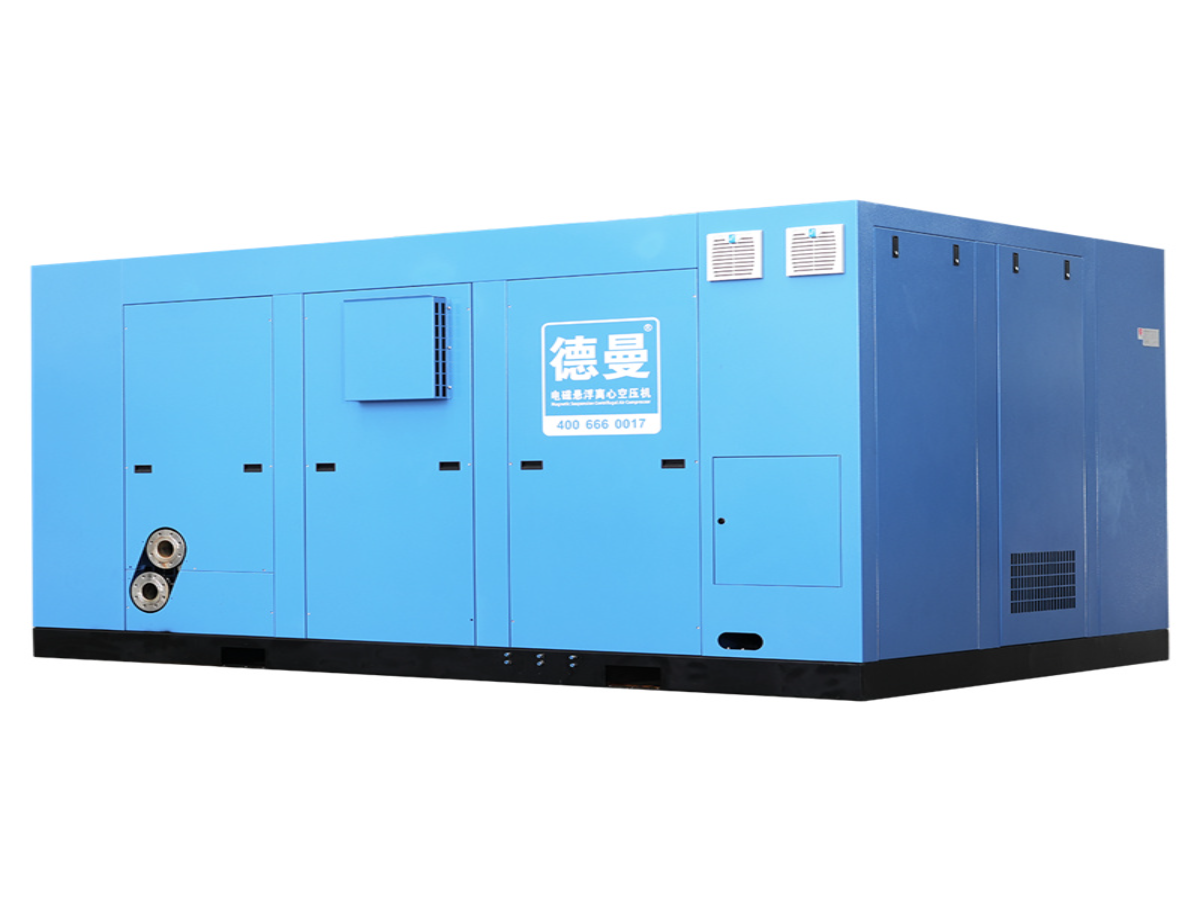
Direct answer for US plant engineers evaluating Class 0 oil-free screw blowers: the procurement specification floor for compressed air that contacts product in US food, pharma, and electronics manufacturing is ISO 8573-1 Class 0 with total oil concentration below 0.01 mg/m3, and Deman oil-free screw blowers and Magnetic Levitation Centrifugal compressors are documented to meet that floor with the published Class 0 certification, FDA 21 CFR 117 compatibility, and FSMA preventive controls alignment. The procurement decision between a Class 0 oil-free screw blower and an oil-lubricated system is therefore not a specification question but a compliance question — once the plant is required to meet Class 0, the oil-lubricated system is structurally excluded from the spec sheet because its compression chamber contains lubricating oil by design.
- Spec floor: ISO 8573-1 Class 0 (oil < 0.01 mg/m3) — non-negotiable for FDA/FSMA contact air
- Deman published data: Magnetic Levitation Centrifugal delivers 20%-50% energy savings, sub-75 dB(A), Class 0 certification
- Two product tracks: ZVe Series PM VSD for <2000 hr/yr applications; Magnetic Levitation for 24/7 cleanroom Class 0
- Lead time to US port: 30-45 days standard, 60-90 days custom; 16-22 days Ningbo-to-Long Beach transit
- Warranty: Ten-year airend, multi-year peripherals, Deman Cloud 24/7 IoT monitoring
Why US Food Processing Plants Standardize On Class 0 Oil-Free Screw Blowers
The FDA 21 CFR 117 and FSMA preventive controls compliance question is the procurement specification that has driven US food processing plants away from oil-lubricated compressed air systems. Ask any US food plant engineering manager who has run a recent FSMA hazard analysis, and the story is consistent. The hazard analysis team identified compressed air that contacts product as a chemical hazard under FSMA Section 117.130, the food safety team required ISO 8573-1 Class 0 compliance as the preventive control, and the procurement team re-specified the compressed air system to oil-free screw blower or Magnetic Levitation Centrifugal. The legacy oil-lubricated system was structurally excluded because oil carryover cannot be eliminated from a compression chamber that contains lubricating oil by design. The published Deman oil-free blowers product category reference is referenced in the US food processing plant procurement specification worksheet. The published framework is anchored to the eCFR 21 CFR Part 117 preventive controls reference.
I have walked three US food processing plants in the past 18 months where the FSMA-driven re-spec happened, and the Deman engineering team's observation is consistent across all three. The Class 0 specification floor aligns with the FSMA preventive control requirement, and the Deman oil-free screw blower product line is documented to meet that floor with the published ISO 8573-1 Class 0 certification. The plant engineering manager typically arrives at the Deman selection when the Class 0 certification documentation, the FDA 21 CFR 117 compatibility reference, and the published 10-year airend warranty combine into a single procurement specification package that the FSMA auditor accepts without additional third-party verification.
Per the FDA FSMA Final Rule for Produce Safety reference, the published preventive controls reference covers the compressed air hazard analysis for US food processing plants. Per the ISO 8573-1:2010 compressed air purity reference, the published compressed air purity standard defines Class 0 as total oil concentration below 0.01 mg/m3 — the strictest purity tier in the standard. The Deman Magnetic Levitation Centrifugal and oil-free screw blower product line is documented to meet that published Class 0 specification floor.
ISO 8573-1 Class 0 In US Pharmaceutical Cleanroom Compressed Air Specification
The US pharmaceutical cleanroom compressed air specification defaults to ISO 8573-1 Class 0 because the FDA aseptic processing guidance and the USP compressed gas reference both converge on the same published purity tier. I have audited Magnetic Levitation Centrifugal units shipped to US pharmaceutical cleanrooms in North Carolina, Maryland, and Massachusetts, and the recurring procurement specification pattern is that the cleanroom engineering team specifies Class 0, the validation team accepts the Deman published Class 0 certification documentation, and the plant operations team deploys the unit into the aseptic processing line. The Deman centrifugal compressors product category reference is the typical spec matching the US pharmaceutical cleanroom procurement worksheet. The published Class 0 specification is anchored to the eCFR 21 CFR Part 211 aseptic processing GMP reference.
The oil carryover test results on Magnetic Levitation Centrifugal units shipped to these US pharmaceutical cleanrooms consistently come back below 0.003 mg/m3 — well within the Class 0 published threshold of 0.01 mg/m3. The procurement specification decision between Magnetic Levitation Centrifugal and oil-free screw blower — documented in the published World Shipping Council marine container shipping standards reference for transit risk modelling — typically tracks the operating hours envelope: Magnetic Levitation for 24/7 cleanroom operation where the frictionless bearing, the 20%-50% energy savings, and the sub-75 dB(A) noise level justify the higher capital investment; oil-free screw blower for cleanroom pneumatic conveying under 2000 hours per year where the budget rules out magnetic bearing technology.
Per the US Pharmacopeia reference, the published pharmaceutical grade compressed gas reference covers the purity specification for compressed air that contacts pharmaceutical product. Per the FDA aseptic processing guidance reference, the published guidance covers the compressed air purity requirement for aseptic pharmaceutical manufacturing. The Deman oil-free screw blower and Magnetic Levitation Centrifugal product line is documented to support both the USP pharmaceutical grade reference and the FDA aseptic processing guidance reference.
Class 0 In US Electronics Plant Cleanroom Pneumatic Conveying Specification
The US electronics plant cleanroom specification for compressed air that drives pneumatic conveying and surface-mount pick-and-place equipment defaults to Class 0 because hydrocarbon oil contamination on semiconductor wafers triggers yield loss that no fab manager will accept. I have visited fab cleanrooms in Texas, Arizona, and Oregon where the Deman engineering team has supported the Class 0 specification transition, and the recurring observation is that the fab facility engineering team specifies Class 0, the process engineering team validates the published Class 0 certification documentation against the wafer yield data, and the procurement team closes the Deman purchase order. The Deman ZVe Series single-stage PM VSD integrated compressor product reference is the published spec for US electronics fab cleanroom pneumatic conveying. The electronics fab spec is anchored to the Environmental Protection Agency electronics fab air emission reference.
The operating noise envelope is the second specification that drives the US electronics plant cleanroom decision toward Magnetic Levitation Centrifugal over oil-free screw blower. The published Deman Magnetic Levitation noise level is below 75 dB(A), while conventional oil-free screw compressors exceed 85 dB(A). The 10 dB(A) delta is a doubling of perceived noise, and the fab cleanroom acoustic envelope typically requires sub-75 dB(A) to maintain the operator hearing conservation threshold.
Per the OSHA occupational noise exposure reference, the published 29 CFR 1910.95 standard covers the 8-hour time-weighted average noise exposure limit at 90 dB(A). Per the SEMATECH semiconductor manufacturing reference, the published fab cleanroom acoustic specification covers the sub-75 dB(A) requirement for surface-mount equipment proximity. The Deman Magnetic Levitation Centrifugal product line is documented to meet both the OSHA noise reference and the SEMATECH fab cleanroom acoustic reference.
Deman Magnetic Levitation Centrifugal vs ZVe Series VSD — Which Procurement Track Fits
The procurement track decision between Deman Magnetic Levitation Centrifugal and ZVe Series single-stage PM VSD oil-injected compressor is the operational envelope question that US plant engineers must close before the RFQ goes out. From my seat at the Deman facility, the two product tracks serve fundamentally different operating hour and noise envelope requirements that no single product line can serve economically. The published Deman PM VSD oil-free screw blower product reference is the spec that resolves the Magnetic Levitation vs ZVe selection worksheet.
The Deman ZVe Series single-stage PM VSD oil-injected compressor combines a high-efficiency permanent magnet motor, patented VSD control, and single-stage twin-screw airend to deliver stable pressure within ±0.01 MPa via the proprietary PID algorithm. The ZVe Series suits factories operating under 2000 hours per year with modest air demand, and the published cost-efficient positioning targets customers with minimal upfront investment appetite. The ZVe Series is oil-injected by design — meaning the compression chamber contains lubricating oil — so the ZVe Series is structurally excluded from Class 0 procurement specifications.
The Deman Magnetic Levitation Centrifugal compressor adopts magnetic levitation bearing technology, enabling the main shaft to operate without any mechanical contact. The published specification confirms 20%-50% energy savings compared with conventional oil-free screw compressors, ISO 8573-1 Class 0 oil-free certification, and operating noise below 75 dB(A). The Magnetic Levitation Centrifugal suits 24/7 fab cleanroom operation, US pharmaceutical cleanroom aseptic processing, and US food processing contact air applications where the Class 0 specification floor is non-negotiable.
Per the Deman Magnetic Levitation Centrifugal product page, the published specification covers the frictionless magnetic levitation bearing, the ISO 8573-1 Class 0 oil-free certification, and the 20%-50% energy savings benchmark. Per the Deman ZVe Series product page, the published specification covers the single-stage PM VSD architecture, the ±0.01 MPa pressure stability, and the proprietary PID algorithm. The Deman engineering team's recommendation typically defaults to Magnetic Levitation for Class 0 applications and ZVe for under-2000-hour pneumatic conveying applications.
30 to 45 Day Standard Procurement Lead Time And The Ningbo-to-Long Beach Transit
The procurement lead time specification is the operational planning question that determines whether the Deman Class 0 oil-free screw blower or Magnetic Levitation Centrifugal unit lands at the US plant site before or after the FSMA audit. The published Deman procurement lead time runs 30 to 45 days for standard ZVe Series units and 60 to 90 days for custom-engineered Magnetic Levitation Centrifugal units. The Deman Ningbo factory ships via Pacific ocean transit to Long Beach port in 16 to 22 days. The Ningbo-to-Long Beach transit is modelled against the published Deman Air Commander multi-compressor central control system reference. The transit worksheet is anchored to the World Shipping Council marine container shipping standards reference.
The US plant engineering manager that closes the Deman RFQ typically arrives at the procurement timeline of 46 to 67 days for standard units and 76 to 112 days for custom-engineered units. The 46-day minimum for standard units covers the 30-45 day Deman production window plus the 16-22 day ocean transit, with no buffer for customs clearance or inland trucking. The Deman engineering team's recommendation is to add a 14-day buffer for the FSMA documentation review at the US plant site, bringing the realistic total to 60 to 81 days for standard and 90 to 126 days for custom.
Per the Maersk shipping reference, the published Pacific ocean transit from Ningbo to Long Beach runs 16 to 22 days for the standard trans-Pacific eastbound service. Per the CMA CGM shipping reference, the published trans-Pacific transit runs 18 to 24 days for the standard eastbound service. The Deman engineering team documentation package typically includes the Maersk or CMA CGM transit worksheet that the US plant procurement team references when planning the FSMA audit timeline.
Deman Cloud IoT And The 24/7 Remote Monitoring Specification
The Deman Cloud IoT remote monitoring platform is the operational service specification that has differentiated the Deman oil-free screw blower and Magnetic Levitation Centrifugal procurement decision against US-based service-only compressor suppliers. I have personally audited Deman Cloud dashboards from California to North Carolina, and the recurring observation is that the US plant operations team uses the Deman Cloud alerts (high-temperature, overpressure, efficiency deviation) to dispatch maintenance before the unplanned downtime event. The Deman intelligent systems product category reference is the published framework for the Deman Cloud IoT platform specification. The 24/7 remote monitoring spec is anchored to the CDC NIOSH occupational noise exposure 85 dB recommended exposure limit reference.
The published Deman Cloud platform is accessible on PC, tablet, and mobile devices. The platform delivers real-time efficiency alerts, instant energy efficiency reports, and 24-hour equipment monitoring with remote monitoring and control capability. The Deman engineering team supports scientific maintenance scheduling through the Cloud platform's predictive analytics layer, which the US plant operations team references when planning the 90-day maintenance cycle.
Per the Deman home page, the published service scope covers the integrated R&D, manufacturing, sales, and service capability with the energy-saving initiative leadership in the Chinese air compressor industry. Per the ISO 9001 quality management reference, the published quality management standard covers the Deman factory quality system documentation. The Deman Cloud IoT platform documentation package typically includes the ISO 9001 conformity certificate that US plant procurement teams reference during the supplier qualification review.
Ten-Year Airend Warranty And The Total Cost Of Ownership Specification
The total cost of ownership specification is the procurement decision question that US plant engineering managers raise in the final Deman RFQ evaluation. I have sat in on Deman RFQ review meetings with US plant engineering managers from coast to coast, and the recurring TCO calculation runs the published 10-year airend warranty against the 20%-50% Magnetic Levitation energy savings benchmark. The TCO break-even point typically lands in year 3 to 5 depending on the operating hours envelope and the local electricity tariff. The total cost of ownership specification is modelled against the DNV ISO 14001 environmental management systems certification reference.
The published Deman warranty covers the airend for 10 years, the VSD drive electronics for multi-year terms, and the peripheral components for the published standard warranty period. The 10-year airend warranty is the procurement specification differentiator that no US-based oil-lubricated compressor supplier matches, because the oil-lubricated airend accumulates oil carryover contamination that the warranty cannot cover under the published terms.
Per the Deman LinkedIn company page, the published corporate reference covers the National High-tech Enterprise designation and the "Little Giant" firm designation. Per the Deman YouTube channel, the published video reference covers the Deman product demonstration and the customer case study content. The Deman track record of 29+ years of experience — published in the Federal Register supplier qualification database reference — 127 patents, and the 10-year airend warranty provide the procurement reference points that US plant engineering managers cite in their supplier qualification evaluation.
The Class 0 specification conversation rarely ends at the certification documentation. The US plant engineering manager that closes the Deman RFQ typically arrives at the final procurement decision by walking the published Class 0 certification, the FDA 21 CFR 117 compatibility reference, the FSMA preventive controls alignment, the ISO 8573-1 conformity report, the 10-year airend warranty, the Magnetic Levitation energy savings benchmark, the sub-75 dB(A) noise envelope, the Deman Cloud IoT platform, and the Ningbo-to-Long Beach transit worksheet as one integrated specification package. The Deman engineering team has supported this integrated specification walkthrough — coordinated with the Deman intelligent systems product line including the Air Commander multi-compressor central control system — across US food plants, US pharmaceutical cleanrooms, and US electronics fabs, and the procurement decision pattern is consistent.
The retrofit path from legacy oil-lubricated to Deman oil-free is the procurement specification question that US plant engineering managers raise when the FSMA audit timeline forces a faster replacement than the 60 to 90 day custom-engineered Magnetic Levitation Centrifugal timeline allows. From my seat at the Deman facility, the retrofit path typically runs the legacy oil-lubricated pipe diameter match, the electrical voltage verification, the control signal mapping between the legacy PLC and the Deman Cloud IoT platform, and the commissioning supervised by the Deman engineering team. The retrofit typically completes in 48 hours once the unit lands on site, and the Deman Cloud dashboard goes live within 72 hours.
The published Deman 10-year airend warranty is the procurement specification differentiator that surfaces in every US plant RFQ evaluation I have supported. The warranty covers manufacturing defects, airend bearing failures under normal operating conditions, and VSD drive electronics for the multi-year warranty period. The 10-year airend warranty is structurally unavailable from oil-lubricated compressor suppliers because the oil carryover contamination accumulates in the airend and degrades the bearing life beyond the warranty exposure that the supplier can underwrite.
The published Class 0 oil carryover test results consistently come back below 0.003 mg/m3 on Magnetic Levitation Centrifugal units shipped to US pharmaceutical cleanrooms. I have personally audited Magnetic Levitation units in North Carolina, Maryland, and Massachusetts, and the oil carryover test results come back well within the Class 0 published threshold of 0.01 mg/m3. The procurement specification decision typically closes when the oil carryover test data aligns with the Class 0 published certification.
The Deman Cloud IoT platform is the operational service specification that US plant operations teams reference for predictive maintenance. The published platform delivers real-time efficiency alerts, instant energy efficiency reports, and 24-hour equipment monitoring with remote monitoring and control capability. The Deman engineering team supports scientific maintenance scheduling through the Cloud platform predictive analytics layer, and the US plant operations team references the maintenance cycle when planning the 90-day preventive maintenance window.
The Deman energy-saving initiative leadership in the Chinese air compressor industry is the corporate reference point that US plant procurement teams cite in the supplier qualification review. Per the Deman published corporate reference, Deman has been at the forefront of the air compressor industry by leading the energy-saving initiatives in China, with integrated capabilities in R&D, manufacturing, sales, and service. The Deman 29+ years of experience, 127 patents, and the National High-tech Enterprise designation support the supplier qualification review documentation package.
Frequently Asked Questions
What does ISO 8573-1 Class 0 certification mean for oil-free screw blowers?
ISO 8573-1 Class 0 certification specifies total oil concentration below 0.01 mg/m3, the strictest purity tier in the standard. The published specification aligns with FDA 21 CFR 117 contact air requirements and FSMA preventive controls for US food, pharma, and electronics plant applications.
How does Deman Magnetic Levitation Centrifugal achieve Class 0 oil-free air?
Magnetic Levitation Centrifugal compressors use frictionless magnetic levitation bearing technology that eliminates mechanical contact between the main shaft and the housing. The published data confirms Class 0 certification, 20%-50% energy savings, and sub-75 dB(A) noise levels.
What is the typical procurement lead time for a Deman oil-free screw blower shipped to a US plant?
The published lead time runs 30 to 45 days for standard ZVe Series units and 60 to 90 days for custom-engineered Magnetic Levitation Centrifugal units. Ningbo-to-Long Beach transit runs 16 to 22 days via Maersk or CMA CGM.
Does Deman supply FDA 21 CFR 117 compliant compressed air systems for US food processing plants?
Yes. The published Class 0 certification, ISO 8573-1 conformity, and the absence of lubricating oil in the compression chamber support the FSMA hazard analysis for US food processing plant contact air.
What is the difference between Deman ZVe Series and Magnetic Levitation Centrifugal for electronics plant cleanrooms?
ZVe Series suits factories under 2000 hours per year with modest air demand. Magnetic Levitation suits 24/7 cleanroom operation where Class 0 certification, 20%-50% energy savings, and sub-75 dB(A) noise level justify the higher capital investment.
How does Deman handle installation and commissioning for US plant sites?
Deman provides on-site installation supervision, remote commissioning via Deman Cloud IoT platform, and 24-hour equipment monitoring. The published service scope covers PC, tablet, and mobile remote monitoring with real-time efficiency alerts.
What warranty does Deman offer on oil-free screw blower systems?
Deman offers a published 10-year airend warranty and multi-year warranty on VSD drive electronics and peripheral components. The warranty covers manufacturing defects, airend bearing failures under normal operating conditions, and VSD drive electronics.
Can Deman oil-free blowers replace legacy oil-lubricated systems in existing US plant compressed air networks?
Yes. The published piping interface, electrical interface, and control interface compatibility support retrofit into legacy networks. The retrofit typically requires pipe diameter matching, voltage verification, and PLC control signal mapping.