










Causes of Screw Air Compressor Tripping
Screw air compressors boost air pressure by rotary movement of twin rotors and volume compression, running steadily under normal conditions. Unexpected tripping disrupts production and implies potential severe faults.
This article analyzes main tripping causes and corresponding preventive measures.
- Three Common Electrical Causes
①Short Circuit
One primary direct trigger of tripping:
- Motor coil short circuit: Caused by long-term overload, insulation aging or dampness
- Inverter short circuit: Breakdown of internal IGBT modules and rectifier bridges
- Aging internal wiring short circuit: Wire abrasion, damaged insulation and loose terminals
Solution: Regularly test three-phase insulation resistance, monitor inverter status and replace aging wires timely.
②Undersized Power Cable
Cable cross-section shall match rated current. Small gauge cables generate excessive voltage drop and heat under full load or startup, triggering thermal protection tripping.
Solution: Select qualified copper cables with sufficient margin per rated current parameters.
③Underrated Circuit Breaker
Breaker rated current shall not be lower than actual operating current. Undersized breakers adopted for cost saving easily trip during startup or full-load operation.
Solution: Equip breakers with rated current 1.2~1.5 times the maximum operating current to avoid false tripping.
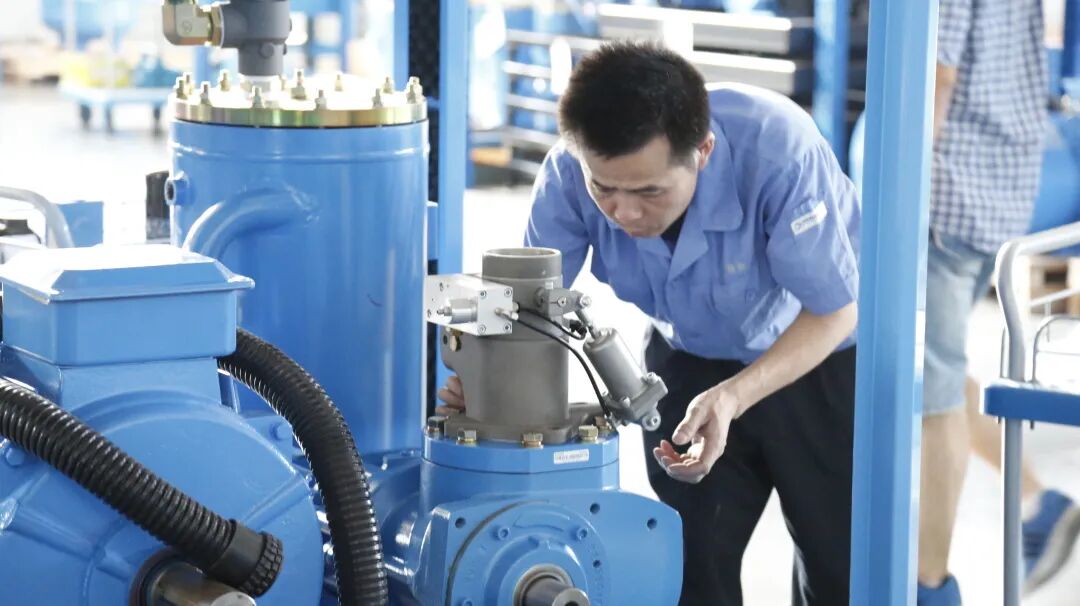
- Other Common Tripping Causes
Mechanical and system failures also lead to tripping:
- Clogged oil separator: Rising internal pressure increases motor load and overcurrent tripping
- Excessive discharge temperature: Dirty cooler, insufficient oil and high ambient temperature activate overheat protection
- Unstable voltage: Low grid voltage or unbalanced three-phase voltage causes drastic current fluctuation
- Main unit failure: Bearing wear and rotor jamming raise mechanical resistance and lead to overload tripping
Solution: Replace filter elements and lubricant regularly, clean coolers, monitor voltage and halt operation for troubleshooting once abnormalities occur.
- Optimal Prevention: Regular Predictive Maintenance
Proactive maintenance outperforms post-fault troubleshooting. It maintains high efficiency of new units, improves performance of old equipment and sharply cuts unexpected tripping risks.
Key maintenance items:
- Daily inspection of oil level, discharge temperature and operating current
- Periodic replacement of air filter, oil filter, oil separator core and lubricant
- Regular cleaning of coolers and motor heat dissipation fins
- Semi-annual inspection of electrical circuits and contactor contacts
- Deman Commitment: Avoid Tripping Disruptions
All Deman energy-saving compressors are fitted with Deman Intelligent Cloud Control System. It forecasts potential faults in advance to eliminate hidden risks. Supported by 46 comprehensive maintenance services, equipment performance stays optimal, cutting efficiency loss by 3% throughout the service life for energy-efficient stable operation.
Contact Deman After-sales Service Department for frequent tripping or other operational issues.