


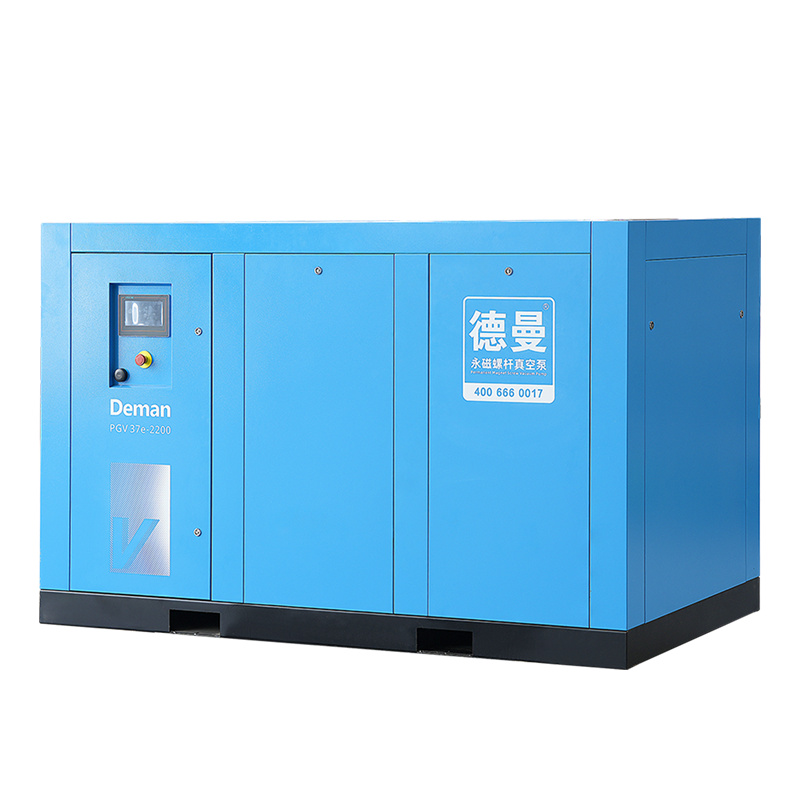
China PGVe Series VSD Screw Vacuum Pump | Energy-Efficient Solutions from Leading Suppliers & Factory
Product Highlight
Superior Energy Saving
PM VSD technology matches output to demand, saving energy and water compared to conventional pumps.
Low Failure Rate
Non-contact rotors, 7×24 continuous operation, failure rate 90% lower than traditional pumps.
Longer Lifespan
Robust construction delivers durable, continuous operation with a 10× longer lifespan exceeding conventional pumps.
More Precise Pressure Control
Advanced system ensures stable vacuum pressure for improved process consistency and yield compared to conventional pumps.
Quieter Operation
Direct-drive, low-speed design ensures minimal vibration and noise level significantly lower.
Deman Cloud Intelligent Control System
Built-in Cloud function, enables 24/7 monitoring, sends out real-time early-warning alerts when there is data deviation, reducing unexpected downtime losses.
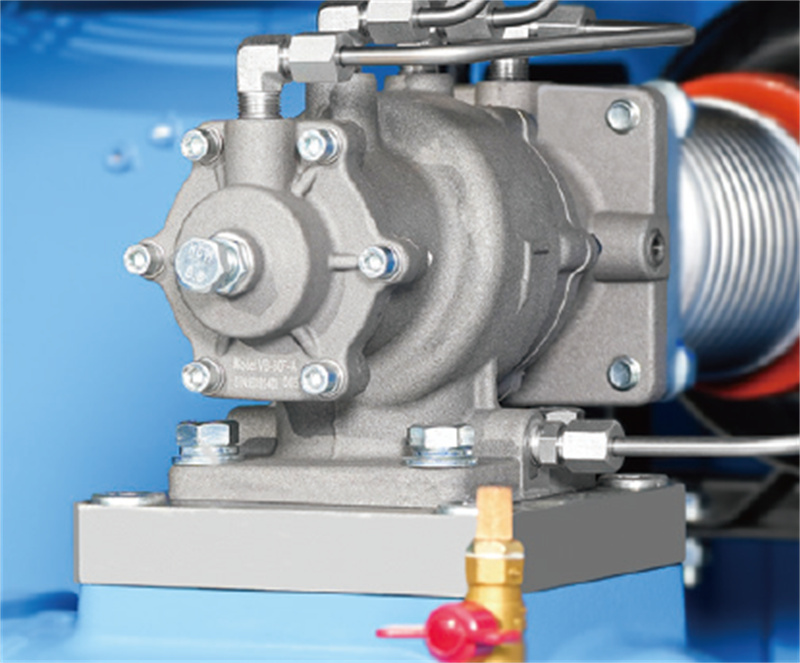
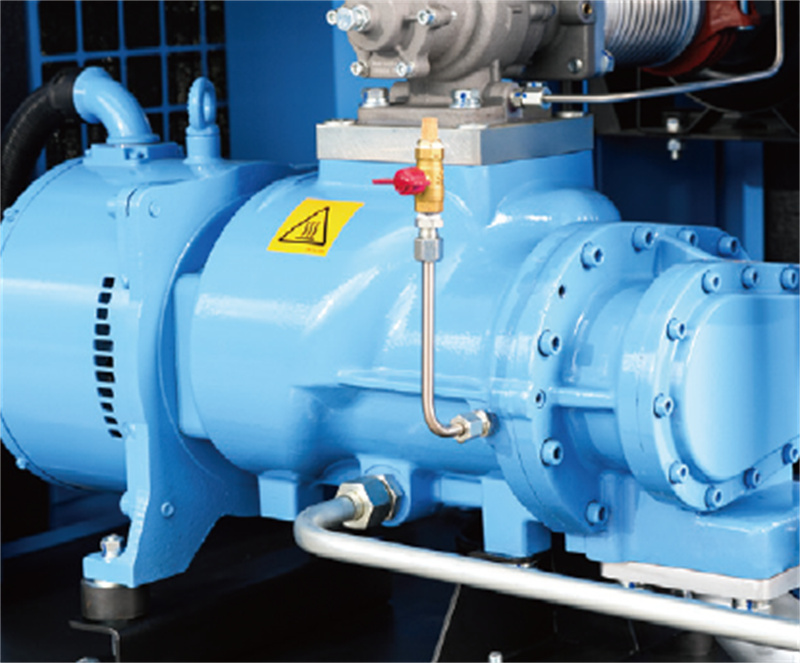
Product Structure


Technical Parameter
| Model Specification | Nominal Slip Rate m³/hr | Extreme Pressure mbar(a) | Intake Air Temperature Range ℃ | Inlet Diameter | Exhaust Pipe Diameter | Outline Dimension (L×W×H) mm | Power kW |
| PGV 6e-450 | 450 | 0.35 | 0-46 | G2 | G1 1/2 | 1050×700×793 | 5.5 |
| PGV 8e-580 | 580 | 0.35 | 0-46 | G2 | G1 1/2 | 1050×700×793 | 7.5 |
| PGV 11e-730 | 730 | 0.35 | 0-46 | DN 80 | G2 | 1180×930×1090 | 11 |
| PGV 15e-900 | 900 | 0.35 | 0-46 | DN 80 | G2 | 1230×930×1090 | 15 |
| PGV 22e-1300 | 1300 | 0.35 | 0-46 | DN 100 | DN 80 | 1680×1300×1180 | 22 |
| PGV 30e-1800 | 1800 | 0.35 | 0-46 | DN 150 | DN 100 | 2200×1260×1390 | 30 |
| PGV 37e-2200 | 2200 | 0.35 | 0-46 | DN 150 | DN 100 | 2200×1260×1390 | 37 |
Frequently Asked Questions
-
What makes the PGV series vacuum pump more energy-efficient than conventional pumps?
The PGV series uses PM VSD (Permanent Magnet Variable Speed Drive) technology that automatically matches motor output to actual demand. This eliminates unnecessary energy consumption during low-load operation, resulting in significant savings in both energy and water usage compared to fixed-speed conventional pumps.
-
How does the three-stage vacuum separation system work?
The system separates oil from air in three progressive stages: Stage 1 uses cyclonic centrifugal force for preliminary separation; Stage 2 uses impaction separation where airflow contacts the wall surface to remove further oil droplets; Stage 3 employs a high-efficiency oil-air separator with imported multi-layer micro-glass fiber media to remove the finest oil aerosols, delivering exceptionally clean exhaust air.
-
What is the expected lifespan of the PGV series compared to traditional pumps?
Thanks to its robust construction, non-contact rotor design, and optimized screw rotor air-end, the PGV series is engineered to deliver a lifespan up to 10 times longer than conventional pumps, while supporting 7×24 uninterrupted continuous operation.
-
What is the Deman Cloud Intelligent Control System and how does it help operations?
The Deman Cloud Intelligent Control System is a built-in IoT-based monitoring platform that enables 24/7 remote surveillance of the vacuum pump's operating status. It sends real-time early-warning alerts whenever data deviations are detected, helping operators respond proactively, minimize unexpected downtime, and reduce maintenance costs.
-
What is the operating temperature range and can the pump handle high-temperature environments?
The PGV series is designed to operate with an intake air temperature range of 0–46°C. Its high-performance cooling system — featuring a high-airflow axial fan and an advanced plate-fin heat exchanger with separate oil and air circuits — ensures stable and reliable operation even in demanding high-temperature ambient conditions.
-
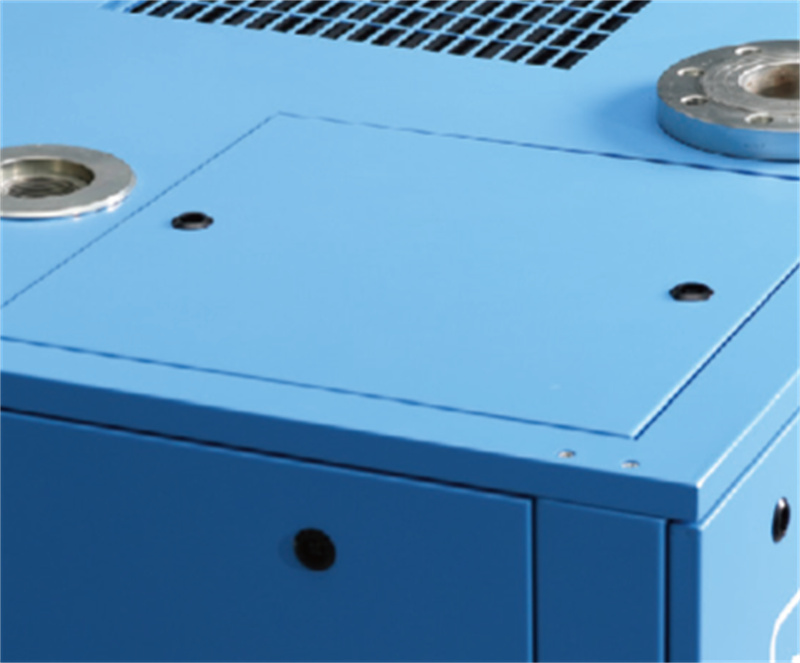
How easy is it to maintain the PGV series vacuum pump?
Maintenance has been simplified through smart-positioned consumables design. The oil separator features a dedicated maintenance panel on its top cover, allowing quick and easy replacement of the oil separation element. This design significantly minimizes downtime and reduces overall service costs during routine maintenance.