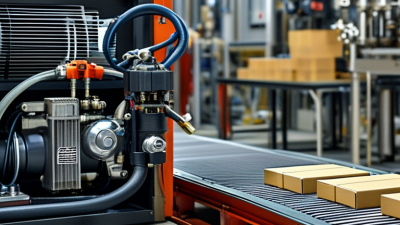
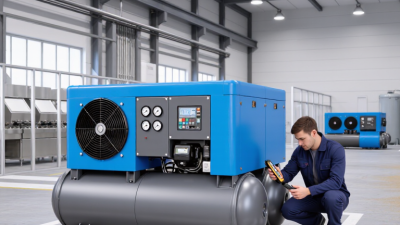
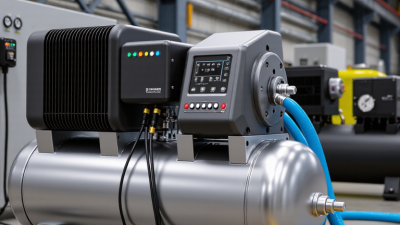
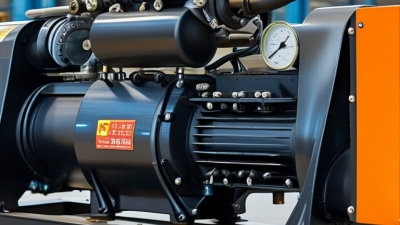
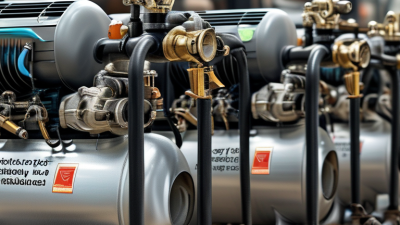
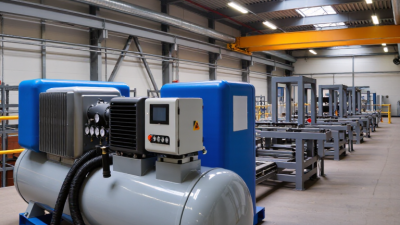
Picking the right Industrial Air Compressor can really affect production speed, energy use, and how much maintenance risk you're dealing with. Global buyers often compare horsepower, pressure, airflow, tank size, and lifecycle cost. But honestly? Catalog numbers rarely show the full operating picture. A compressor rated for 10 bar might perform totally differently in a hot, dusty workshop. And don't forget—noise, voltage, humidity, and whether you can get spare parts easily all play into how reliable things are day to day. Bigger isn't always better, either. Sometimes the quiet little unit that fits your needs just right is the smarter pick.
So, this guide is all about compressor choices — rotary screw, reciprocating, oil-free, and portable — for places like factories, workshops, construction sites, and those sensitive manufacturing lines. We'll look at things like measured airflow, duty cycle, motor efficiency, dryer compatibility, control systems, and how often service is needed. Honestly? Practical, real-world evaluation is what counts. A technician glancing at a pressure gauge at 7 a.m. can spot trouble long before any dashboard does. If you're buying equipment, ask for the test data, warranty terms, installation guidance, and local support in writing. Don't just rely on a verbal promise. Certifications and safety docs are worth a careful look too, especially if the equipment is crossing borders. And at the end of the day, claims without evidence shouldn't be what decides your purchase.
Good purchasing teams don't just look at the sticker price—they tally up the total cost over a few years. Electricity alone can end up costing more than the original invoice. And a tiny leak around a coupling? That can quietly waste compressed air nonstop, almost without anyone noticing. Keeping up with regular audits, getting pipe sizes right, and swapping filters on time—those things go a long way toward protecting performance. Truth is, no shortlist is ever perfect. Ambient conditions shift, and real demand might be harder to predict than the project brief makes it sound. So think of this as a practical framework, not some universal final answer. Honestly, when it comes to the final pick, I'd go with what the verified site data shows, get advice from someone who really knows their stuff, and make sure there's a clear plan for the service.
What Defines an Industrial Air Compressor
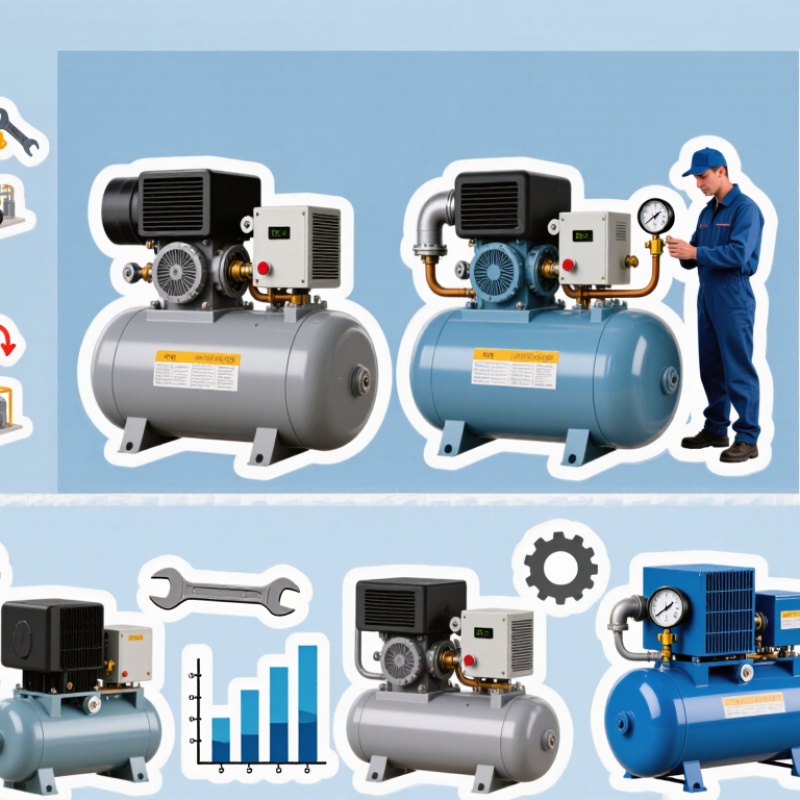
An industrial air compressor is a machine that converts mechanical energy into pressurized air for continuous production work. It commonly powers pneumatic tools, control systems, packaging equipment, and material-handling devices. Unlike small workshop units, industrial models are designed for higher duty cycles, stable output, and demanding operating environments.
Its definition depends on more than pressure alone. Airflow, measured in cubic meters per minute, must match the factory’s real consumption. Pressure must remain steady during peak demand. A practical assessment also examines motor efficiency, cooling capacity, noise, service access, and expected operating hours. Oil-injected compressors can support heavy-duty applications, while oil-free systems suit processes with strict air purity requirements. Dryers and filters are often essential. Clean air matters.
A reliable selection begins with measured data, not guesswork. Record leakage, shift patterns, receiver size, ambient temperature, and pressure drops across piping. A specification sheet can still mislead. Rated airflow may differ from delivered airflow under actual conditions. That gap is easy to overlook. It can increase energy costs and shorten equipment life. Safety controls, maintenance intervals, electrical compatibility, and recognized testing requirements also influence suitability for global buyers. The definition is not perfectly fixed. Each plant adds its own constraints, and even careful sizing may need revision after real production begins.
Industrial air compressors are primarily defined by their pressure capability, airflow capacity, duty cycle, energy efficiency, and suitability for continuous operation. The chart compares common compressor technologies by their typical discharge-pressure ranges.
Pressure ranges are typical industrial operating ranges and can vary by configuration, number of stages, cooling method, and application. Reciprocating compressors generally support the highest pressures, while centrifugal compressors are commonly selected for high-volume, continuous airflow at moderate pressure.
Industrial air compressors convert mechanical energy into pressurized air for tools, automation, packaging, and process equipment. Most industrial units use rotary screw compression. Two interlocking rotors draw air through an inlet valve. As the rotors turn, the air moves through shrinking chambers and its pressure rises. A separator then removes oil from the compressed stream in oil-injected systems.
The process creates heat. A cooler reduces the discharge temperature before air enters the receiver tank. Moisture condenses along the way, so drains and dryers protect downstream equipment.
In oil-free compressors, specially designed compression chambers avoid oil contact, but they still require careful temperature control. Small details matter. A clogged intake filter can reduce output and increase energy use.
When evaluating equipment, buyers should match pressure and flow with the actual application, not an optimistic estimate. I have seen systems selected by motor size alone, which is a costly mistake. Demand often changes during a production shift. Variable-speed control can respond to those changes, although it may add control complexity.
Operators should check leaks, drain condensate, inspect filters, and record pressure trends.
The quietest machine is not always the most efficient one. Room temperature, ventilation, duty cycle, and maintenance access deserve equal attention.
A compressor can perform well on paper and disappoint on the factory floor.
Major Types of Industrial Air Compressors
Industrial air compressors generally fall into reciprocating, rotary screw, centrifugal, and scroll types. Reciprocating compressors suit intermittent demand and high pressure, such as workshops or small production cells. Rotary screw units provide steady airflow for continuous manufacturing. Centrifugal compressors support very large volumes, but they need stable demand and careful maintenance. Scroll compressors offer clean, low-pulsation air for laboratories, electronics, and selected food processes.
The U.S. Department of Energy’s Improving Compressed Air System Performance sourcebook reports that leaks can waste 20–30% of compressor output. That figure changes the buying decision. A smaller, well-controlled rotary screw system may outperform an oversized unit running unloaded. Variable-speed control can reduce wasted cycling, although savings depend on the demand pattern. No single type wins.
Air quality also matters. Oil-injected compressors often reduce purchase cost, while oil-free designs can protect sensitive processes. ISO 8573-1 classification helps buyers define particles, water, and oil limits before installation. A common field mistake is choosing pressure first and airflow second. Measure peak flow, shift patterns, receiver capacity, and ambient temperature. Centrifugal equipment can struggle with rapid demand changes. Reciprocating equipment can feel noisy beside occupied work areas. These practical details are easy to miss. They should not be.
Global buyers should evaluate an Industrial Screw Air Compressor through measured performance, not catalog size alone. Free air delivery, or FAD, must match the required pressure and operating conditions. A unit rated at 8 bar may lose efficiency when the system requires 10 bar. Check motor power, specific energy consumption, and the full-load duty cycle. Small differences can raise annual electricity costs significantly.
Air quality also matters. Confirm whether the compressor supports the required ISO 8573-1 class for oil, particles, and moisture. A built-in dryer may simplify installation, but it can increase heat and energy demand. Review outlet temperature, noise levels, cooling requirements, and ambient operating limits. In a dusty factory, filters need safe access and clear replacement intervals. In high-altitude locations, motor performance may decline.
Electrical compatibility deserves practical attention. Verify voltage, frequency, starting current, and control-system requirements before shipment. Ask for test data taken under stated inlet conditions, because “capacity” figures are not always comparable. I have seen projects focus on purchase price while overlooking pressure drops in long pipe runs. That choice looked efficient on paper. It was not. Buyers should also inspect service access, spare-part availability, maintenance records, and the response process for technical support. A compressor can meet its specification and still disappoint when installation details are weak.
| Compressor Configuration | Typical Motor Rating | Typical Free Air Delivery (FAD) | Typical Working Pressure | Air Quality | Energy Efficiency Profile | Typical Noise Level | Recommended Applications | Key Global-Buying Considerations |
|---|---|---|---|---|---|---|---|---|
| Oil-Injected Rotary Screw | 7.5–37 kW | 0.9–6.5 m³/min | 7–13 bar(g) | Technically oil-lubricated air; downstream filtration and a dryer are normally required for sensitive processes. | Strong continuous-duty performance; variable-speed drive can reduce unloaded running and improve part-load efficiency. | 62–72 dB(A) | General manufacturing, assembly lines, workshops, packaging, and pneumatic tools. | Confirm FAD at the specified pressure, motor efficiency class, inlet conditions, service intervals, voltage, frequency, and local electrical requirements. |
| Oil-Injected Rotary Screw with Variable-Speed Drive | 15–110 kW | 2.0–20 m³/min | 7–13 bar(g) | Oil-lubricated compressed air with filtration and drying options. | Best suited to facilities with fluctuating demand; speed control helps limit blowdown and idle losses. | 65–76 dB(A) | Factories with variable production schedules, multiple shifts, and changing air demand. | Evaluate the specific energy consumption in kW per m³/min, turndown range, control strategy, and total cost of ownership. |
| Oil-Free Rotary Screw | 30–160 kW | 4.0–28 m³/min | 7–10 bar(g) | Oil-free air at the compressor outlet; final air quality depends on the complete system and installation conditions. | Suitable where air contamination creates high product or process risk; some designs use multi-stage compression and intercooling. | 68–80 dB(A) | Food and beverage, pharmaceuticals, electronics, medical manufacturing, and critical instrumentation. | Check ISO 8573-1 air-quality requirements, certification scope, cooling method, ambient-temperature limits, and lifecycle energy consumption. |
| Reciprocating Piston Compressor | 1.5–22 kW | 0.15–3.5 m³/min | 8–30 bar(g) | Oil-lubricated or oil-free versions are available; air treatment is selected according to the end use. | Efficient for intermittent operation and high-pressure, low-to-medium-flow requirements; less suitable for continuous high-volume demand. | 72–85 dB(A) | Service stations, small workshops, maintenance operations, laboratories, and high-pressure applications. | Review duty cycle, receiver volume, cooling requirements, starting current, vibration control, and required maintenance access. |
| Two-Stage Reciprocating Compressor | 5.5–30 kW | 0.5–4.0 m³/min | 10–30 bar(g) | Usually oil-lubricated; coalescing filtration and drying may be required. | Two-stage compression improves performance for higher pressures compared with many single-stage designs. | 75–88 dB(A) | High-pressure maintenance shops, bottle filling, industrial cleaning, and specialized pneumatic equipment. | Verify pressure rating of the receiver, safety valves, aftercooler capacity, and compliance with local pressure-vessel regulations. |
| Centrifugal Compressor | 200–2,000+ kW | 30–350+ m³/min | 4–12 bar(g) | Typically oil-free in the compression chamber; final air quality depends on the package and downstream treatment. | High efficiency at stable, near-design flow; performance can decline when operating far below the optimum flow range. | 75–90 dB(A) | Large continuous-process plants, chemicals, metals, refineries, utilities, and central compressed-air systems. | Require accurate demand profiling, surge-control assessment, cooling-water or ambient-air evaluation, and specialist commissioning. |
| Scroll Compressor | 1.5–22 kW | 0.12–3.0 m³/min | 7–10 bar(g) | Oil-free compression chamber; additional filtration and drying depend on the process specification. | Quiet and compact for clean, moderate-flow applications; usually installed as multiple modules when higher capacity or redundancy is needed. | 50–65 dB(A) | Dental and medical facilities, laboratories, electronics, and small clean-air systems. | Check module sequencing, redundancy, dew-point requirements, ambient temperature, and access for intake-filter replacement. |
| Rotary Vane Compressor | 2.2–75 kW | 0.25–12 m³/min | 5–10 bar(g) | Commonly oil-lubricated; oil-free variants and suitable filtration systems should be specified when required. | Provides steady flow with a compact footprint; operating efficiency depends on vane condition, pressure, and maintenance quality. | 60–75 dB(A) | Printing, packaging, material handling, small process systems, and general industrial service. | Assess vane life, oil carryover limits, spare-parts availability, local service capability, and continuous-duty suitability. |
| Note: The figures shown are representative industry ranges for typical operating conditions. Actual performance depends on inlet temperature, altitude, humidity, discharge pressure, cooling method, control mode, and the applicable test standard. Compare FAD values measured under the same conditions, preferably in accordance with ISO 1217. | ||||||||
Industrial buyers should compare measured output, not motor size or brochure promises. An Industrial Rotary Screw Air Compressor may look efficient at full load. Yet factory demand rarely stays constant.
Ask suppliers for free air delivery at your working pressure, inlet temperature, and voltage. Compare specific power in kilowatts per 100 cubic feet per minute. Lower figures usually indicate better efficiency. Check whether tests follow a recognized standard and include the complete package. The compressor, dryer, filters, and controller all consume energy.
A 7.5-bar system may waste power when production needs only 6 bar. Small pressure reductions can matter across thousands of operating hours. This is easy to miss.
Observe performance beyond the test sheet. Variable-speed control can reduce unloaded running, but savings depend on demand changes. A poorly sized unit may cycle constantly or operate inefficiently. Inspect logged pressure, flow, and power data from a similar installation. Ask about maintenance intervals, oil separation, cooling airflow, and service access. Dirty coolers raise discharge temperatures and increase electricity use. Air leaks near hoses can hiss like a small valve, silently adding cost. Ultrasonic leak checks help locate them.
Reliability also affects efficiency. A cheap purchase can become expensive after neglected servicing or unstable local power. I would leave room for skepticism: projected savings are estimates, not guarantees. Request assumptions, test records, and a transparent lifecycle calculation before choosing equipment.
Selecting an industrial compressor starts with the application, not the advertised horsepower. A paint line may need clean, dry air, while a quarry values dust tolerance, service access, and stable flow. The U.S. Department of Energy reports that compressed-air systems can lose 20% to 30% of their output through leaks. A pressure audit should come before equipment selection.
For packaging and electronics, oil-free compression and reliable filtration protect sensitive products. Moisture control matters too; one wet airline can damage valves during a humid shift.
Automotive tools often need high flow during short demand peaks, so receiver capacity can prevent pressure swings. A variable-speed unit may reduce waste when demand changes, but it is not automatically the best choice. Poorly sized controls can create cycling losses.
Industrial Low Pressure Compressor systems suit pneumatic conveying, wastewater aeration, and certain process-air duties. They usually operate below conventional plant-air pressures, reducing energy demand when the process allows it. The European Commission’s energy-efficiency guidance emphasizes matching supply pressure to actual end-use requirements. That sounds obvious. It is often missed.
ISO 11011 recommends evaluating supply, distribution, and demand as one system. Buyers should request noise data, part-load performance, service intervals, and verified power consumption. Published efficiency figures can be difficult to compare across test conditions. A practical trial under real shift patterns may reveal more than a brochure. Even experienced teams sometimes specify excess capacity “for safety,” then pay for it every operating hour.
Top Industrial Air Compressors for Global Buyers?
For global buyers, an industrial air compressor is more than a motor and pressure vessel. Selection should begin with site conditions, not a catalog headline. Confirm voltage, frequency, altitude, ambient temperature, and required air quality. ISO 8573 helps classify particles, water, and oil levels. The correct class depends on the process. A clean assembly line needs tighter control than a workshop tool line. Ask for measured flow at working pressure. “Maximum capacity” can mislead. Keep this detail visible.
An Industrial Refrigerated Air Dryer can reduce moisture in compressed air systems. Its performance depends on inlet temperature, pressure, and surrounding heat. Check drainage design, filter ratings, and service access before purchasing. Pressure equipment and electrical requirements vary between countries. Request conformity documents, test records, manuals, and clear installation limits. Good documentation matters. Maintenance teams should inspect filters, drains, belts, coolers, and safety devices on a fixed schedule. They should also record pressure loss and energy use. Small losses become expensive.
Purchasing decisions should include total ownership cost, not only the invoice price. Compare power consumption, spare-part availability, warranty terms, delivery support, and technician training. Ask for factory testing and site acceptance criteria. A spreadsheet cannot predict every site problem. That deserves reflection. Buyers sometimes specify excessive capacity for comfort, then pay for inefficient operation. A better approach uses measured demand, future growth, and realistic duty cycles. Leave room for mistakes, but verify every critical assumption.
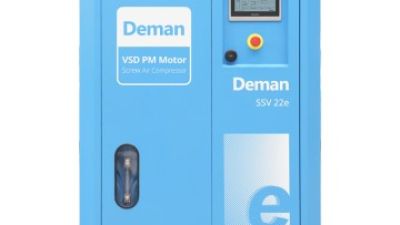
In modern factories, compressed air is essential for automation, assembly, packaging, and material handling, yet it can also be a hidden source of operating costs. The U.S. Department of Energy reports that compressed-air systems may account for 10–15% of a manufacturing plant’s electricity consumption, while poorly maintained systems can lose 20–30% of their output through leakage. For Chinese factories seeking greater productivity, SSVe-series air compressors offer a practical route toward stable, efficient, and dependable air production.
Designed for demanding industrial environments, the SSVe series focuses on safe air delivery through consistent pressure control and reliable operation. When paired with a 5DV refrigerated dryer, the system removes moisture before air reaches production equipment, helping reduce corrosion, valve failures, product contamination, and unplanned maintenance. This supports the dry-air requirements highlighted in ISO 8573-1, the international standard for compressed-air purity.
Energy efficiency is equally important. According to the International Energy Agency, energy management and system optimization are among the most effective ways for industry to reduce electricity use and emissions. Efficient compressor control, reduced leakage, and lower pressure losses can potentially deliver annual savings comparable to the cost of an additional compressor. With supplier-backed air-quality assurance and water-removal performance, this integrated solution helps factories obtain safer, energy-saving, and consistently dry compressed air at the point of use.
Mechanical power turns two interlocking rotors. Air enters through an inlet valve. Shrinking chambers compress the air.
Compression creates heat. A cooler lowers the discharge temperature. Moisture condenses and should be removed with drains or dryers.
Oil-injected systems separate oil from compressed air after compression. Oil-free systems avoid oil contact inside special compression chambers. Temperature control remains essential.
Match free air delivery and pressure with actual equipment demand. Do not select a unit by motor size alone. Production demand may change during a shift.
It can respond to changing air demand and reduce waste. However, it may add control complexity. The benefit depends on the operating pattern.
Check free air delivery, pressure, motor power, and specific energy consumption. Review full-load duty cycle and outlet temperature. Catalog capacity figures may not compare equally.
Confirm the required ISO 8573-1 air quality class. Check oil, particles, and moisture limits. Also review dryers, heat release, ventilation, and room temperature.
Inspect filters, check air leaks, drain condensate, and record pressure trends. Keep service areas accessible. A clogged intake filter can increase energy use. Small details matter.
Verify voltage, frequency, starting current, and control-system requirements before shipment. Consider altitude, dust, pipe pressure drops, and ventilation. A quiet machine is not always efficient.
Choosing the right Industrial Air Compressor is essential for factories and production facilities that depend on stable, efficient compressed air. This guide explains what defines an industrial compressor, how it converts mechanical power into pressurized air, and how major designs differ in operation, capacity, noise, and maintenance needs. It also introduces key performance specifications, including pressure, airflow, duty cycle, motor power, air quality, and control systems, helping global buyers evaluate equipment more accurately.
The article further explains how to compare energy efficiency by considering operating load, heat management, leakage control, and lifecycle costs rather than purchase price alone. It outlines compressor selection for applications such as manufacturing, construction, processing, and automated equipment, while highlighting the importance of environmental conditions and required air purity. Finally, buyers will learn how international standards, routine maintenance, spare parts availability, warranty terms, installation support, and total ownership cost can influence a safe, reliable, and long-term purchasing decision.