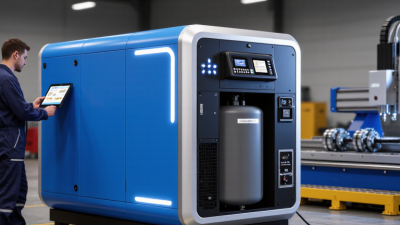
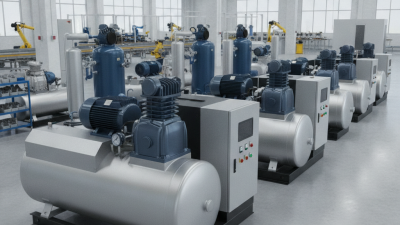
Look, China’s maglev air compressor scene is pretty broad—you’ve got manufacturers catering to factories, wastewater treatment plants, electronics makers, and all sorts of demanding operations. That said, seeing someone slap a “top 10” label on a list? It’s not exactly a badge of certification. Companies change, product lines shift, service coverage evolves. So if you’re serious about picking a supplier, don’t just take a ranking at face value—go check the latest details with the companies themselves.
Okay, so this guide walks you through ten different manufacturers and gives you some practical tips for comparing them. Don't just get swept up by those flashy efficiency numbers—you know, the ones they love to put in big print. You really need to dig into rated flow, pressure, how the magnetic bearings are controlled, cooling needs, noise levels, and the actual operating conditions. Here's the thing: a compressor can look amazing in a clean test room, but put it in a dusty, gritty compressor station and it might tell a whole different story. So make sure you ask for recent performance reports, references from actual installations, warranty details, and how local service would work. Because honestly, the little stuff matters more than you'd think.
Look, when you're comparing compressors, don't just take published specs at face value—try to separate those from independently verified results. And if the info is incomplete, call that out. Sure, it's messier that way. But honestly, it gives you a much better picture. A smart buyer can then match the compressor to what they'll actually need, not just pick whichever ranks highest. So before you even ask for a quote, have your expected airflow, pressure range, annual operating hours, and site conditions ready. Having these details upfront means suppliers can actually recommend comparable setups—and it cuts down on those vague promises. Treat the list as a rough starting point, not the final word. And definitely double-check anything that impacts cost, reliability, or maintenance.
What Is a Maglev Air Compressor and How Does It Work?
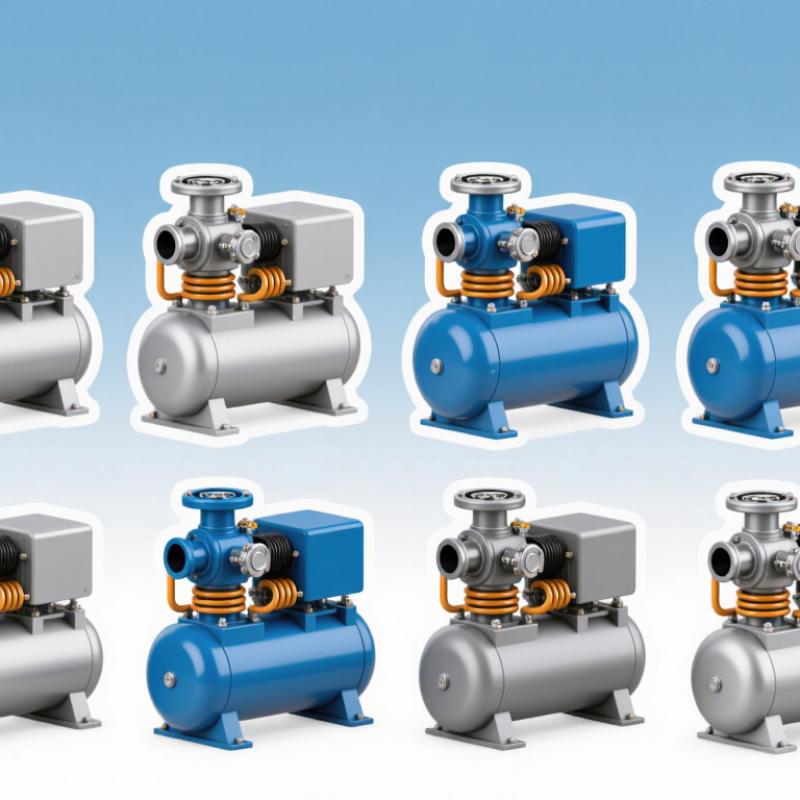
A Maglev Compressor uses magnetic forces to suspend its rotating shaft instead of supporting it with conventional contact bearings. Position sensors continuously measure the rotor’s movement, while a controller adjusts electromagnets to keep it centered. No rubbing contact. A high-speed motor spins the impeller, which draws air through an inlet and accelerates it outward. A diffuser then slows the airflow and converts much of its velocity into pressure.
Because the bearing system needs no oil film, it can reduce bearing-related friction and the risk of oil entering the compressed-air path. The Maglev Compressor still depends on responsive electronics, clean operating conditions, and effective cooling. A technician might notice unusual vibration or rising temperatures before a fault becomes obvious, so monitoring matters. It is not maintenance-free, despite the appealing simplicity of a shaft floating in a magnetic field. Dust, unstable power, or poor installation can affect performance. Actual energy savings also vary with airflow demand and system design; that part deserves careful measurement, not assumption.
Key Technologies Behind China’s Maglev Compressor Industry
China’s maglev compressor industry is built on several connected technologies. Active magnetic bearings suspend the rotor without physical contact, reducing bearing friction and eliminating routine bearing lubrication. A high-speed motor, variable-frequency drive, and carefully shaped impeller then work together to match airflow to demand. Small details matter: sensor accuracy, rotor balance, and cooling paths can affect stability at thousands of revolutions per minute.
The energy case is substantial. The International Energy Agency’s 2011 report, Energy-Efficiency Policy Opportunities for Electric Motor-Driven Systems, estimates that motor-driven systems use about 45% of global electricity. China’s 14th Five-Year Plan for Industrial Green Development set a target to cut energy consumption per unit of industrial added value by 13.5% from 2020 levels by 2025. These figures explain the attention paid to efficient drives and control systems, but they do not prove that every maglev installation saves energy. Operating hours, inlet conditions, pipe losses, and demand fluctuations all matter. Site measurements matter more.
Digital monitoring adds another layer. Vibration, temperature, and pressure sensors can help operators detect unstable operation before it becomes a costly shutdown. Yet sensor data is only useful when teams interpret it well. That part is often underestimated. A technically advanced compressor may still run inefficiently if its control settings do not match the plant’s actual load profile.
How to Evaluate Maglev Air Compressor Manufacturers in China
Evaluating a Maglev Centrifugal Compressor manufacturer in China starts with operating data, not headline efficiency claims. Ask for performance maps across your expected flow and pressure range. A unit that performs well at full load may behave differently during frequent demand changes. Request test conditions, measured power consumption, and the method used to calculate efficiency. Ask for proof.
Check how the magnetic bearings, control system, and cooling design respond to real operating conditions. Request details on alarms, restart procedures, and what happens during a power interruption. Small details matter. A clear maintenance schedule should identify inspection tasks, recommended intervals, and any specialist tools required. If a supplier cannot explain these points plainly, that deserves a closer look.
Factory references can help, but compare applications with similar airflow, operating hours, and site conditions. Ask whether performance data comes from a witnessed test or a standard factory report, and confirm what the warranty covers. Review commissioning support and the availability of trained service staff near your facility. Documentation is important, though it does not guarantee a smooth installation. I would also check how the supplier handles a mismatch between promised and measured performance; this is easy to overlook when comparing quotations.
Profiles of 10 Leading Chinese Maglev Air Compressor Manufacturers
Profiles of ten leading Chinese maglev air compressor manufacturers reveal a market shaped by different engineering strengths. One focuses on high-speed centrifugal impellers; another develops motor and inverter controls. A third emphasizes magnetic-bearing stability, while a fourth integrates compressors with dryers and filters. Details matter. Buyers should check measured flow, discharge pressure, and efficiency at their actual operating point.
Other manufacturers specialize in wastewater aeration, where steady air delivery can matter more than compact size. Some serve textile plants with variable demand; others design systems for electronics facilities that require careful air-quality control. One profile centers on original-equipment production, another on export documentation and commissioning support. A tenth may stand out through regional service teams and spare-parts availability. These differences are more useful than a simple ranking.
For comparison, ask each supplier for test data, bearing-control safeguards, noise readings, and a clear maintenance plan. A model described as Air Compressor 100 Hp Air Cooled may suit one installation, but cooling conditions and load patterns still need review. Request references for similar applications, not just a specification sheet. Some published figures lack enough testing detail; that deserves a second look. A shortlist can still miss a practical weakness.
Comparing Manufacturers by Capacity, Efficiency, and Support
Comparing maglev Air Compressor manufacturers requires more than checking advertised capacity. Request certified flow data at the same discharge pressure, inlet temperature, and operating conditions. A high nameplate rating may not reflect usable output during changing demand. Ask for performance curves across the expected load range, not just one best-case point.
Efficiency deserves equal scrutiny. The U.S. Department of Energy’s Improving Compressed Air System Performance guide notes that leaks can waste 20–30% of compressor output in poorly maintained systems. That figure concerns the wider compressed-air system, not a compressor’s standalone efficiency. Compare measured specific power, expressed as kilowatts per unit of delivered airflow, and confirm what auxiliaries are included. Small differences matter. Still, a spreadsheet cannot capture every site condition.
Support can decide real-world uptime. Compare commissioning scope, technician response commitments, spare-parts availability, and remote monitoring limits. Ask how the supplier handles low-load operation, alarms, and bearing-system inspections. The DOE guide also stresses system-level assessment, so request a site audit rather than relying only on catalog ratings. I would not rank suppliers from published figures alone; test conditions and service coverage are often unevenly reported. That gap deserves attention.
China Top 10 Maglev Air Compressor Manufacturers? – Comparing Manufacturers by Capacity, Efficiency, and Support
Important: This is an anonymized, illustrative comparison of common maglev centrifugal compressor capacity classes—not a verified ranking or supplier-specific dataset. Actual product availability, performance, and service coverage vary by model and project. Confirm all figures with current manufacturer datasheets and a site-specific performance curve.
| Comparison Profile |
Indicative Airflow Class |
Typical Application |
Efficiency Comparison |
Support to Verify |
| Profile 1 · Compact |
15–30 m³/min |
Small wastewater and process-air systems |
Compare measured input power at the same airflow and discharge pressure. |
Commissioning, operator training, and local service response time |
| Profile 2 · Compact-plus |
25–45 m³/min |
Small-to-medium aeration duties |
Request specific power in kW/(m³/min) at the required operating point. |
Warranty terms, remote diagnostics, and spare-parts availability |
| Profile 3 · Mid-range |
35–60 m³/min |
Municipal wastewater treatment and industrial aeration |
Compare full-load and part-load power; avoid comparing unlike test conditions. |
Availability of site commissioning and application engineering |
| Profile 4 · Mid-range |
50–80 m³/min |
Continuous-duty process air |
Check performance across the expected seasonal demand range. |
Documented maintenance procedures and technician training |
| Profile 5 · Mid-to-large |
70–110 m³/min |
Large aeration basins and centralized air systems |
Request independently stated test conditions and an efficiency curve. |
On-site acceptance testing and response-time commitments |
| Profile 6 · Large |
90–140 m³/min |
Large industrial or municipal installations |
Assess specific power at the site's actual pressure and inlet conditions. |
Regional service coverage and critical-spares lead times |
| Profile 7 · Large |
120–180 m³/min |
High-demand, continuous process-air service |
Compare annual energy use using the same load profile and operating hours. |
Control-system integration and remote monitoring support |
| Profile 8 · Extra-large |
160–230 m³/min |
Large plants with variable air demand |
Evaluate turndown and control stability, not just rated-point efficiency. |
Multi-unit sequencing support and documented alarm response |
| Profile 9 · Extra-large |
210–320 m³/min |
High-capacity centralized air supply |
Check the guaranteed operating envelope and performance at site conditions. |
Project engineering, installation supervision, and service escalation path |
| Profile 10 · Project-scale |
300 m³/min and above |
Large multi-unit or customized process-air systems |
Require a project-specific energy model and documented acceptance-test method. |
Written service-level agreement, commissioning plan, and long-term parts support |
Buyer note: Airflow classes are indicative planning bands, not verified offerings from ten individual manufacturers. Confirm whether quoted airflow is stated at standard or actual conditions, and check discharge pressure, inlet temperature, humidity, acoustic limits, electrical requirements, and the applicable test standard before comparing bids.
Industries and Applications for Maglev Air Compressors
Industries and Applications for Maglev Air Compressors
Maglev air compressors use magnetic bearings to support a high-speed rotor without mechanical contact. Their oil-free airflow can suit electronics plants, food processing lines, pharmaceutical facilities, and other operations with strict air-quality requirements. In a clean production room, for example, compressed air may power packaging tools while helping reduce the risk of oil contamination. Textile mills and automotive factories may also use these systems for pneumatic equipment and process air. Wastewater treatment sites are another fit, where blowers supply air to aeration tanks. The right choice still depends on airflow, pressure, duty cycle, and local service support—not simply the industry name.
Tips: Check the required air-quality class and measure demand across a full production shift. Ask for performance data at partial load, since real plants rarely run at one steady output. Compare noise, cooling needs, maintenance access, and control-system compatibility. A compact installation can still need generous ventilation. Don’t skip that detail. For China-based manufacturers, request test conditions, efficiency curves, and clear warranty terms. Specifications can look impressive on paper; independent verification may be harder to arrange, so plan for it early.
Industries and Applications for Maglev Air Compressors
Typical compressed-air pressure ranges vary by equipment and process. The ranges shown are indicative engineering values, not fixed requirements; confirm the pressure and air-quality specifications for each installation.
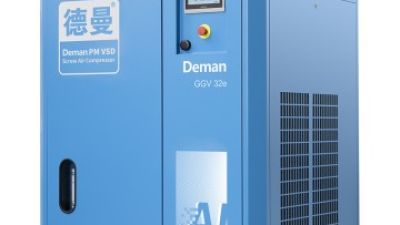
Industrial Air Compressor Efficiency: GGVe AI Insights Informed by the IEA Energy Efficiency 2023 Report
Industrial air compressors can consume substantial energy, making efficiency improvements important for controlling operating costs and reducing wasted power. The IEA Energy Efficiency 2023 report highlights the broader value of better technology, operational practices, and energy management. Applied to compressed-air systems, these principles point to practical steps: match output to demand, avoid excessive pressure, and monitor performance so that inefficiencies can be addressed early.
A dual-stage, permanent-magnet variable-speed quad-screw compressor can support these goals by adjusting its output to changing air demand. Customized discharge pressure and free air delivery (FAD) help align the system with an application’s requirements rather than relying on a fixed operating point. AI-assisted monitoring can provide operational insights, support safety checks, and help operators respond to changing conditions, improving dynamic efficiency without compromising reliability. Designed for demanding industrial use, this high-end configuration combines advanced control functions with precision engineering to deliver consistent performance across a range of applications.
FAQS
It uses magnetic forces to suspend a rotating shaft without contact bearings. No rubbing contact.
A high-speed motor spins an impeller. The impeller accelerates incoming air, and a diffuser converts much of that motion into pressure.
Its magnetic bearings do not need an oil film. This can reduce friction and the risk of oil entering the compressed-air path.
No. Dust, unstable power, or poor installation can affect performance. Not maintenance-free. Sensors, cooling, and inspections still matter.
Track vibration, temperature, and pressure. A rising temperature or unusual vibration can be an early warning, but readings need careful interpretation.
No. Savings depend on operating hours, airflow demand, inlet conditions, and pipe losses. Measure energy use at the site. Assumptions can be wrong.
Compare certified airflow at the same pressure, inlet temperature, and operating conditions. Request performance curves across the expected load range, not one best-case figure.
Ask about commissioning, technician response times, spare parts, remote monitoring, and low-load operation. I would not trust catalog figures alone.
Yes. Poorly maintained compressed-air systems can waste 20–30% of compressor output through leaks. Check pipes and connections, too.
Conclusion
This article introduces the Maglev Air Compressor, explaining how magnetic levitation supports contact-free rotor operation and how this design can reduce mechanical friction, maintenance needs, and energy loss. It also outlines the key technologies shaping China’s maglev compressor industry, including magnetic bearings, high-speed motors, intelligent control systems, and thermal management. Readers will learn how to assess manufacturers by considering product design, production capacity, efficiency data, reliability, customization options, and after-sales support.
The article profiles ten leading Chinese manufacturers without focusing on brand promotion, then compares their capabilities in areas such as output range, energy performance, technical service, and application experience. It also explores where maglev air compressors may be used, including industrial manufacturing, electronics, food processing, pharmaceuticals, and other settings that require reliable compressed air. Together, these sections offer a practical overview to help readers understand the technology and make informed comparisons.