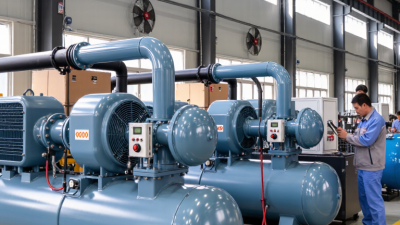
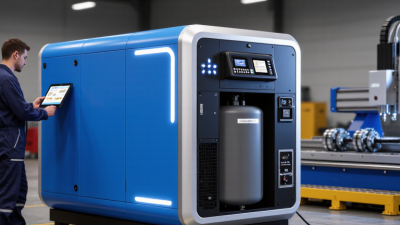
Industrial air is starting to feel less like a mystery and more like something you can actually measure, connect, and even plan around. The Smart Air Compressor is a good example: it pulls together variable-speed control, sensors, remote monitoring, and energy analytics. Put those pieces together, and factories can cut waste without putting production stability at risk.
The U.S. Department of Energy says compressed air can account for 10% or more of a plant's industrial electricity use. Its Improving Compressed Air System Performance guide also points to leakage, inappropriate use, and poor system design as some of the biggest efficiency losses. The International Energy Agency, meanwhile, notes that motor-driven systems make up a significant chunk of industrial electricity demand. So compressor efficiency isn't just an equipment preference anymore—it's a purchasing issue.
Ron Marshall, a well-known compressed-air systems specialist, put it bluntly: “Compressed air is the most expensive utility in a plant.” That warning still holds up. A small leak near a dusty packaging line can just keep running, even when operators can't hear it.
For global buyers, horsepower and purchase price shouldn't be the whole story. You also want verified airflow, pressure stability, lifecycle energy costs, maintenance access, cybersecurity controls, and service coverage. Atlas Copco, Ingersoll Rand, Kaeser Compressors, Sullair, and Gardner Denver are among the established manufacturers serving international markets. Their capabilities vary depending on the application, climate, factory size, and control requirements.
Industry reports can give you useful direction, but they're no substitute for measurements at your own site. Real plants are messier. Sensor data may be incomplete, and the advertised savings may depend on how the system is actually run. That uncertainty is worth paying attention to.
This guide compares leading Smart Air Compressor manufacturers for global buyers. It focuses on evidence, practical performance, and the details that shape long-term reliability.
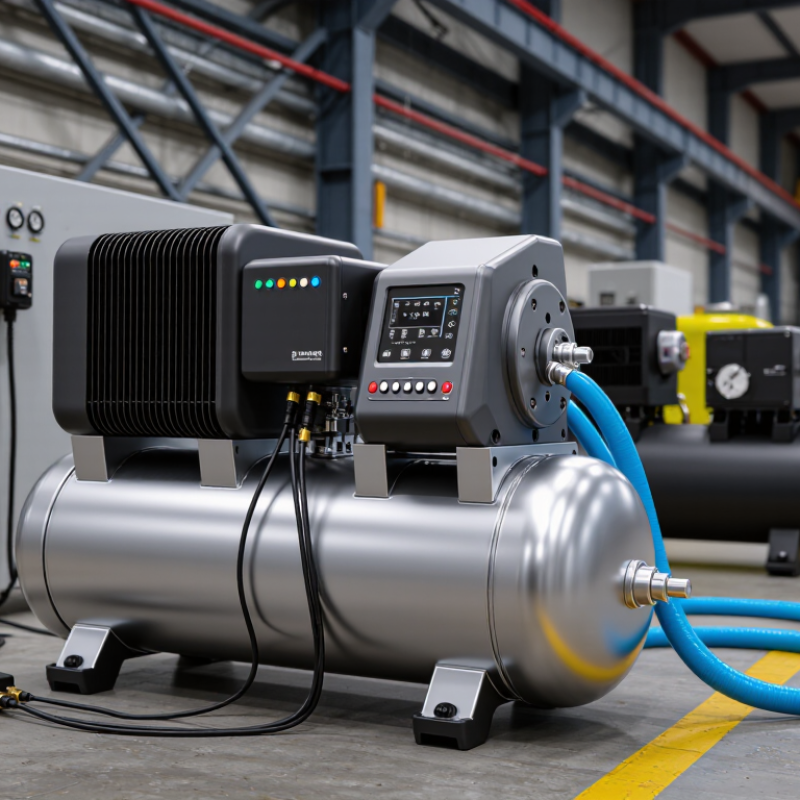
Smart air compressors combine compressed-air production with sensors, software, and automatic controls. They monitor pressure, temperature, vibration, energy use, and operating hours. This information helps technicians identify abnormal conditions before a breakdown stops production.
Modern units often use variable-speed drives, remote monitoring, and programmable controllers. A variable-speed motor adjusts output when demand changes, reducing unnecessary power consumption. Digital dashboards can show pressure trends and maintenance alerts in real time. Core functions include automatic start and stop, leak detection, overload protection, fault reporting, and scheduled servicing. In practical installations, these features support steadier pressure across workshops, factories, and demanding process lines.
No system is perfectly smart. Sensor drift, poor calibration, or weak network connections can produce misleading data. Experienced buyers should compare measured performance with site conditions, not rely on software screens alone. A trial period can reveal noise, heat, response speed, and maintenance access. These details are easy to overlook.
Tips: Check the required pressure and airflow first. Match the compressor to the real duty cycle. Ask for documented energy data and service procedures. Review data security and remote-access controls. Keep manual inspection in the maintenance plan. Small leaks still matter.
ISO 8573-1 oil-content limits for compressed-air purity classes commonly monitored by smart compressor and treatment systems
Lower oil concentration indicates cleaner compressed air. Smart systems use sensors, controllers, alarms, and data connectivity to help maintain the required air-quality class. Values represent the ISO 8573-1:2010 maximum total oil concentration for Classes 1–5; Class 0 is user-defined and therefore excluded.
Global buyers should judge air compressor manufacturers beyond catalogue pressure and horsepower. The U.S. Department of Energy reports that compressed air can consume about 10% of industrial electricity. Leakage may waste 20–30% of compressor output. These figures make efficiency a purchasing issue, not a brochure detail.
Request independently verified performance data at full and partial load. Check ISO 1217 test conditions and ISO 8573-1 air-quality classifications. A Smart Low Pressure Compressor may reduce energy use in applications requiring stable, moderate pressure. However, “smart” controls need practical proof. Ask for annual energy simulations using your duty cycle, ambient temperature, and shift pattern. Service coverage matters equally. Examine technician response times, spare-parts storage, warranty limits, and remote-monitoring security. The 2023 U.S. DOE Compressed Air Sourcebook also recommends leak surveys and pressure optimization before capacity expansion. Many buyers overlook this step.
Tips: Compare total cost over ten years, not purchase price alone. Inspect a factory acceptance test report. Confirm noise, heat, drainage, and installation clearances. Request customer references from similar climates. Small details matter.
No scorecard is perfect. Real operating data can challenge laboratory claims. A careful buyer should leave room for that uncomfortable possibility. Manufacturers that share test methods, failure rates, and maintenance records usually deserve closer evaluation. Reliability is demonstrated after installation, under dust, heat, changing demand, and imperfect maintenance.
| Evaluation Dimension | Verified Technical Data or Benchmark | Recommended Evidence from the Manufacturer | Why It Matters to Global Buyers |
|---|---|---|---|
| Flow Capacity | Compare free air delivery at the same pressure, inlet condition, and measurement standard. Do not compare nominal motor size alone. | Performance curves, certified test reports, and clearly stated FAD or capacity measurement conditions. | Prevents undersizing, unstable system pressure, and misleading capacity comparisons. |
| Rated Pressure | Common plant-air configurations are often specified around 7–10 bar(g), while higher-pressure versions require dedicated verification of maximum allowable working pressure. | Pressure range, set-point limits, safety-valve details, and vessel documentation where applicable. | Ensures compatibility with production equipment and local pressure-equipment rules. |
| Energy Efficiency | Evaluate specific power in kW per m³/min or kW per delivered air volume at identical pressure and operating conditions. Lower specific power is preferable. | ISO 1217 performance data, full-load and part-load power figures, and an ISO 11011 energy-assessment report when available. | Electricity commonly represents the largest portion of lifetime compressor cost. |
| Variable-Speed Control | A variable-speed drive can reduce unloaded running and improve part-load performance when demand fluctuates; savings depend on the actual load profile. | Load profile analysis, turndown range, control logic, drive efficiency, and harmonic-mitigation information. | Helps buyers select the correct control method instead of assuming variable speed is always optimal. |
| Air Purity | Specify oil-lubricated or oil-free compression according to the application. Air purity should be classified under ISO 8573-1 for particles, water, and oil. | ISO 8573-1 test results, oil carryover data, filtration specifications, and food, pharmaceutical, or electronics compliance documents where required. | Protects products and processes from contamination and supports regulatory audits. |
| Reliability and Duty Cycle | Continuous-duty applications require confirmation of operating limits, cooling design, ambient-temperature range, and permissible starts per hour. | Factory endurance-test procedures, rated duty information, thermal protection details, and failure-rate or service-history data. | Reduces unexpected downtime in factories operating across long shifts or demanding climates. |
| Operating Environment | Confirm allowable ambient temperature, altitude, humidity, dust exposure, and cooling-air requirements before selection. | Environmental operating limits, derating curves, enclosure protection rating, and installation-clearance requirements. | A compressor designed for one climate may lose capacity or reliability in hot, high-altitude, or dusty locations. |
| Noise and Vibration | Noise figures must state the measurement method, distance, operating load, and whether the value is sound pressure or sound power. | Acoustic test reports, vibration limits, foundation requirements, and enclosure specifications. | Supports workplace safety, indoor installation, and compliance with site noise limits. |
| Control and Connectivity | Look for pressure scheduling, alarm history, remote monitoring, predictive-maintenance indicators, and communication support such as Modbus TCP or Ethernet-based protocols. | Controller specification, communication protocol list, cybersecurity functions, data-export format, and integration examples. | Improves visibility of energy use, maintenance status, and plant-wide compressed-air demand. |
| Electrical Compatibility | Verify voltage, frequency, phase configuration, motor efficiency class, starting current, power factor, and allowable voltage variation for the destination country. | Electrical datasheet, wiring diagram, motor certificates, EMC information, and conformity documentation. | Avoids commissioning delays, electrical incompatibility, and unplanned infrastructure upgrades. |
| Manufacturing Quality | An ISO 9001-certified quality-management system is a useful baseline, but it does not replace product-performance verification. | Current certificate, certification scope, audit body, factory inspection records, and final-test procedures. | Shows whether documented quality controls cover design, production, testing, and corrective actions. |
| Testing and Standards | ISO 1217 is widely used for compressor acceptance and performance testing; applicable electrical and machinery requirements must also be checked for the destination market. | Third-party or witnessed test reports, calibration certificates, declarations of conformity, and applicable standard references. | Creates a consistent basis for comparing suppliers and resolving performance disputes. |
| Maintenance Requirements | Compare service intervals for filters, separators, lubricants, belts, valves, bearings, and cooling systems under the intended operating conditions. | Maintenance schedule, recommended consumables, maintenance procedures, spare-parts list, and estimated service labor. | Affects operating cost, technician workload, and equipment availability. |
| Global Service Capability | Assess response time, local technical coverage, spare-parts availability, commissioning support, and warranty administration in the destination market. | Service-location list, escalation process, spare-parts stock policy, technician qualifications, and reference installations without relying only on marketing claims. | Local support can significantly reduce downtime and international freight delays. |
| Total Cost of Ownership | Calculate purchase price, installation, electricity, cooling, consumables, maintenance, downtime risk, and end-of-life costs over the planned service period. | Itemized quotation, energy model, lifecycle-cost assumptions, warranty terms, and residual-value or replacement information. | The lowest purchase price may not deliver the lowest lifetime cost. |
| Export and Documentation | Confirm documentation for customs classification, packing, lifting, installation, operation, maintenance, and destination-market conformity. | Commercial invoice, packing list, manuals, spare-parts catalog, certificates of origin, conformity documents, and shipping specifications. | Complete documentation reduces customs delays and installation errors. |
Note: All comparisons should use identical pressure, flow, inlet conditions, test methods, electrical supply, and ambient conditions. Applicable regulations and certification requirements vary by destination market and application.
Global buyers are evaluating smart air compressor manufacturers by market region, not only by advertised efficiency. Regional climate, electrical supply, service coverage, and industrial standards shape the right choice. In North America, manufacturers often prioritize remote monitoring, rapid maintenance alerts, and flexible control systems. Buyers typically request clear energy reports and reliable integration with factory management platforms.
European markets commonly emphasize efficiency data, noise reduction, lifecycle cost, and documented compliance. In Asia-Pacific, compact designs, high production demands, and multilingual software can influence purchasing decisions. Hotter regions require careful cooling analysis, especially when selecting an Air Compressor 100 Hp Air Cooled system. Dust protection and stable performance matter more than impressive brochure figures.
In the Middle East and Africa, local technical support and spare-part availability deserve close inspection. Latin American buyers may focus on durable construction, simple maintenance, and adaptable voltage options. That difference matters. Experienced procurement teams should compare response times, warranty conditions, sensor accuracy, and technician training in each region. Remote dashboards are useful, but they cannot replace a skilled inspection during harsh operating conditions. Some manufacturers report attractive savings without explaining the measurement period or factory load. I remain cautious about those claims. Buyers should request operating records, installation references, and realistic maintenance assumptions before approving a purchase.
Selecting an Air Compressor starts with the application, not the nameplate. Reciprocating models suit workshops and intermittent construction tools. Rotary screw units support steady automotive, textile, and general manufacturing loads. Centrifugal compressors fit large plants with continuous demand. Oil-free designs matter in food processing, pharmaceuticals, and electronics, where tiny oil traces can damage production. Scroll compressors can serve quiet laboratories and dental facilities.
The U.S. Department of Energy reports that compressed air may consume 10–15% of industrial electricity. Its system guidance also identifies leaks as a major waste source, often reaching 20–30% of compressor output. These figures make lifecycle efficiency more important than purchase price. The International Energy Agency notes that motor-driven systems represent over half of industrial electricity use globally. A poorly sized compressor therefore creates a wider energy problem. In practical plant audits, pressure drops often appear at filters, dryers, and undersized pipes. The specification can look correct, yet the line still struggles. That is worth questioning.
Tips: Measure actual flow during peak shifts, not only during idle periods. Ask suppliers for verified performance data under your operating pressure. Check dew point, noise, heat recovery, maintenance access, and control response. Install leak detection before increasing compressor capacity. It may be less impressive, but usually more useful.
Smart air compressor selection now depends on measurable efficiency, practical automation, and reliable connectivity. The U.S. Department of Energy reports that compressed air can consume about 10% of industrial electricity, while poorly managed systems may waste 20% to 30% through leaks. These figures make energy monitoring more than a marketing feature.
Variable-speed control can reduce unloaded running, especially when demand changes during a shift. Intelligent sequencing also balances multiple compressors and avoids unnecessary pressure. However, higher pressure still consumes more power. A small pressure reduction may deliver meaningful savings, but only after testing production requirements. The International Energy Agency’s Energy Efficiency 2023 report stresses the value of digital monitoring and operational optimization across industrial systems. Connected compressors can track pressure, temperature, runtime, and energy use. Alerts may reveal a leaking hose before workers hear it. Yet, a dashboard alone does not create efficiency. Data needs trained staff and regular action.
Tips: Compare specific energy consumption, expressed as kW per m³/min. Request verified performance data at your actual load range. Check whether sensors support open communication standards. Review cybersecurity controls and data ownership. A cheaper unit may become costly if maintenance records remain incomplete. Even expert teams sometimes overestimate savings because factory demand changes weekly. Test the system under real operating conditions before expanding automation.
Top Smart Air Compressor Manufacturers for Global Buyers
Global buyers should evaluate smart air compressors against recognized standards, not marketing claims. ISO 1217 supports performance testing, while ISO 8573-1 helps classify compressed-air purity. Electrical safety may involve IEC 60204-1, EMC requirements, and destination-specific approvals. Requirements differ by country. Confirm them before signing.
A reliable supplier should provide current certificates, test reports, a declaration of conformity, and clear product traceability. Check the compressor’s serial number against factory records. Review pressure-vessel documents, operating manuals, wiring diagrams, and maintenance procedures. For connected systems, ask about user access, software updates, data protection, and network security. These details can prevent costly delays during customs clearance or site acceptance.
In procurement reviews, I would not trust a certificate image alone. Verify its issuing body, scope, expiry date, and matching model number. Factory acceptance testing can compare airflow, pressure, noise, power consumption, and alarm functions with contract values. Small gaps matter. A sensor may read accurately in a factory but drift in a hot, dusty plant. Buyers should define calibration intervals and spare-part responsibilities in writing. Some compliance files still omit local language instructions, which is an avoidable weakness. Rechecking every document remains necessary.
Choosing a smart air compressor manufacturer requires more than comparing prices. International buyers should examine engineering experience, factory testing, and after-sales reliability. A 15kw Air Compressor may look suitable on paper, yet its performance depends on voltage, duty cycle, ambient temperature, and required air quality.
Ask for technical documents before requesting a final quotation. These should include pressure curves, power consumption, noise levels, motor efficiency, and maintenance intervals. Confirm whether the manufacturer can adapt controls to your local electrical standards. Remote monitoring is useful, but only when sensors provide accurate data. Request factory test records and independent inspection options. Clear documentation shows professional manufacturing discipline.
Tips: Compare the complete operating cost, not only the purchase price. Check spare-parts availability, response times, warranty terms, and technician training. Speak with recent industrial customers if possible. Their experience may reveal delays that brochures do not mention. A small detail, such as an unsuitable drain system, can interrupt production.
Reliable manufacturers explain limitations instead of promising perfect results. This matters when equipment operates continuously in dusty workshops or hot climates. Buyers should also question unclear energy-saving claims and request measurable evidence. I have found that technical assumptions often create more risk than visible defects. A careful selection process may feel slower, but it reduces costly surprises after installation.
Compressed air systems often lose substantial energy through moisture management, pressure instability, and inefficient control. The U.S. Department of Energy’s *Improving Compressed Air System Performance* guide notes that compressed-air systems can represent 10–20% of industrial electricity consumption, while leakage may waste 20–30% of compressor output. These figures highlight the importance of a refrigerated air dryer that maintains stable performance without creating excessive pressure loss.
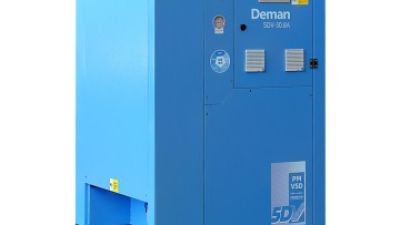
The 5DV Series Intelligent PM VSD Refrigerated Air Dryer is designed for low-pressure compressed-air applications requiring consistent dew point control and efficient operation. Its high-efficiency heat exchanger removes moisture effectively, while permanent-magnet variable-speed drive technology adjusts power use to match actual demand. Intelligent temperature control helps minimize dew-point fluctuations, reduce unnecessary cycling, and lower the risk of moisture-related failures in downstream equipment.
According to the Compressed Air Challenge, reducing pressure drop and improving system control are key strategies for lowering compressed-air operating costs. With low pressure drop, reduced power consumption, and dependable moisture separation, this dryer supports more stable production and improved system efficiency. Its intelligent design is suitable for factories seeking reliable, energy-conscious compressed-air treatment from experienced manufacturers in China.
Look beyond pressure and horsepower. Request verified performance data at full and partial load. Review testing methods, factory reports, service coverage, spare parts, and warranty limits. A polished catalogue proves little.
Compressed air can consume around 10% of industrial electricity. Leaks may waste 20–30% of compressor output. Compare energy use across ten years, not only the purchase price. Small leaks can sound like a faint hiss near pipe joints.
Reciprocating models suit workshops and intermittent tools. Rotary screw units support steady manufacturing demand. Centrifugal systems fit large plants with continuous airflow. Oil-free designs suit sensitive production environments. Scroll models can serve quiet laboratories.
Measure airflow during peak shifts, not only idle periods. Record pressure, temperature, duty cycle, voltage, and air-quality needs. Include filter and dryer pressure drops. Real demand may differ from the nameplate.
Ask for independent test records and factory acceptance reports. Check pressure curves, power consumption, noise levels, and motor efficiency. Confirm the test conditions and measurement methods. Laboratory results can still disappoint onsite.
Check technician response times, local spare-parts storage, warranty exclusions, and training. Ask how emergency support works across time zones. Review remote-monitoring security and sensor accuracy. Delayed parts can stop production.
Not automatically. Inspect leaks, filters, dryers, valves, and undersized pipes first. Pressure optimization may solve the problem more cheaply. More capacity can hide a weak distribution system.
Confirm noise limits, heat removal, drainage, maintenance access, and electrical compatibility. Leave adequate clearance around service panels. Check the drain system carefully. A small installation mistake may interrupt production.
Request references from similar climates and operating conditions. Ask about dust, heat, changing demand, and maintenance quality. Review failure rates and maintenance records when available. Perfect reliability claims deserve skepticism.
Smart Air Compressor technology combines compressed-air generation with intelligent controls, sensors, variable-speed operation, and connected monitoring. These systems can automatically adjust output to changing demand, improve energy efficiency, identify maintenance needs, and provide useful performance data. For global buyers, evaluating manufacturers requires attention to engineering capability, product reliability, customization options, production capacity, technical support, and experience serving different industrial environments.
Leading manufacturers are typically assessed by regional market coverage, product range, automation level, connectivity, and suitability for applications such as manufacturing, construction, healthcare, food processing, and energy. Buyers should compare oil-free and oil-lubricated designs, fixed-speed and variable-speed models, noise levels, service requirements, lifecycle costs, and remote-management features. Compliance with applicable international standards, safety certifications, documentation, and import requirements is also essential. The right supplier should offer a dependable solution that matches air demand, operating conditions, energy targets, budget, and long-term support expectations.