Picking a Rotary Vane Pump isn't just about comparing horsepower or the vacuum level on the spec sheet. Honestly, the right choice comes down to your process: what gas is moving through it, the operating pressure, how much flow you need, and what kind of maintenance environment it'll live in. A pump running clean lab air is dealing with a very different situation than one pulling solvent vapors, moisture, or fine dust. Little things matter too—inlet pipe size, oil temperature, even how many cycles it runs per day.
John F. O’Hanlon, who wrote A User’s Guide to Vacuum Technology, is a name a lot of vacuum engineers respect. As he put it, “A pump must be selected for the process, not for the nameplate.” That advice still holds up. A pump with a flashy ultimate pressure can still struggle once vapor loads get high. A two-stage Rotary Vane Pump might give you deeper vacuum, while a single-stage unit can win on simplicity and lower running cost. The spec sheet? It never tells the whole story.
This guide walks through what actually makes a dependable selection. Things like ultimate pressure, pumping speed, oil compatibility, noise, cooling, service access, and contamination control. We’ll also compare common applications—vacuum packaging, lab filtration, refrigeration service, industrial drying—and look at how real operating conditions should drive the decision. Not the biggest motor. Not the cheapest price.
And yeah, there’s room for some honest doubt here. A pump that looks technically suitable can still turn into an expensive mistake if you can’t get to it for maintenance. Operators should push back on overly optimistic performance claims and check data under comparable conditions. The best Rotary Vane Pump is the one that hits the vacuum you need, consistently, survives the workload, and stays practical to service.
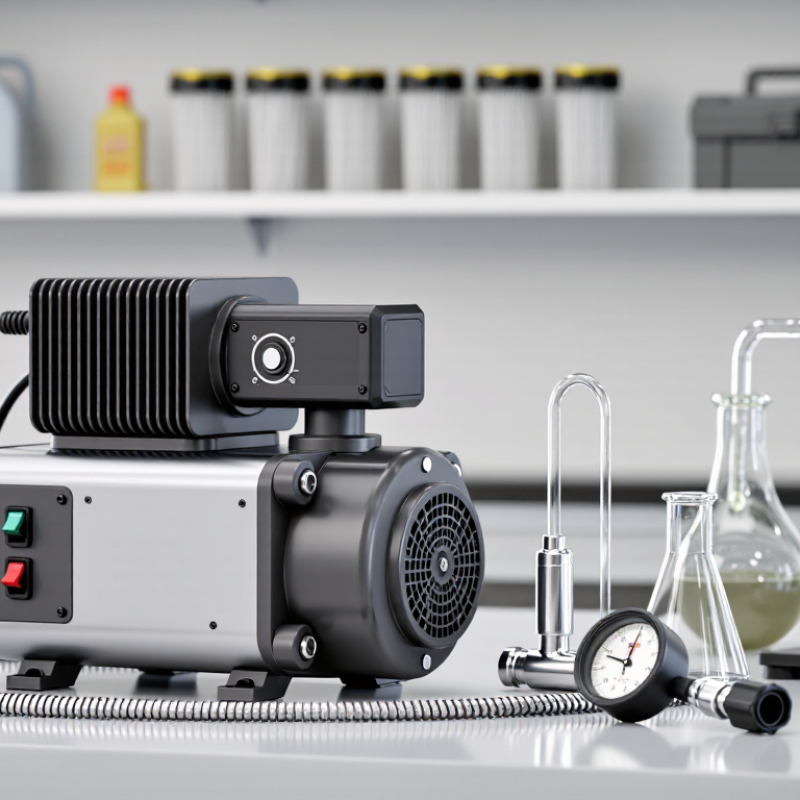
When choosing a rotary vane pump, define the working vacuum range before comparing specifications. Rough-vacuum duties from 1,000 to 1 mbar cover many laboratory, packaging, drying, and maintenance applications. The pump must start reliably near atmospheric pressure and maintain stable flow as pressure falls. That range matters.
Check the rated pumping speed at your actual operating pressure, not only the headline value. A pump listed at 25 m³/h may deliver less capacity near 1 mbar. Oil temperature, inlet pipe length, vapor load, and small leaks can change the result.
An inlet filter protects the vanes from dust, while a gas ballast helps remove condensable vapor. Keep it simple. Match the pump to the process.
In workshop testing, oil condition often reveals poor vacuum before the gauge does. Cloudy oil, rising temperature, or slow pump-down deserves attention. A clean exhaust separator also reduces oil mist around the work area. Do not confuse a rotary vane vacuum pump with a Rotary Air Compressor; their pressure direction, lubrication needs, and operating limits differ. I have seen systems oversized for occasional use, creating unnecessary noise and maintenance. That choice can look efficient on paper, but not in daily operation. Confirm the required pressure, duty cycle, and gas composition with measured data. Small leaks matter.
Choosing a rotary vane pump starts with ultimate pressure, not inlet size. Pressure comes first. Single-stage pumps typically reach 1–10 mbar absolute. They suit degassing, packaging, evaporation, and general laboratory work. Two-stage pumps target 0.001–0.01 mbar. They support deeper vacuum applications with lower residual gas levels. However, these values require warm-up, clean oil, tight seals, and controlled gas ballast. ISO 21360-1:2020 requires vacuum performance tests to include defined conditions, so compare datasheets carefully.
Grand View Research reported that the global vacuum pump market reached approximately USD 5.8 billion in 2023. Its projected growth reflects expanding laboratory and process demand, but market growth cannot confirm pump suitability. I have seen two-stage units miss their stated pressure when solvent vapor enters the oil. Chamber leakage also causes trouble. A calibrated gauge near the chamber gives more useful evidence than a pump-mounted reading. Pumping speed is another issue; ultimate pressure alone does not show how quickly the chamber will evacuate.
Tips: Write the target pressure in mbar absolute. Keep a 30–50% pumping-speed margin. Check ultimate pressure with gas ballast enabled and disabled. Review vapor tolerance, oil compatibility, seal materials, and service intervals. Do not confuse Rotary Screw Compressors with vacuum pumps; they are designed for compressed-air duty. Small details matter.
Match the pump’s ultimate pressure to your vacuum requirement. Single-stage rotary vane pumps typically reach about 1–10 mbar, while two-stage designs can reach approximately 0.001–0.01 mbar.
Selection guide: Choose a single-stage pump for coarse or medium vacuum applications. Select a two-stage pump when substantially lower ultimate pressure is required.
Choosing a rotary vane pump starts with the actual gas load, not the motor size. Use Q = S × p, where Q is gas throughput, S is effective pumping speed, and p is operating pressure. Keep all units consistent.
For example, a chamber may release 12 mbar·L/s at a target pressure of 0.04 mbar. The calculation gives S = 300 L/s. Add a 20–30% capacity margin, so the practical selection becomes 360–390 L/s. This allowance covers small leaks, outgassing, hose resistance, and performance loss as oil temperature changes. Real installations are rarely perfect.
Check the pump curve at your working pressure. A published speed at low pressure may not match the speed delivered through narrow valves or long piping. Measure the chamber volume, estimate the pump-down time, and inspect the conductance of every connection. A larger pump cannot fully correct poor system design. That mistake is common.
Avoid comparing a rotary vane pump directly with a Rotary Screw Air Compressor. Their pressure ranges, gas paths, and performance ratings differ. Also review ultimate pressure, oil vapor control, inlet filtration, and duty cycle. I would recheck the gas-load estimate before ordering, because outgassing from warm plastics can exceed the original calculation. The margin is helpful, but it is not a substitute for measurement.
How to Choose a Rotary Vane Pump?
Choosing a rotary vane pump often begins with ultimate vacuum. For wet processes, gas ballast deserves equal attention. It admits a controlled stream of air into the compression chamber. This reduces oil condensation when water vapor enters the pump. Without it, cloudy oil, corrosion, and unstable vacuum may appear. Small detail.
Match ballast performance to the actual vapor load, not a catalog headline. Ask for gas ballast capacity at a stated inlet pressure and temperature. Suppliers may quote different test conditions, making comparisons imperfect. That is easy to miss. Check whether the valve has several positions or only open and closed. A controllable setting helps balance vapor handling against final pressure. Gas ballast usually sacrifices some pumping speed and ultimate vacuum. Measure both values during a realistic process cycle.
Run the pump warm before pulling deep vacuum. Keep the ballast open during the wet portion, then close it for finishing. Use a vapor trap when the load is heavy or unpredictable. Inspect oil color and viscosity regularly; dark, milky oil signals trouble. Oil changes alone will not fix an undersized ballast system. Record evacuation time, exhaust temperature, and final pressure. Real data often challenges the first selection. A larger pump can waste energy, while a small pump may overheat. Leave room for that judgment.
| Evaluation Dimension | Low or No Gas Ballast | Gas Ballast Open | Selection and Operating Guidance |
|---|---|---|---|
| Primary purpose | Achieves the lowest achievable pressure with relatively dry gas. | Introduces a controlled amount of atmospheric air or another suitable dry gas during compression. | Use gas ballast when the process contains water vapor or other condensable vapors that could condense in the pump oil. |
| Effect on condensable vapor | Vapor is more likely to reach its saturation point during compression and condense in the oil. | Raises the partial pressure at which vapor condensation begins, helping vapor pass through the pump in the gas phase. | Gas ballast reduces condensation risk but does not make the pump suitable for unrestricted liquid intake. |
| Water-vapor handling | Best for dry processes; prolonged exposure to humid gas can degrade oil condition. | More suitable for intermittent or continuous water-vapor service, provided the pump remains within its specified vapor capacity. | Check the manufacturer’s water-vapor capacity, usually stated as a pressure or mass-flow limit, rather than relying only on displacement. |
| Ultimate pressure | Normally provides the lowest ultimate pressure for a given pump condition. | Ultimate pressure becomes higher because ballast gas remains part of the compressed gas load. | Close the ballast valve after the condensable load has been removed if the process requires the lowest pressure. |
| Pumping speed | Rated pumping speed is generally measured without a significant ballast-gas load. | Effective process performance can decrease because the pump is also handling ballast gas and may operate at a higher pressure. | Compare pumping-speed curves at the intended inlet pressure and ballast setting, not only the nominal displacement value. |
| Oil contamination risk | Higher risk when condensable vapor enters below its condensation limit. | Lower risk of vapor condensation, although oil can still be contaminated by reactive chemicals, particles, or liquid carryover. | Monitor oil color, viscosity, odor, and pressure performance; change oil when contamination affects operation. |
| Energy and heat load | Generally lower gas throughput through the pump at the same process condition. | Additional gas flow increases compression work and can raise operating temperature. | Confirm motor rating, cooling requirements, and thermal limits during prolonged ballast operation. |
| Typical process examples | Dry vacuum chambers, leak testing with dry gas, and applications requiring maximum vacuum. | Vacuum drying, evacuation of humid equipment, freeze-drying support, and processes releasing water vapor or solvent vapor. | For heavy solvent or corrosive vapor loads, evaluate chemical-resistant oil, separators, condensers, or a different pump technology. |
| Gas-ballast gas | Not applicable or normally closed. | Usually filtered ambient air; dry nitrogen may be preferred where oxygen, moisture, or contamination must be limited. | Use a clean, dry, compatible gas and follow the pump’s allowable inlet-gas and pressure requirements. |
| Gas-ballast adjustment | Valve closed. | Valve partially or fully open, depending on vapor load and required final pressure. | Start with the minimum effective opening and increase it only when oil mist, pressure instability, or vapor condensation indicates a need. |
| Liquid carryover | Not suitable for direct liquid pumping. | Still not suitable for direct liquid pumping; gas ballast affects vapor, not bulk liquid. | Install a knock-out pot, inlet separator, condenser, or drainable trap when liquid slugs are possible. |
| Inlet protection | A particulate filter helps protect the pump but does not remove vapor. | Gas ballast improves vapor tolerance but does not replace filtration or condensation control. | Use suitable filters and separators to protect against dust, droplets, aerosols, and process debris. |
| Shutdown procedure | Isolate the pump from the process and prevent backstreaming where required. | Run the pump with ballast and a clean, dry gas for a suitable purge period before isolation. | A post-run purge helps remove residual condensable vapor from the pump oil and internal surfaces. |
| Key specification to request | Ultimate pressure, pumping speed, oil type, and motor duty. | Water-vapor capacity, gas-ballast flow, ballast operating pressure, and allowable continuous-duty conditions. | Request performance data for the actual vapor, temperature, inlet pressure, and operating cycle. |
| Best overall choice | Dry processes where minimum pressure is the primary objective. | Processes with manageable water-vapor or condensable-vapor loads. | Choose a rotary vane pump with adjustable gas ballast when vapor exposure is expected, while sizing separators and condensers for peak load. |
Note: Gas-ballast performance depends on pump design, oil condition, gas composition, inlet pressure, vapor temperature, and operating cycle. Always verify the manufacturer’s published vapor-capacity and continuous-duty limits for the selected configuration.
Choosing a rotary vane pump starts with the process gas, not the catalogue. Oil is the working fluid and a potential contaminant. Mineral oil suits many dry, non-reactive gases. Synthetic fluids can tolerate wider temperature ranges. However, oxygen-rich service requires approved oil, cleaning, and operating procedures. Never assume “chemically resistant” means universally safe.
Water vapor deserves attention. The NIST Chemistry WebBook reports water’s vapor pressure at about 2.34 kPa at 20°C. That load can condense inside a cool pump. Condensation reduces lubrication and accelerates corrosion. Run a suitable gas ballast cycle when the design permits it. Check the oil after exposure. ASTM D974 provides an acid-number method that can reveal chemical degradation, although it does not replace laboratory analysis.
Materials must match the gas, temperature, and concentration. Stainless steel often handles corrosive environments better than ordinary steel. PTFE can resist many aggressive chemicals, while elastomers may swell or harden. Compatibility charts are only starting points. The NIOSH Pocket Guide and SDS data should be checked for each gas. ISO 6743-3 also helps classify lubricants by application. In practice, the overlooked detail is moisture trapped in pipework. I would record gas composition, pressure, temperature, oil type, and seal material before selection. The record may feel excessive. It prevents a costly guess. Recheck compatibility when the process changes, because small concentration increases can change the failure mode.
Choosing a rotary vane pump starts with the pumping-speed class, not the motor rating. A 0.5–5 m³/h unit suits small chambers, leak testing, and laboratory work. Medium systems often need 10–80 m³/h. Large industrial chambers may require 100–500 m³/h, sometimes with parallel pumps. ISO 21360-1:2012 specifies how vacuum-pump performance should be measured, because catalogue speed can differ from useful speed at working pressure. I would check the gas load, target pressure, and inlet conductance before accepting any advertised figure.
Duty cycle changes the decision. Intermittent operation may tolerate a compact pump, while continuous service demands stable oil temperature, adequate ventilation, and scheduled oil inspection. Heat is easy to underestimate. At the same speed, a pump running against high pressure can become noticeably hotter and lose efficiency. A thermal overload protects equipment, but it does not fix poor sizing. That distinction matters.
Noise also deserves a measured approach. ISO 3744:2010 provides methods for determining sound power under controlled conditions, while EU Directive 2003/10/EC identifies 80 dB(A) as a lower exposure action value for workers. Actual noise rises with vibration, worn bearings, and restricted exhaust filters. Use isolation mounts and place the exhaust away from operators. Less noise helps. It is not proof of better vacuum performance. I would also leave capacity margin, because real systems rarely remain clean, cool, and perfectly sealed.
A rotary vane pump should be chosen from measured performance, not only from its catalog rating. Under ISO 21360-1 testing, check pumping speed at defined inlet pressures and gas throughput. These values show how the pump performs in real vacuum conditions. A large displacement figure can still hide weak performance at the working pressure.
Ask for the test pressure, gas type, temperature, and measurement uncertainty. Confirm whether the reported ultimate pressure uses clean, warm oil and a sealed system. During site checks, allow sufficient warm-up time, inspect fittings for leaks, and record inlet pressure continuously.
Small leaks can make a capable pump appear unreliable. They are easy to miss.
Power data also deserves close attention. Compare actual electrical input with the stated motor rating at the intended operating point. A pump drawing excessive power may have poor oil condition, high backpressure, or mechanical wear. Do not compare these figures directly with a Pm Vsd Rotary Screw Air Compressor, because the equipment serves a different duty and uses different performance criteria.
I once focused too heavily on ultimate pressure and overlooked recovery speed. That was a useful mistake. Review pumping speed, power consumption, noise, oil behavior, and maintenance access together. Ask for raw ISO 21360-1 test records when the application is critical.
Rough-vacuum work commonly ranges from 1,000 to 1 mbar. The pump should start near atmospheric pressure and remain stable as pressure falls.
Not completely. Check the speed at your actual operating pressure, because long pipes, warm oil, vapor, and leaks reduce performance.
Use Q = S × p. If gas load is 12 mbar·L/s at 0.04 mbar, the calculated speed is 300 L/s.
Add roughly 20–30% capacity for leaks, outgassing, hose resistance, and changing oil temperature. Real systems are rarely perfect.
A 0.5–5 m³/h pump may suit small chambers, leak testing, and laboratory work. Measure the chamber volume before choosing.
Medium systems often need 10–80 m³/h. Large industrial chambers may require 100–500 m³/h or parallel pumps.
Intermittent work may suit a compact pump. Continuous service needs ventilation, stable oil temperature, and regular oil inspections.
Cloudy oil, rising temperature, slow pump-down, or a dirty exhaust separator deserve attention. I would inspect the oil before blaming the gauge.
An inlet filter helps protect internal vanes from dust. Gas ballast helps remove condensable vapor, but it cannot repair major leaks.
Use isolation mounts, maintain bearings, and keep exhaust filters clear. Less noise helps, but it does not prove better vacuum performance.
Choosing the right Rotary Vane Pump begins with defining the vacuum range required by the application. These pumps are commonly suited to rough-vacuum work between 1,000 and 1 mbar, but the target ultimate pressure must also be considered. A single-stage design may achieve approximately 1–10 mbar, while a two-stage model can reach about 0.001–0.01 mbar under suitable conditions. Pumping speed should be selected using Q = S × p, with an additional 20–30% capacity margin to accommodate changing process demands and system losses.
Other important factors include gas-ballast capability when handling water vapor or condensable loads, as well as oil, seal, and material compatibility with the process gas. Compare pumping-speed classes from roughly 0.5 to 500 m³/h, while assessing duty cycle, heat generation, noise, maintenance, and operating power. Finally, verify performance and flow specifications using consistent ISO 21360-1 testing data to ensure the selected pump will deliver reliable results in actual service.