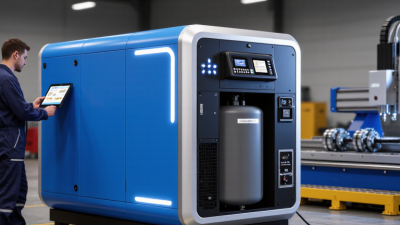
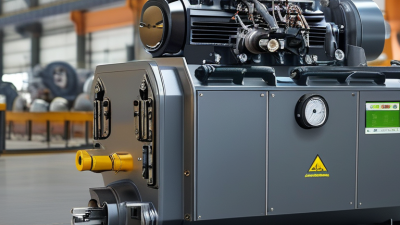
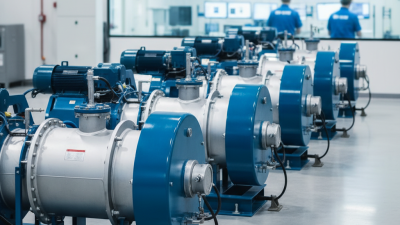
China has become a huge source of industrial air compression equipment for buyers around the world. Its manufacturers supply factories, workshops, food plants, hospitals, energy projects—pretty much wherever compressed air keeps things moving. But here’s the catch: “best” should mean proven performance, not just the cheapest quote. A reliable air compressor has to line up with pressure, flow, duty cycle, ambient temperature, and maintenance conditions. If it doesn’t match those, the low price won’t matter much.
A few established Chinese manufacturers are worth a closer look. Kaishan Compressor makes screw, piston, and centrifugal systems for all sorts of industrial jobs. Fusheng China is known for compressed air equipment and regional service support. Hanbell Precise Machinery develops screw compressor tech for tough industrial environments. Still, treat these as examples—not automatic recommendations. The buyer’s requirements should drive the final call.
Look hard at the details. Ask for performance data at the pressure you’ll actually run, not just catalogue capacity. Check oil separation, motor efficiency, noise levels, cooling design, and what the control system can really do. For an Air Compressor 100 Hp Air Cooled, confirm airflow at operating pressure and how it behaves in local summer temperatures. A test report, serial-number traceability, and clear warranty terms often tell you more than polished marketing talk. And ask how fast filters, valves, controllers, and replacement parts can arrive.
Real experience matters here. A compressor might run beautifully in a clean factory but struggle in dusty coastal conditions. Installation quality changes results too. Oversized equipment can waste energy; undersized equipment may end up running nonstop. Some supplier claims need closer verification—and honestly, that’s worth admitting. Independent inspection, factory audits, reference calls, and a monitored trial period build much stronger confidence. Global buyers should compare lifecycle cost, technical support, certifications, and communication quality before choosing a Chinese manufacturer. Reliability gets built after delivery, not promised before it.
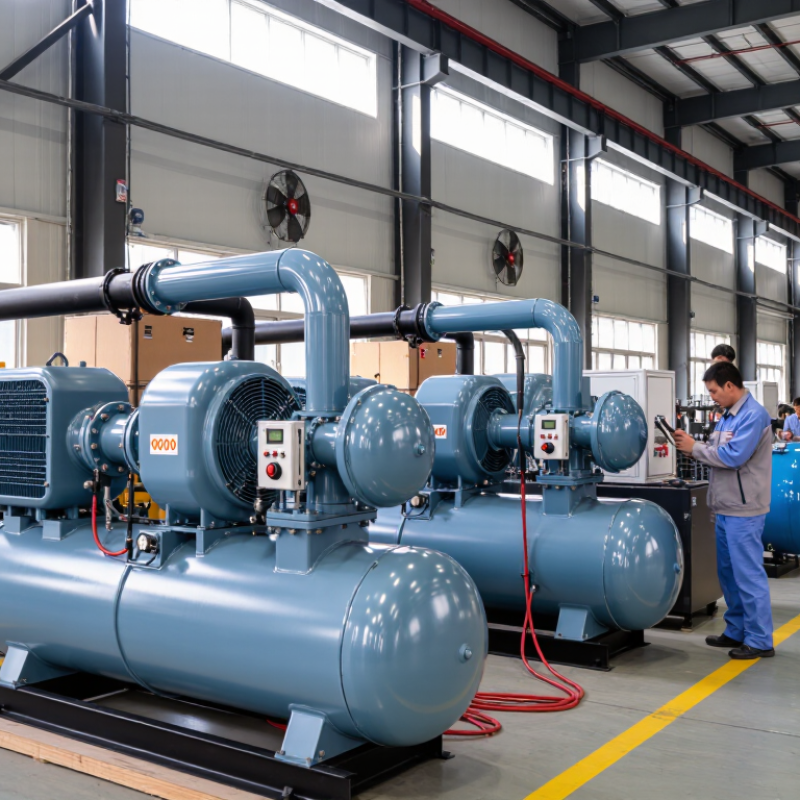
China’s air compressor industry serves factories, workshops, construction teams, hospitals, and energy projects. Its manufacturing scope covers complete machines, pressure vessels, air dryers, filters, controllers, and replacement parts. Common products include rotary screw, piston, scroll, centrifugal, oil-free, and portable air compressors. Production capabilities vary widely between suppliers.
During factory evaluations, buyers should inspect machining accuracy, assembly cleanliness, testing procedures, and component traceability. A reliable manufacturer can provide performance curves, noise data, pressure ratings, and service documentation. Oil-free models suit sensitive applications, while screw compressors often support steady industrial production. Portable units may fit construction sites, but transport conditions can expose weak frames or poor cooling design. No supplier is perfect. Even experienced buyers can overlook maintenance access.
Tips: Request a sample inspection or video audit before ordering. Compare airflow at the same pressure, not only motor power. Check electrical standards, spare-part availability, warranty terms, and response times. Ask how each unit performs in dusty, humid, or cold environments. A cheaper quote may hide thinner materials, limited testing, or difficult after-sales support. Verify every claim with records, not promises.
Chinese air compressors generally fall into three practical groups: reciprocating, rotary screw, and centrifugal models. Reciprocating compressors suit workshops, service vehicles, and intermittent duty. Their compact cylinders are easy to inspect, but vibration and noise can become noticeable. Rotary screw compressors support factories requiring steady airflow. They are common for packaging, textiles, machining, and general plant utilities. Centrifugal units serve large facilities with stable, high-volume demand. They need cleaner installation conditions and skilled maintenance.
Oil-injected screw compressors usually offer lower purchase costs and efficient operation for ordinary plant air. Oil-free designs are more suitable for food processing, electronics, pharmaceuticals, and other sensitive applications. Buyers should check ISO 8573-1 air-quality requirements, not rely on the phrase “oil-free” alone.
The U.S. Department of Energy reports that compressed air can represent about 10% of industrial electricity use. Its technical sourcebook also notes that system leaks may waste 20–30% of compressor output. That makes control systems and leak testing financially important.
Portable diesel compressors support construction sites and remote projects, while electric models work better where stable power is available. Capacity figures can mislead. Free air delivery, pressure, altitude, ambient temperature, and duty cycle all affect real performance. A 7.5-kilowatt unit may struggle with a long, undersized hose. Buyers should request test conditions, efficiency curves, noise data, spare-parts plans, and inspection records. One weakness remains easy to overlook: some supplier specifications describe ideal laboratory results, not daily operating performance.
Chinese air compressor manufacturers increasingly align production with ISO 1217, ISO 8573-1, and GB/T requirements. ISO 1217 defines performance testing, including airflow, pressure, and power input. ISO 8573-1 classifies compressed-air purity by particles, water, and oil. These details matter when selecting a 15kw Air Compressor for factories, workshops, or automated production lines.
The U.S. Department of Energy reports that compressed-air systems may lose 20–30% of output through leaks and poor maintenance. Chinese suppliers now use permanent-magnet motors, variable-speed drives, and intelligent controllers to reduce unloaded running. Energy performance still depends on installation. A high-efficiency motor cannot fix an oversized receiver or unstable pressure settings. I have seen impressive datasheets fail to explain testing conditions. That deserves careful questioning.
Tips: Request a third-party test report based on ISO 1217. Check airflow at your actual working pressure, not only the advertised maximum. Ask for noise data measured at a stated distance. Inspect separator replacement intervals and controller fault records. Confirm whether CE documentation, electrical protection, and pressure-vessel records match your destination market. A simple leak survey can reveal more than a polished brochure. Be cautious. Some specifications remain unclear.
| Evaluation Dimension | Common Standard or Technology | Typical Technical Data | Relevance for Global Buyers |
|---|---|---|---|
| Performance Testing | ISO 1217, Displacement Compressors — Acceptance Tests | Measures delivered flow, discharge pressure, shaft speed, power input and specific power under defined test conditions. | Provides a consistent basis for comparing quoted capacity and energy performance. |
| Air Purity | ISO 8573-1 compressed-air purity classification | Classifies particles, water and oil; oil-free applications may require Class 0 or a specified downstream treatment system. | Helps buyers match the compressor and filtration package to food, pharmaceutical, electronics or general industrial processes. |
| Energy Efficiency | Variable-frequency drive and permanent-magnet synchronous motor technology | Modulates motor speed to follow demand; permanent-magnet motors avoid rotor slip and can reduce part-load losses. | Most valuable for systems with fluctuating demand, multiple shifts or frequent unloaded operation. |
| Compression Arrangement | Single-stage and two-stage oil-injected screw compression | Two-stage designs divide the pressure ratio between air ends and can improve efficiency at higher working pressures. | Suitable for industrial systems commonly operating around 7–13 bar(g), subject to the selected model and duty cycle. |
| Oil-Free Compression | Oil-free screw, scroll or dry reciprocating technology | Compression chamber operates without lubricating oil; air purity still depends on design, seals and downstream treatment. | Recommended where process contamination risk is high, including medical, pharmaceutical and food-production environments. |
| Motor and Electrical Safety | IEC 60204-1, IEC 60034 and region-specific electrical requirements | Covers machinery electrical equipment, rotating electrical machines, protection, wiring and control-panel design. | Supports safe integration with local power systems and helps identify voltage, frequency and certification requirements before shipment. |
| Noise and Vibration | Acoustic enclosure, balanced rotors and vibration monitoring; testing may reference ISO 2151 | Many enclosed industrial screw packages are designed for approximately 65–75 dB(A), depending on power, speed and test distance. | Important for indoor installations, workshops near offices and facilities with occupational-noise limits. |
| Cooling and Climate Adaptation | Air-cooled or water-cooled package with high-ambient options | Configurations may include oversized coolers, tropicalized electrical components and operating-temperature options commonly reaching 45°C or higher. | The correct selection reduces thermal trips and performance loss in hot, dusty or humid regions. |
| Control and Connectivity | PLC control, Modbus RTU/TCP, Ethernet and remote monitoring | Typical functions include pressure scheduling, alarm history, load/unload control, sequencing and maintenance reminders. | Enables centralized control of compressor rooms and easier predictive-maintenance planning. |
| Heat Recovery | Oil-circuit or air-side heat recovery systems | A substantial portion of compressor input energy becomes heat; recovered heat can support hot-water preheating or space heating. | Can improve total site energy utilization where a steady low- or medium-temperature heat load is available. |
| Energy Management | Sequencing controller, pressure-band optimization and leak-management support | Maintains stable header pressure and reduces unnecessary running of multiple compressors at partial load. | System-level controls often deliver greater savings than selecting a compressor based only on nameplate motor power. |
| Documentation and Export Readiness | Technical datasheet, wiring diagram, pressure-vessel documentation and conformity documentation | Documents should state FAD, pressure, motor rating, voltage, frequency, sound level, dimensions, weight and service intervals. | Complete documentation simplifies customs clearance, installation, commissioning and local regulatory review. |
Note: Actual performance depends on model configuration, ambient conditions, pressure set point, test method and installation design. Buyers should request a certified performance test and a complete operating-duty profile before purchase.
Evaluating China’s air compressor manufacturers requires more than comparing quotations. Start with the application: pressure, flow, duty cycle, air quality, and local voltage. A 7.5 kW unit may look suitable, yet lose efficiency at 35°C ambient temperature. Request performance curves, motor details, noise readings, and a pressure dew point report. For a Compressor Air Screw system, confirm whether the quoted capacity is measured at actual working pressure. Do not rely on free-air delivery figures without test conditions. Small wording differences can change the purchase decision.
Factory evidence matters. Ask for a recent production video, serialised test records, calibration certificates, and a sample inspection plan. During a remote or in-person audit, inspect rotor machining, oil separation, electrical cabinets, and final leak testing. Check whether technicians can explain common alarm codes without reading a script. Quality systems should be traceable, not merely displayed on a wall. Contact two comparable overseas users, if permission is available, and ask about parts availability after twelve months. That answer is often more useful than a sales presentation.
Study the quotation line by line. Clarify warranty coverage, response times, spare-parts lists, packaging, installation guidance, and training. Confirm compliance documents for the destination market before payment. Avoid vague statements such as “international standard.” A reliable supplier should provide drawings, manuals, and a realistic maintenance schedule. I have learned that polished websites prove very little. Sometimes a smaller workshop answers technical questions more clearly, but that is not proof of stronger production control. Keep scoring objective, and record every assumption before comparing suppliers.
Selecting a Large Air Compressor requires more than comparing motor power and purchase price. Real confidence starts with controlled production. During factory audits, buyers should examine incoming steel, rotor balancing, welding quality, and final pressure testing. Ask to see calibration records for gauges and temperature sensors. Inspect the nameplate, serial number, and emergency stop function on a finished unit. Do not rely on photographs alone.
Reliable manufacturers usually maintain ISO 9001 quality procedures and provide traceable inspection reports. Depending on the destination, equipment may also need CE marking, electrical safety documents, pressure equipment assessments, or local certification. These documents should match the exact model, voltage, pressure rating, and manufacturing date. A certificate with vague product details deserves careful questioning.
Export compliance requires practical accuracy. The commercial invoice, packing list, certificate of origin, and HS classification must agree. For ocean shipments, confirm moisture protection, lifting points, crate strength, and shock indicators. Small gaps matter. One overlooked voltage detail can delay installation or damage a motor. Manufacturers should explain spare parts, warranty limits, noise levels, and service response in writing. Buyers should also verify whether manuals are complete and translated correctly. I have seen technically strong equipment weakened by poor documentation. That weakness is easy to miss during price negotiations, yet costly at the destination.
China Best Air Compressor Manufacturers for Global Buyers
For global buyers, compressor pricing should begin with lifecycle cost, not the purchase quote. The U.S. Department of Energy reports that compressed air can consume about 10% of industrial electricity. Its Compressed Air System Sourcebook also notes that leaks may waste 20–30% of compressor output. A cheaper machine can become expensive through energy loss, poor controls, and frequent downtime. Request measured power data, noise levels, warranty terms, and spare-parts prices. Price is only the entry point.
Customization should match the working environment. Confirm pressure, flow, duty cycle, altitude, ambient temperature, and required air quality under ISO 8573-1. A food-processing site may need oil-free air and stainless-steel piping. A dusty workshop may need stronger filtration and easier maintenance access. Ask for a load profile, not a guessed motor size. I have seen oversized compressors run lightly loaded for years. That design looked safe, but wasted energy.
Tips: Ask for a factory test record and a sample maintenance schedule. Check response times for remote troubleshooting and local service coverage. The DOE recommends leak surveys and regular system audits, so include these services in negotiations. Do not guess. A useful contract should define emergency support, technician travel costs, replacement-part lead times, and performance remedies. One weakness remains: published efficiency figures may use different test conditions, making comparisons imperfect. Require the same measurement standard from every supplier.
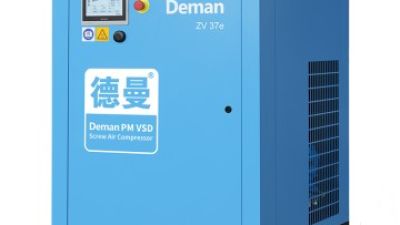
For factories seeking a cost-effective compressed-air solution, a China-manufactured single-stage permanent-magnet variable-speed drive compressor can offer an attractive balance between purchase price and operating efficiency. Its high-efficiency permanent-magnet motor adjusts power use according to actual air demand, while the variable-speed control system helps maintain stable pressure during changing production conditions. The single-stage twin-screw airend is designed for dependable, continuous air delivery with a straightforward configuration that can simplify maintenance.
This type of compressor is especially suitable for facilities with relatively modest air consumption or annual operation below 2,000 hours. Compared with a larger fixed-speed unit, it can reduce unnecessary energy consumption during periods of partial load and may require less initial investment. When comparing suppliers, factory buyers should review motor efficiency, pressure range, controller functions, cooling performance, service availability, spare-parts support, and warranty terms. It is also important to match the compressor’s capacity with the plant’s real demand rather than selecting an oversized model, which may increase both purchase and running costs.
With stable output, efficient power adjustment, and reliable screw-compression technology, this solution can support tools, assembly lines, packaging equipment, and general plant services. Buyers should request a clear quotation covering installation requirements, filtration, air storage, delivery time, and expected operating costs before placing an order.
Check ISO 1217 for airflow, pressure, and power testing. ISO 8573-1 defines particle, water, and oil purity classes. Also verify applicable national requirements. Standards matter.
Request a third-party test report based on ISO 1217. Check airflow at your real working pressure. Do not rely only on maximum pressure figures. Testing conditions can change the result.
Leaks and poor maintenance may waste 20–30% of output. Oversized receivers and unstable pressure settings also increase consumption. Variable-speed drives can reduce unloaded running. Installation still matters more than a perfect datasheet.
Inspect incoming steel, rotor balancing, welding, and pressure testing. Review calibration records for gauges and temperature sensors. Check the nameplate, serial number, and emergency stop. Photos are not enough.
Request inspection reports, manuals, warranty terms, and certification documents. Documents should match the exact model, voltage, pressure rating, and date. Check electrical protection and pressure-vessel records. Vague certificates deserve questions.
The invoice, packing list, origin certificate, and HS classification must agree. Confirm voltage details before shipment. Also check crate strength, moisture protection, lifting points, and shock indicators. Small gaps become expensive.
Compare lifecycle cost, not only the purchase quote. Request measured power data, noise levels, spare-parts prices, and warranty limits. A cheaper unit may consume more electricity. The lowest quote can mislead.
Confirm pressure, airflow, duty cycle, altitude, temperature, and air-quality requirements. A dusty workshop may need stronger filtration. A sensitive production area may require oil-free air. Motor size should follow a load profile, not guesswork.
Define remote troubleshooting, local service coverage, and emergency response times. Include travel costs, parts lead times, and performance remedies. Ask for maintenance schedules and fault records. Support promises can remain unclear.
China has become a major source of Air Compressor equipment for global buyers, offering a wide range of products such as rotary screw, piston, oil-free, portable, and high-pressure models. Chinese manufacturers serve industries including manufacturing, construction, energy, transportation, and food processing. Their products increasingly incorporate energy-saving motors, intelligent control systems, variable-speed technology, improved cooling structures, and remote monitoring functions. Buyers should evaluate suppliers by production capability, engineering experience, product reliability, testing procedures, export history, and responsiveness to technical requirements.
Quality control is supported by recognized international standards, factory inspections, performance testing, and certifications required by the destination market. When comparing suppliers, buyers should review total cost rather than focusing only on the initial price, considering efficiency, spare parts, warranty terms, delivery schedules, and maintenance support. Customization may include pressure levels, tank capacity, voltage, control systems, packaging, and documentation. A dependable manufacturer should provide clear technical specifications, stable after-sales service, installation guidance, and timely access to replacement parts.