Leave Your Message
Choosing the best Smart Air Compressor in 2026 requires more than comparing motor power or touchscreen features. A modern workshop may need stable pressure, lower energy use, remote alerts, and cleaner air delivery. Yet connected controls do not automatically create a better machine. A compressor with impressive software can still waste energy through leaks, poor sizing, or unnecessary pressure.
Ron Marshall, a respected compressed-air auditor and former technical specialist at Kaeser Compressors Canada, has said, “The best compressed air system is the one that produces only the air you need, at the pressure you need, when you need it.” That principle guides this comparison. It keeps attention on practical performance, not marketing language.
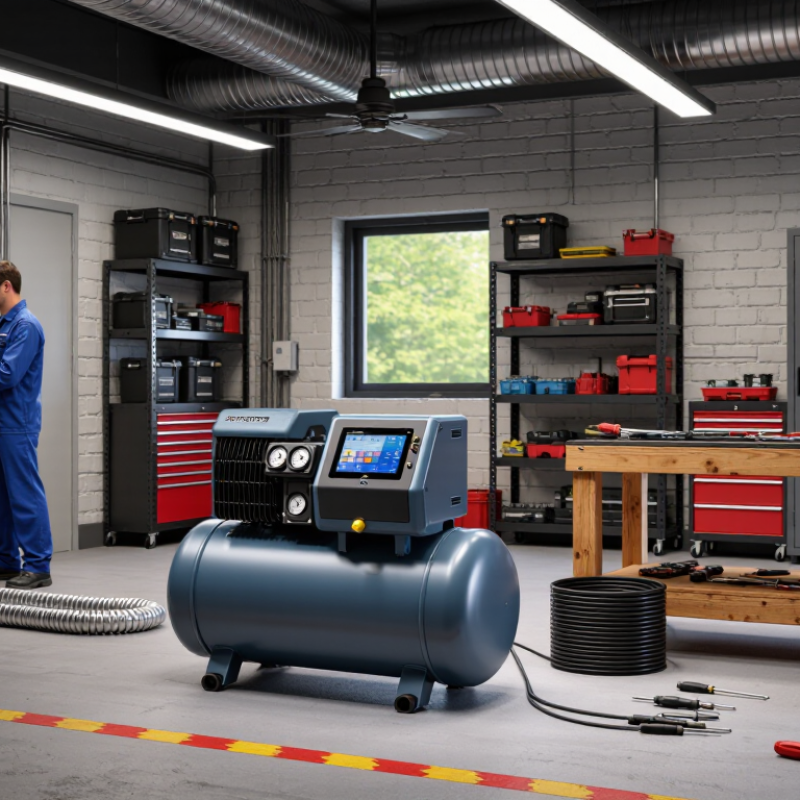
The evaluation considers real operating details. Can the unit maintain pressure during repeated tool use? Does its variable-speed drive respond smoothly? Can an operator notice a filter problem before a production delay? We also examine noise, heat, maintenance access, connectivity, and service support. A workshop owner should picture the machine running beside a workbench, not only on a showroom floor.
Some findings may remain imperfect. Manufacturer data often uses controlled test conditions. Actual results can change with climate, duty cycle, pipe design, and maintenance habits. Therefore, this guide does not promise one universal winner. It identifies the strongest choices for different users, budgets, and workloads. The most intelligent purchase may be a simpler compressor matched accurately to demand. Sometimes, less technology performs better.
What Is the Best Smart Air Compressor in 2026?
A smart air compressor does more than start and stop automatically. It measures pressure, temperature, moisture, power use, and running hours. Built-in sensors send this information to a control screen or mobile device. This helps operators notice leaks, overheating, and unusual cycling before failure occurs. Remote alerts are useful when the compressor runs in a workshop, garage, or remote production area. However, connectivity alone does not make a machine intelligent. Accurate sensors, stable software, and clear maintenance records matter more.
The best systems adjust output to match demand. This reduces wasted electricity during light workloads. Some models can predict filter replacement or warn about low oil levels. Look for readable pressure trends, adjustable alert limits, and secure data access. I still prefer checking the gauge manually. Digital readings can drift, especially in dusty or humid rooms. Independent pressure testing and scheduled servicing remain important. A smart compressor should support trained judgment, not replace it.
Tips: Place the compressor on a level surface with open ventilation. Record pressure, temperature, and energy readings each week. Test alerts before depending on them. Check hoses for a faint hiss and inspect drain points regularly. A cheaper connected unit may become expensive if its app fails or its sensors are poorly calibrated.
Data-driven evaluation framework for selecting a connected, efficient, safe, and predictive compressed-air system.
| Evaluation Dimension | Practical 2026 Reference Data | What Makes It Smart | Recommended Selection Benchmark | How to Verify |
|---|---|---|---|---|
| Pressure Control | Common industrial operating ranges are approximately 7–13 bar, depending on the application. | Closed-loop pressure control continuously adjusts output to demand instead of relying only on fixed loading and unloading. | Choose a system that maintains the required point-of-use pressure without unnecessarily operating at a higher pressure. | Review pressure-trend graphs during minimum, average, and peak demand periods. |
| Airflow Capacity | Capacity is normally specified as free air delivery or inlet flow, commonly expressed in m³/min or CFM. | Digital controls compare actual flow with demand and identify under-capacity, oversizing, and abnormal consumption. | Size for measured peak demand plus a reasonable operating margin, rather than adding excessive reserve capacity. | Compare the compressor's rated delivery with a calibrated flow meter and the site's demand profile. |
| Variable-Speed Operation | Variable-speed systems can reduce energy use substantially when demand changes frequently; savings depend on the duty cycle and control settings. | Motor speed automatically follows demand, reducing the need for repeated full-load and unloaded operation. | High Priority for facilities with fluctuating demand or multiple shifts. | Check motor-speed trends, loaded and unloaded power, and energy consumption across a representative production cycle. |
| Energy Monitoring | Energy performance is typically tracked in kWh, kW, operating hours, and specific energy such as kWh per m³. | The controller records energy data and calculates efficiency by operating state, time period, or production volume. | Look for real-time dashboards, historical trends, exportable data, and specific-energy reporting. | Confirm that the displayed measurements can be compared with an independent power meter. |
| Predictive Maintenance | Useful monitored conditions include temperature, vibration, pressure, oil condition, filter differential pressure, and service hours. | Algorithms identify abnormal trends and issue maintenance alerts before a component reaches a critical condition. | High Priority where unplanned downtime has a high production cost. | Ask for alarm history, trend analysis, alert thresholds, and examples of condition-based maintenance reports. |
| Remote Monitoring | Modern systems can transmit operating status, alarms, energy data, and maintenance information to a secure web or plant platform. | Authorized users can monitor the compressor without being physically beside the machine. | Remote access should include role-based permissions, alarm notifications, data export, and audit records. | Test the mobile or web interface and confirm what functions remain available during network loss. |
| Industrial Connectivity | Common integration methods include Ethernet, Modbus TCP, Modbus RTU, OPC UA, and digital input/output signals. | The compressor exchanges data with a building-management system, PLC, SCADA platform, or manufacturing execution system. | High Priority when centralized plant control or energy management is required. | Verify supported protocols, data points, update rates, API availability, and integration documentation. |
| Cybersecurity | Connected equipment should support encrypted communication, unique user accounts, access control, secure updates, and network separation. | Security is built into the controller, remote service process, user permissions, and software-update workflow. | Require documented security practices, password policies, firmware controls, and a clear vulnerability-response process. | Review the security architecture with the site's IT or operational-technology team before connection. |
| Automatic Leak Detection | Compressed-air leaks can waste a significant share of compressor output, especially in poorly maintained systems. | The system compares compressor output, pressure, and demand patterns to identify probable leakage during low-production periods. | High Priority for facilities with continuous operation or large distribution networks. | Confirm whether the system provides leak estimates, location support, trend reports, or integration with ultrasonic inspection records. |
| Multi-Compressor Sequencing | Central sequencing can coordinate fixed-speed and variable-speed units to match total plant demand. | Control logic selects the most efficient combination of machines and minimizes inefficient unloaded running. | The control system should support lead-lag rotation, automatic capacity staging, and pressure-band optimization. | Review the sequence logic under low, normal, and peak demand conditions. |
| Air Quality Management | Applications may require different ISO 8573-1 classes for particles, water, and oil. | Smart monitoring tracks dryer status, dew point, filter condition, and pressure loss across treatment equipment. | Specify the required air-quality class before selecting the compressor, dryer, filters, or receiver size. | Use calibrated dew-point, particle, and oil measurements where the process requires verified air quality. |
| Thermal and Environmental Sensors | Important measurements include discharge temperature, ambient temperature, humidity, motor temperature, and cooling performance. | Sensor trends allow the controller to detect overheating, blocked coolers, poor ventilation, or abnormal operating conditions. | Prioritize systems with clearly defined sensor locations, alarm limits, and historical trend storage. | Check sensor calibration intervals and confirm that critical alarms create a recorded event. |
| Noise and Workplace Comfort | Compressor noise is normally listed as sound-pressure or sound-power level in dB(A), measured under defined conditions. | Smart controls can reduce unnecessary high-speed operation and provide operating schedules for noise-sensitive areas. | Compare certified noise data under equivalent measurement conditions, not only marketing descriptions. | Verify the published measurement standard and, when necessary, conduct an on-site sound survey. |
| Data Logging and Reporting | Useful records include pressure, flow, power, temperature, alarms, runtime, service events, and energy intensity. | Historical data supports root-cause analysis, efficiency improvement, compliance reporting, and maintenance planning. | Prefer systems with configurable intervals, long-term storage, CSV or API export, and automated reports. | Request a sample report and confirm data-retention periods and ownership of operational data. |
| Safety Functions | Typical protection includes high temperature, excessive pressure, motor overload, phase loss, emergency stop, and abnormal vibration. | Safety events are detected, recorded, and communicated quickly to operators or authorized maintenance personnel. | Essential regardless of energy or connectivity features. | Review the risk assessment, protective devices, alarm priorities, reset procedures, and applicable electrical requirements. |
| Lifecycle Cost | Electricity often represents the largest operating expense over the service life of a compressor system. | Smart optimization reduces avoidable energy use, maintenance interruptions, pressure losses, and inefficient operating modes. | Compare total cost of ownership, including energy, maintenance, air treatment, installation, software, and downtime. | Use measured demand and electricity tariffs to create a multi-year lifecycle-cost model. |
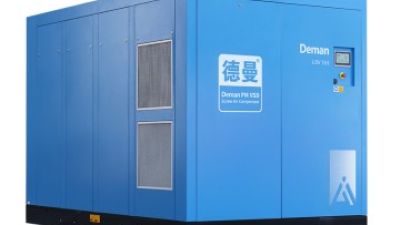
The LBV Series PM VSD Screw Air Compressors are engineered for low-pressure industrial applications that require stable, efficient, and dependable compressed air. With an adjustable pressure range of 0.3–0.45 MPa, these compressors provide a practical solution for processes such as textile machinery, packaging lines, electronics production, pneumatic conveying, and general workshop operations. Permanent magnet variable-speed technology automatically adjusts motor speed according to air demand, helping reduce unnecessary energy consumption during changing production conditions.
The twin-screw compression system supports smooth airflow, reliable operation, and consistent pressure delivery. Its compact structure makes installation easier, while the intelligent control system allows operators to monitor performance and adjust operating parameters conveniently. Designed for demanding industrial environments, the compressor uses durable components and an efficient cooling system to maintain dependable performance during extended operation.
Manufactured in China under strict quality controls, the LBV Series is built to provide long service life with manageable maintenance requirements. Its low-pressure configuration helps users match compressed-air output to actual process needs, improving system efficiency without sacrificing operational stability.
It uses sensors to measure pressure, temperature, vibration, and motor current. A controller adjusts speed or unloading automatically. Operating data can travel through wired or wireless networks. A dashboard shows pressure trends and equipment status. A screen alone is not intelligence.
It can detect pressure drops during idle periods. That may reveal a leaking hose or fitting. Leaks waste energy. The system can send an alert before the sound becomes obvious. However, efficiency still depends on accurate sensors and sensible pressure targets.
Look for pressure limits, thermal overload protection, and automatic restart protection. A guarded belt and stable feet also matter. An accessible emergency switch is useful in a noisy workshop. The compressor should not restart unexpectedly after a power interruption. Safety should come before convenience.
It can record runtime, load cycles, and service intervals. Reminders may include filter cleaning, coupling inspection, and moisture draining. Some systems identify pressure loss while the compressor is idle. Automatic drains reduce water buildup inside the receiver. Dirty drains can still stick.
No. Remote monitoring supports inspection but cannot replace it. Wi-Fi may fail, and sensors can drift. Check the pressure gauge by hand during scheduled maintenance. Record warm discharge air, unusual vibration, or slower filling. Local verification remains important.
Match the compressor to your actual routine. Compact models suit tires and small inflating tasks. Workshop use may require a larger tank and higher airflow. Check both PSI and CFM ratings. PSI shows pressure. CFM shows air volume over time.
No. Wireless functions can add setup time, battery use, and privacy concerns. They help when the compressor sits in a separate utility room. Basic users may prefer clear local controls. Test the controls before buying. Small buttons frustrate greasy hands.
They are practical details, not decorative extras. A compressor beside a garage wall may sound louder than expected. Check hose length, power-cord reach, storage space, and filter access. A short cable can complicate a roadside tire repair. Portability has limits.
Predictive software can identify rising vibration or longer filling times. It can also create false alarms. One clear notification is better than many vague warnings. A technician should verify the cause locally. Dashboards sometimes become decorative screens.
Choosing the best Smart Air Compressor in 2026 means looking beyond basic inflation and air delivery. A smart model combines reliable compression with connected controls, real-time pressure monitoring, automatic shutoff, usage alerts, and practical digital adjustments. These features can improve accuracy, simplify operation, and help users track performance through a compatible control system or mobile device. The most important performance factors include motor strength, maximum pressure, tank capacity, airflow, operating noise, recharge speed, and portability. The right balance depends on whether the compressor is intended for home repairs, vehicle maintenance, workshop tasks, or frequent mobile use.
Safety and maintenance functions are equally important. Look for overheating protection, pressure regulation, leak detection, filter reminders, and clear status indicators. Easy access to service parts and dependable construction can also reduce long-term maintenance needs. Ultimately, the best Smart Air Compressor is the one that matches your required tools, workload, available space, power source, and preferred level of automation while remaining safe, efficient, and easy to use.