Leave Your Message
Why industrial-grade air compressors are the driving force behind modern infrastructure development.
In the modern construction sector, efficiency, reliability, and power are the pillars of project success. At the heart of almost every major construction site is a quiet powerhouse: the industrial air compressor. From massive infrastructure projects like high-speed railways, bridges, and tunnels to high-rise commercial buildings, compressed air serves as the primary energy source for a vast array of pneumatic tools and heavy-duty machinery. The choice of an air compressor for construction site operations is no longer just a matter of selecting a basic utility; it has evolved into a strategic decision that directly impacts operational efficiency, energy consumption, and overall project profitability.
Unlike static factory setups, construction sites are highly dynamic, outdoor environments that require mobile, robust, and highly adaptable energy sources. This is where high-capacity industrial air compressors come into play. An air compressor for construction site operations must deliver high-pressure, consistent airflow to drive everything from light pneumatic nailers to heavy-duty rock drills. The reliability of this air supply determines the pace of the entire project. A failure in the compressed air system doesn't just stop one tool; it can halt concrete pouring, stop tunneling shields, or leave teams of workers idle. Therefore, selecting the right compressor system involves understanding the complex demands of the site, from pressure requirements (measured in bar or PSI) to volume requirements (measured in CFM or m³/min).
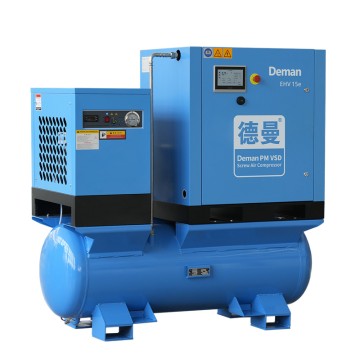
The global market for construction-grade air compressors is experiencing a significant paradigm shift. Driven by massive infrastructure investments across developing nations and the modernization of urban centers in developed economies, the demand for reliable air compressors has skyrocketed. Today's commercial landscape is characterized by a push toward green building standards and strict environmental regulations. Governments worldwide are imposing limits on carbon emissions and noise levels at construction sites, particularly in dense urban zones. This regulatory pressure has forced manufacturers and contractors to look beyond traditional diesel-powered, fixed-speed compressors. The market is rapidly moving toward electric-powered, Variable Speed Drive (VSD) and Permanent Magnet VSD (PM VSD) screw air compressors. These systems offer unparalleled energy efficiency, adapting their power consumption to real-time air demands.
Exploring the diverse and critical roles compressed air plays across various construction stages.
The most visible application of compressed air on any construction site is the powering of pneumatic tools. Jackhammers, breakers, rock drills, impact wrenches, and rivet busters all rely on steady compressed air. Pneumatic tools are preferred over electric tools in construction because they are lighter, more durable, do not overheat, and are safe to use in wet or damp conditions.
In tunneling, mining, and slope stabilization, shotcrete (sprayed concrete) is used to provide immediate structural support. Compressed air is used to propel the wet or dry concrete mix through a nozzle at high velocity, compacting it onto the receiving surface. This requires high-pressure, high-volume air to ensure the concrete adheres correctly and forms a dense, strong layer.
Building tall structures requires deep foundations. Pneumatic down-the-hole (DTH) hammers are used to drill through rock and tough soil formations. These hammers require massive volumes of high-pressure air to operate the piston and continuously flush the drill cuttings out of the hole.
Before structural steel, bridges, or concrete structures can be painted or coated, they must be meticulously cleaned. Sandblasting uses compressed air to project abrasive particles at high speeds against the surface, removing rust, old paint, and scale. This process demands a constant, dry air supply to prevent clogging and ensure an even finish.
During the construction of oil, gas, water, or utility pipelines, the interior of the pipes must be cleared of debris. Compressed air is used to drive 'pigs' (cleaning devices) through the lines. Additionally, pipelines must undergo pressure testing to verify their integrity before being put into service, requiring heavy-duty compressors capable of reaching high pressures.
On large construction sites, bulk materials like cement, sand, and dry mortar are often transported through pipes using compressed air. This pneumatic conveying method is fast, clean, and minimizes material loss, but it requires a reliable compressor to maintain the necessary velocity throughout the transport line.
How smart systems and permanent magnet technology are revolutionizing construction site power.
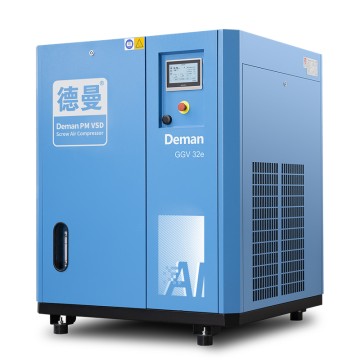
The integration of advanced technologies is redefining what a construction air compressor can achieve. We are witnessing a transition from purely mechanical systems to highly intelligent, digitalized units. Artificial Intelligence is no longer a buzzword; it is a critical component of modern compressed air systems. AI-enabled compressors, such as Deman’s GGVe series, analyze operational data in real-time. They can predict component wear, monitor temperature fluctuations, and automatically adjust operating parameters to maintain peak efficiency. This proactive approach minimizes the risk of sudden equipment failure, keeping construction projects on schedule.
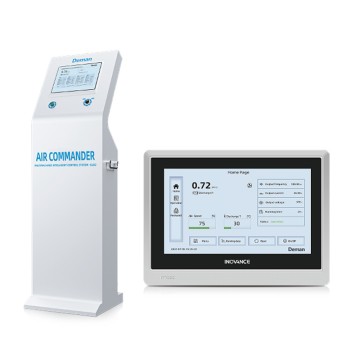
Furthermore, Permanent Magnet Variable Speed Drive (PM VSD) technology adapts the compressor's output to the real-time demand of the site. On a typical construction site, air demand fluctuates wildly—high during drilling operations, low during assembly phases. Traditional compressors waste immense amounts of energy running at full capacity even during low demand. PM VSD systems scale down energy usage dynamically, matching the exact demand and cutting energy costs by up to 30-50%. Another critical trend is the implementation of multi-compressor central control systems like Deman's "Air Commander". On large-scale projects where multiple compressors run simultaneously, the Air Commander coordinates their operations, ensuring they run at peak efficiency and balanced workloads, extending the lifespan of the entire fleet.
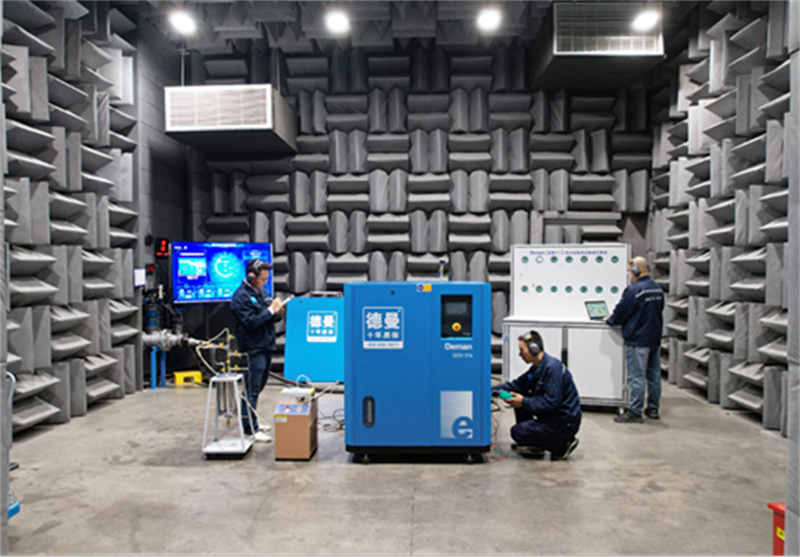
Construction sites are notorious for extreme conditions—dust, mud, rain, and extreme temperatures. An air compressor designed for factory environments will quickly fail on a construction site. Therefore, industrial construction air compressors must feature high-grade filtration, robust enclosures, and advanced cooling systems. Deman's acoustic laboratories and rigorous testing rooms ensure that each unit can withstand these harsh conditions while complying with strict urban noise regulations, which are becoming increasingly stringent worldwide.
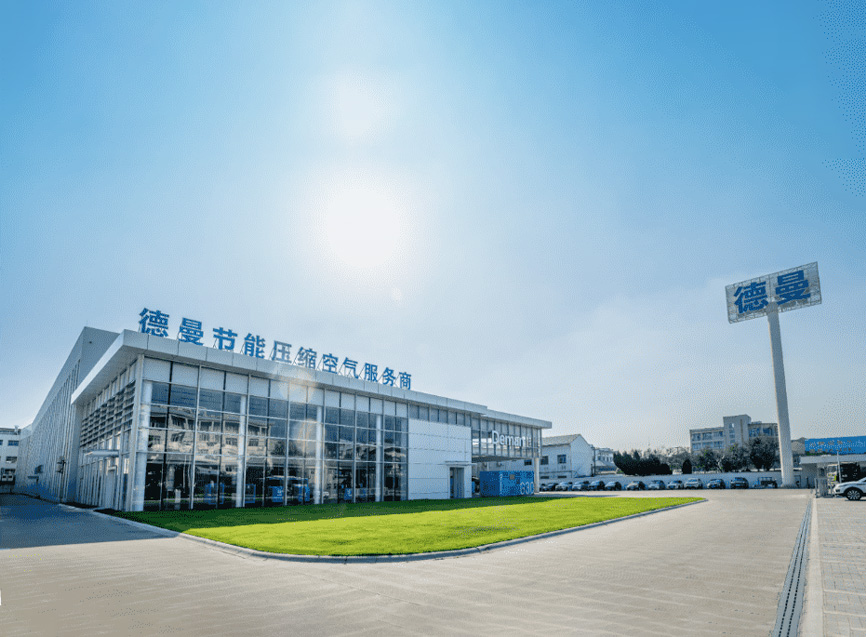
Founded in 1998, Deman has been at the forefront of air compressor industry by leading the energy-saving initiatives in China. We are the primary drafter of China's industry standards for VSD Oil-injected (JB/T10972) and PM VSD Screw Air Compressors (JB/T 13345-2017)
As a China National High-tech Enterprise, Deman has integrated capabilities in R&D, manufacturing, sales, and service. We have a robust R&D team of over 140 technical professionals. Our factory, based in Ningbo, China is ISO9001:2015, ISO14001:2015, and ISO45001:2018 certified. Our product testing process strictly adheres to ASME and ISA1932 standards to ensure the delivery of safe and reliable compressors.
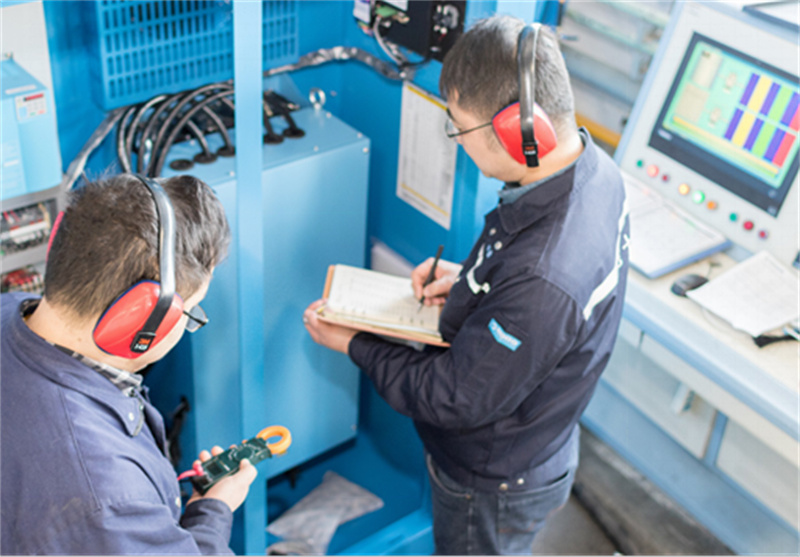
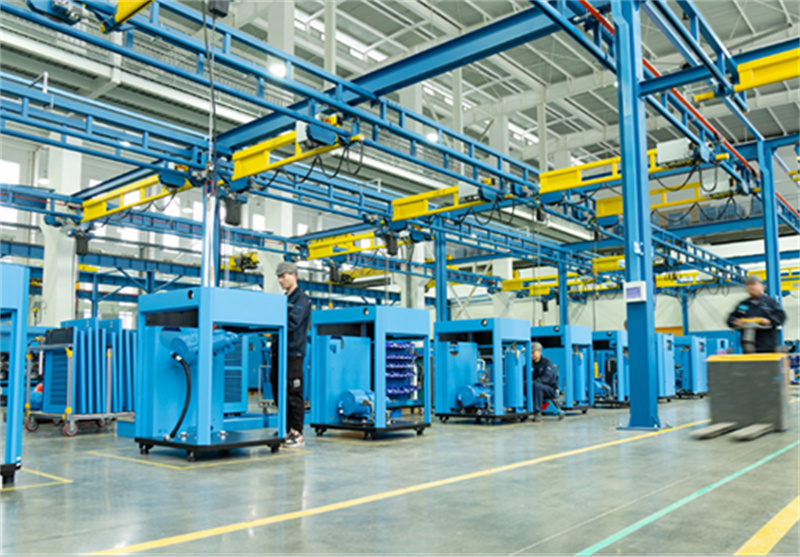
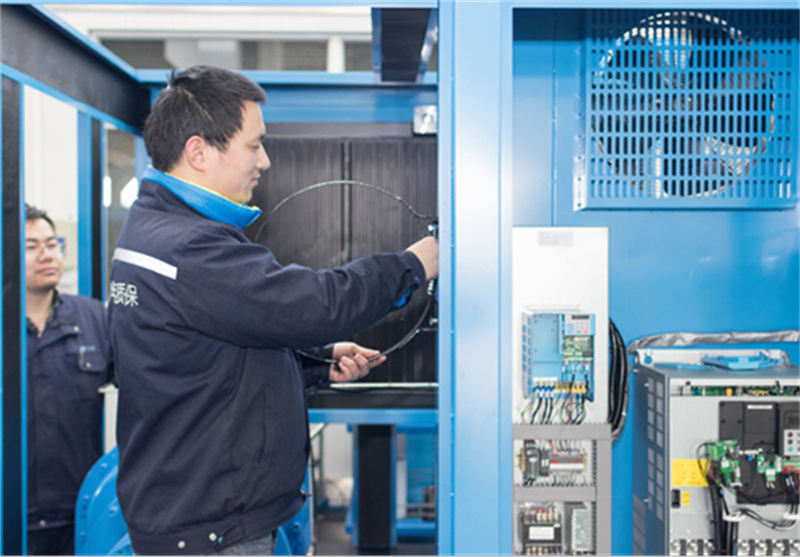
Explore our state-of-the-art manufacturing facilities, testing rooms, and acoustic laboratories.
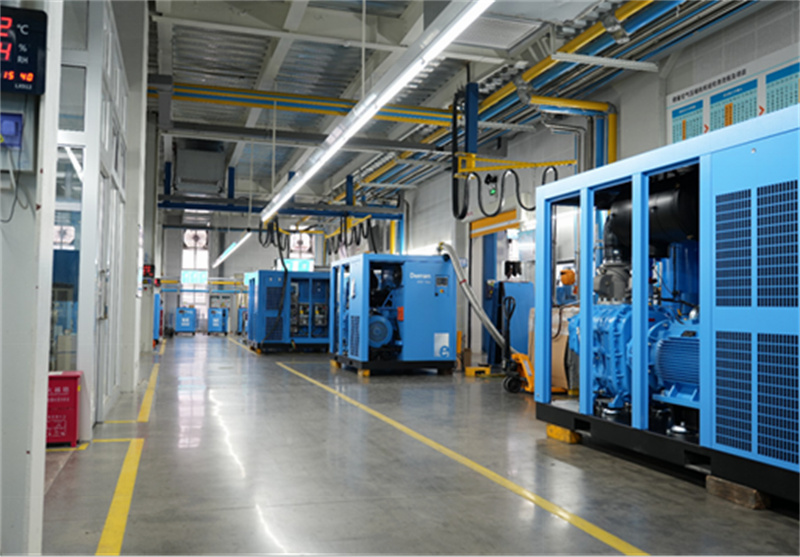
We follow six-end solutions to create infinite value for client's efficient use of compressed air
"No planning, no machine selling". We make sure to understand the air pressure, air flow, and air quality requirement of each air use terminal at client’s factory, before selling anything. When most customers want to spend less for a better machine, we think it is necessary to invest time in planning, to avoid mismatched system that can reduce production efficiency.
Applying “Three-dimensional Customization”, meaning customize the compressor station in terms of air pressure, air flow, and air quality requirements. By selecting the best combination of Deman air compressors + air dryers + heat recovery unit + “Air Commander” central control system, we make sure customers not only has improved production quality, but also reduced energy consumption.
In order to make customers’ life easier, we established a professional team for designing and installing air pipe networks using Deman energy-saving aluminum alloy or stainless-steel green air pipe. Our scientific design, green materials, and professional installation ensures efficient air transmission with minimal pressure drop.
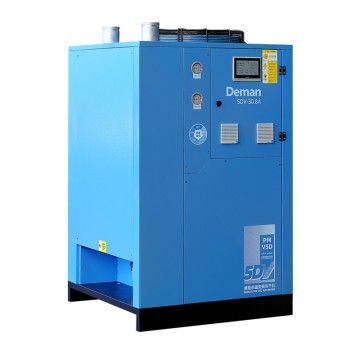
Explore our full catalog of high-efficiency compressors, dryers, blowers, and control systems designed for construction operations.